|
Kuchamaa Mountain (Tecate Peak) Binational Cultural Landscape
San Diego County, California/Tecate, Mexico, A Binational Cultural Landscape
Kuchamaa Mountain, known in the United States as Tecate Peak, is a sacred, living cultural landscape whose spiritual, cultural, and environmental significance predates the creation of both the United States and Mexico.
For the Kumeyaay people, it has been a place of ceremony, spiritual practice, teaching, and connection for generations. Kumeyaay families on both sides of today's international boundary continue to gather at the mountain for ceremonies associated with the full moon and equinoxes.
The mountain's significance does not stop at the border. As SOHO board member Maria Eugenia Curry explains, “Cuchumá has always been one place to the Kumiai.”
The U.S. portion, Tecate Peak, was listed on the National Register of Historic Places in 1992 for its significance to Native American groups. Federal historic documentation identifies Tecate Peak as a sacred mountain and a place of extraordinary religious and spiritual importance to the Kumeyaay people.
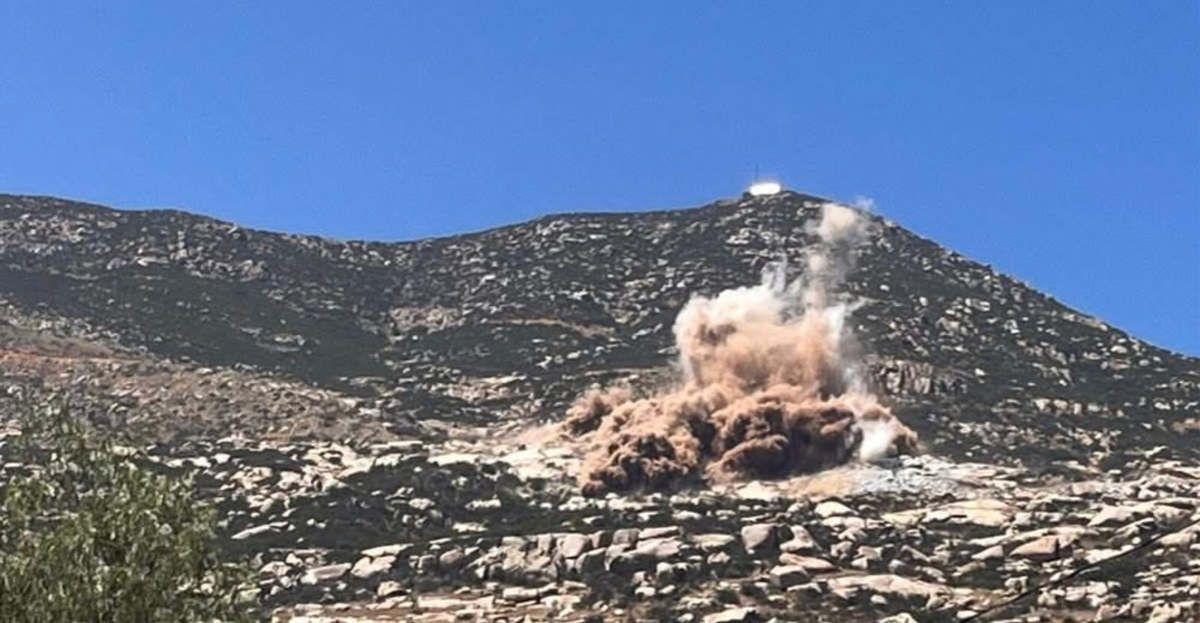
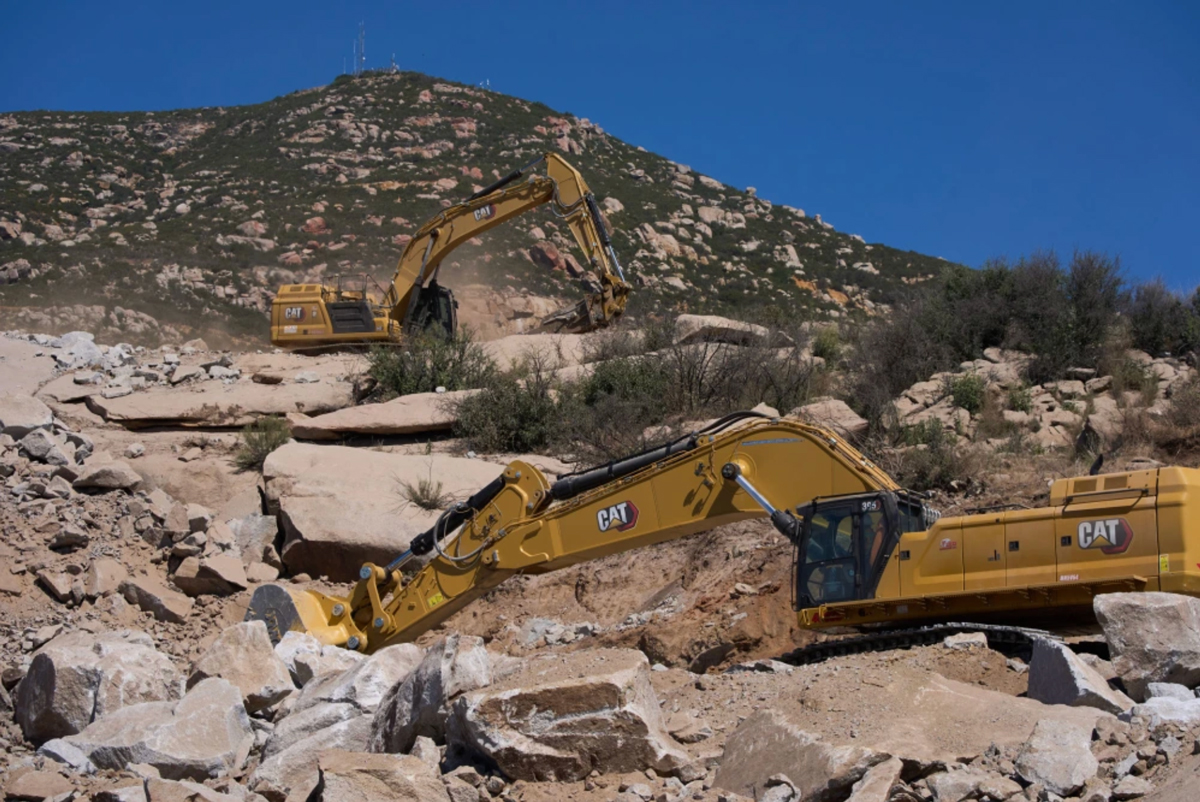
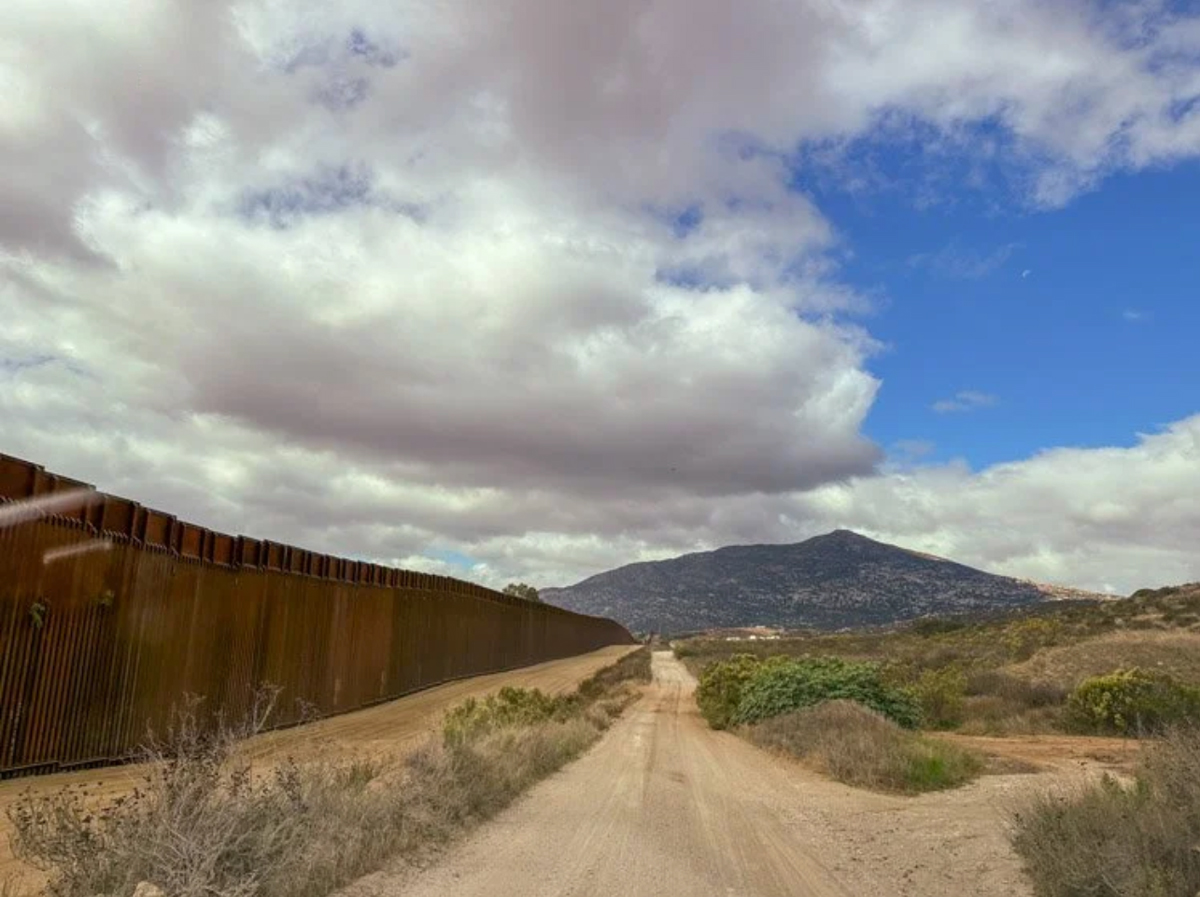
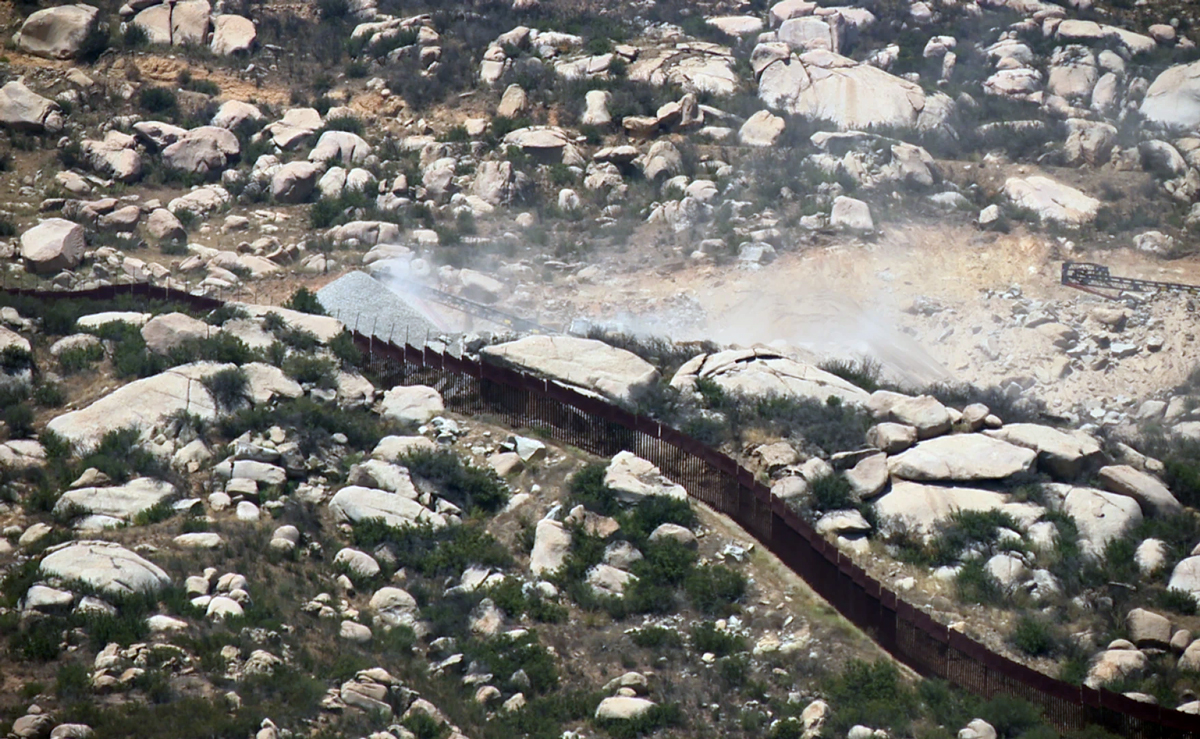
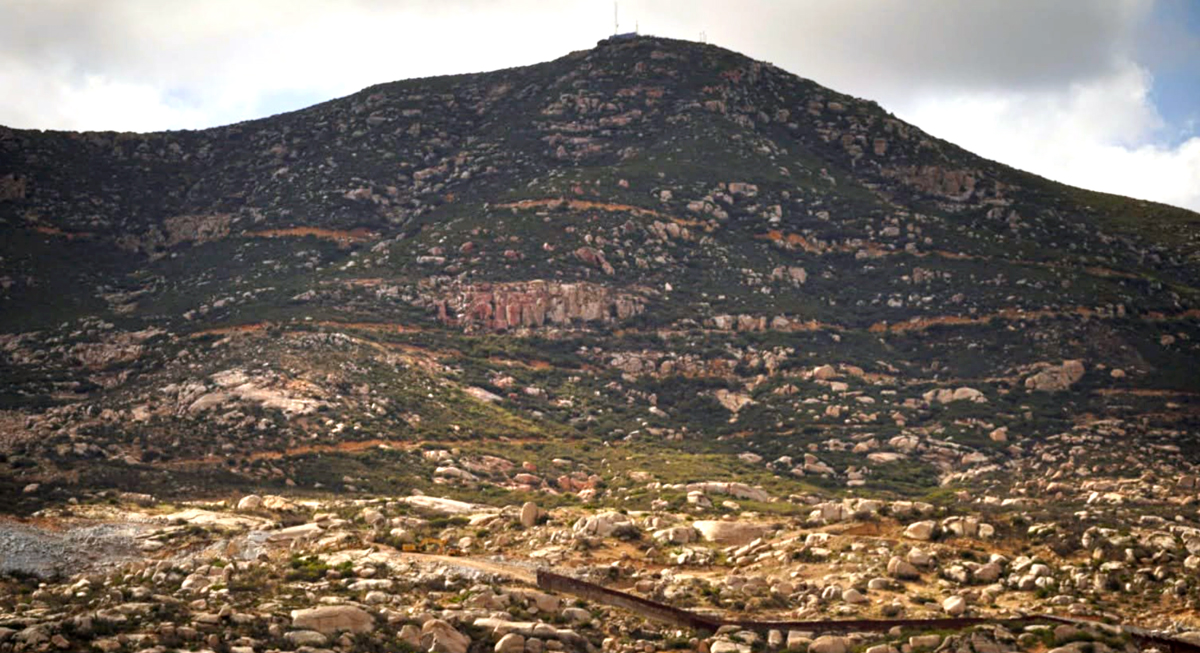
Ongoing federal construction of the 30-foot-tall steel border wall has brought explosives, heavy machinery, roads, and other construction activity into parts of the mountain. The intense work has altered the terrain and disturbed natural and cultural resources, while compounding restricted movement across a landscape that historically connected Kumeyaay communities on both sides of the border.
The damage is much more extensive than what can be seen in a photograph. Changes to the mountain's topography and natural systems raise concerns about habitat destruction and connectivity, erosion, flooding, landslides, and wildfires.
For Kuchamaa, ecological health and cultural significance are inseparable. The international boundary cuts through the landscape, but it does not divide its cultural meaning. The mountain was one place long before the boundary existed, and it remains one place to the Kumeyaay people today.
That is why SOHO, together with ICOMOS Mexico and Kumeyaay communities and partners, is advocating for higher recognition and stronger protection of Kuchamaa as a shared binational cultural landscape, rather than treating its U.S. and Mexican portions as unrelated resources.
In August 2026, Kuchamaa/Tecate Peak was named to the 2026 Endangered Latinx Landmarks List, a national program led by Latinos in Heritage Conservation to raise public awareness of culturally significant places facing serious preservation threats. The designation does not itself provide legal protection, but it brings national attention, advocacy resources, and a platform for communities working to protect endangered places.
The Endangered Latinx Landmarks List comes at an important moment. The Government of Baja California has begun a formal effort to strengthen protection of the cultural heritage associated with Cuchumá, including consultation with Kumeyaay communities, archaeological documentation by Mexico's National Institute of Anthropology and History (INAH), and exploration of additional federal protection. Baja California is pursuing additional cultural-heritage protections, while INAH is documenting archaeological resources, and binational partners are working toward mechanisms to safeguard the shared mountain.
SOHO believes this effort must continue and that the United States must be an equally committed partner.
Government officials in both nations must recognize that Kuchamaa is a sacred cultural landscape, not simply land available for infrastructure. Kuchamaa has endured for generations. The international boundary did not erase its cultural meaning, and modern infrastructure should not erase its physical or spiritual integrity.
What You Can Do
- Support Kumeyaay-led efforts to preserve and protect the mountain and their rights to practice Indigenous cultural traditions there.
- Contact elected officials and government agencies in the United States and Mexico and ask them to protect Kuchamaa's cultural and physical integrity.
- Ask government officials to conduct meaningful consultation with Kumeyaay communities before any additional construction work affecting the mountain proceeds.
- Attend public meetings and speak up when Kuchamaa and border construction are discussed.
- Support efforts to document the mountain's archaeological, cultural, environmental, and historic resources.
- Share information about Kuchamaa and the threats it faces.
- Support efforts for binational recognition and cooperation to protect the mountain as one indivisible cultural landscape.
(Scroll to view more photos)
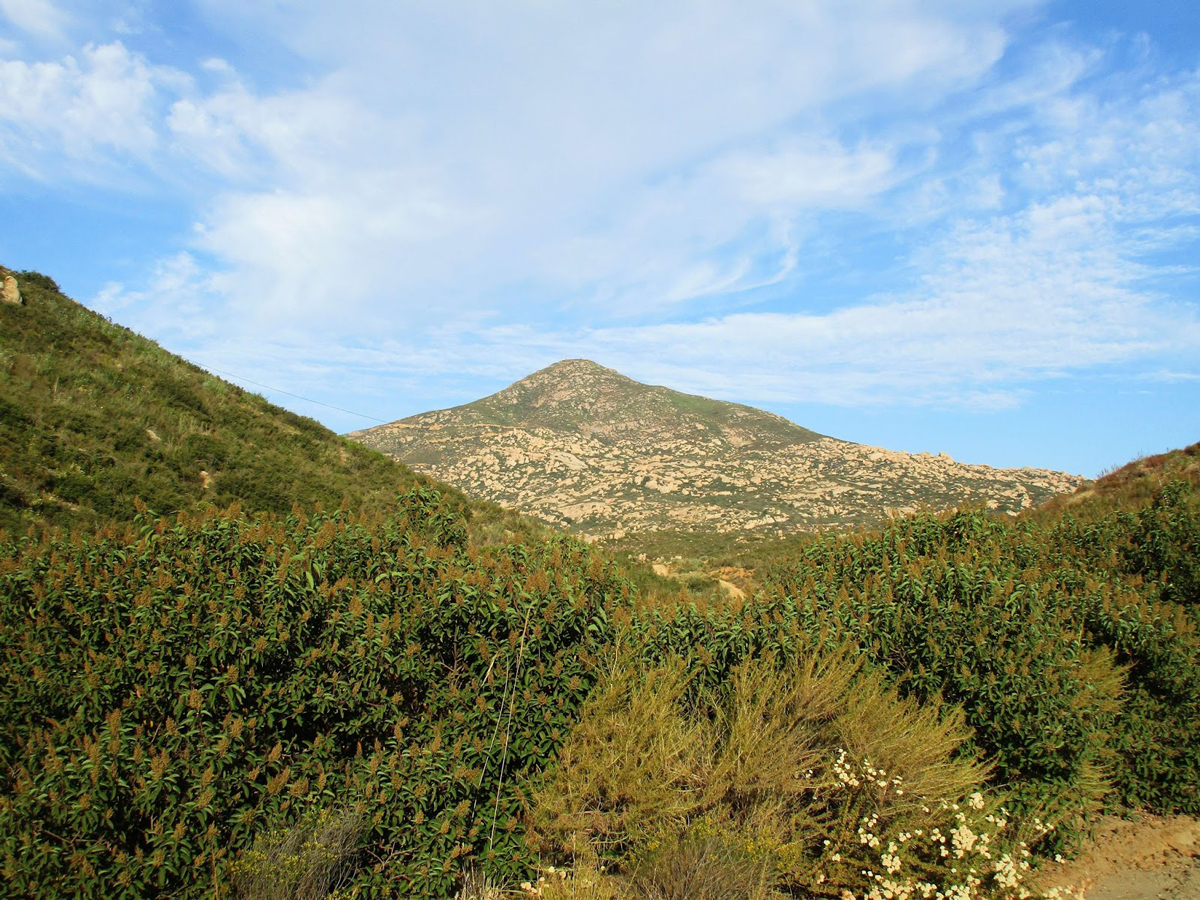
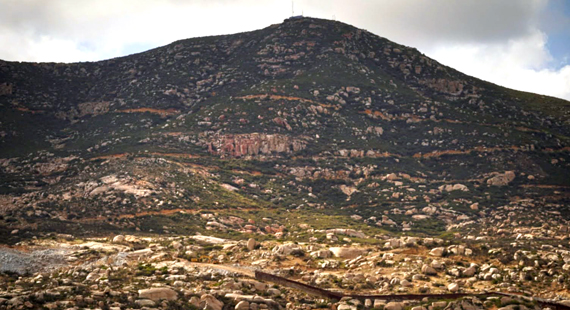
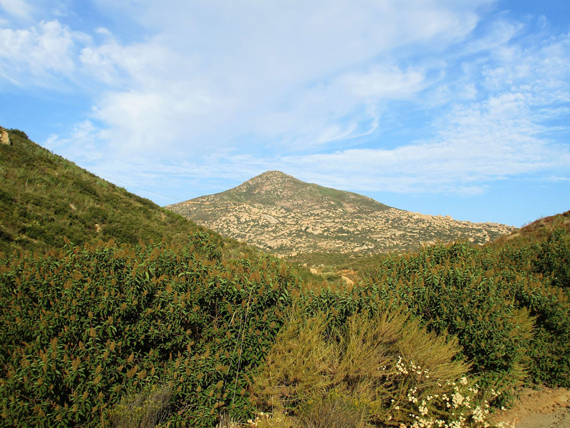 View of Kuchamaa. Courtesy ironhiker.blogspot.com
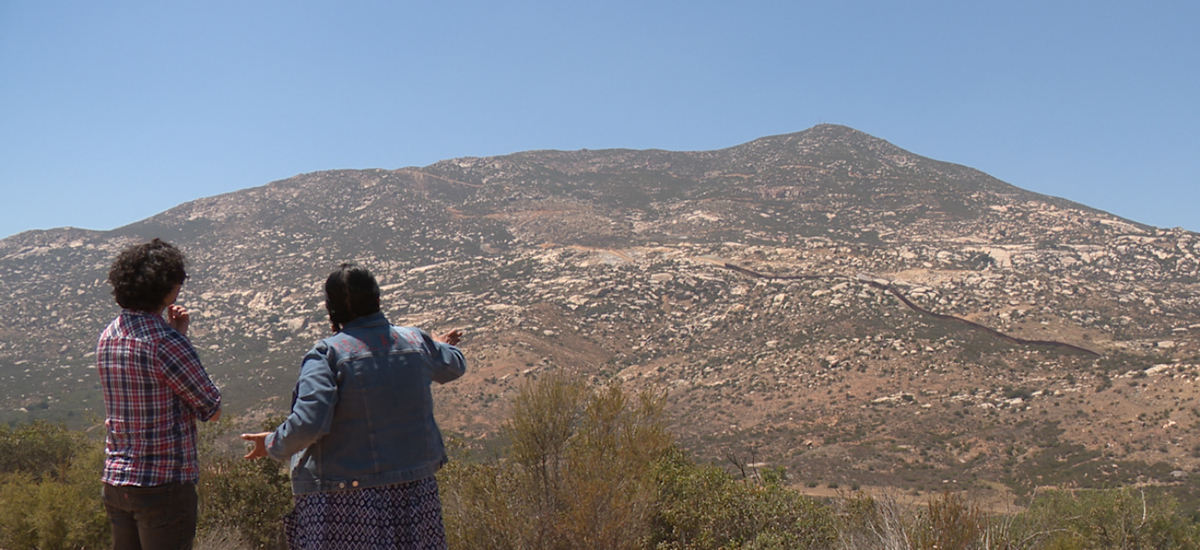
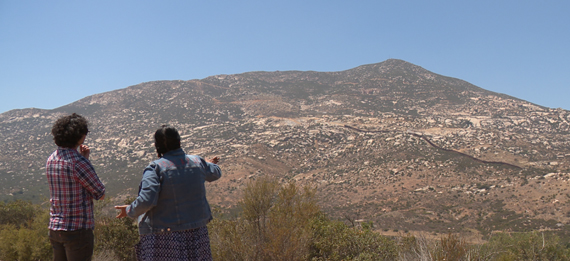 Norma Meza Calles shows KPBS reporter Gustavo Solis new border wall construction on Tecate Peak, a mountain that is considered sacred to the Kumeyaay people, May 21, 2026. Courtesy KPBS
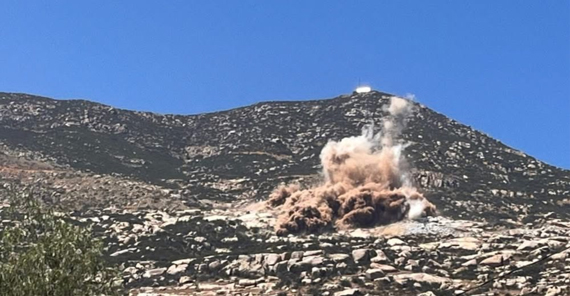 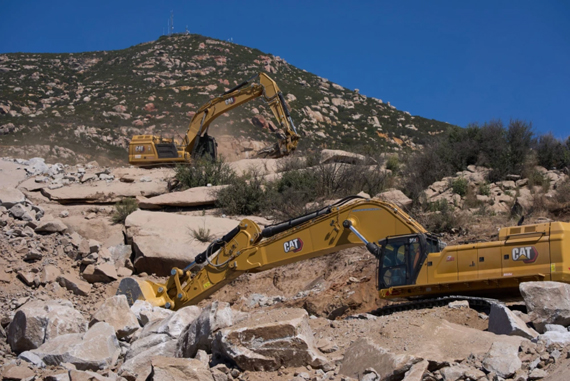 Construction crews work on a new border wall segment on Kuuchamaa Mountain on April 24. Photo by Gregory Bull/AP file
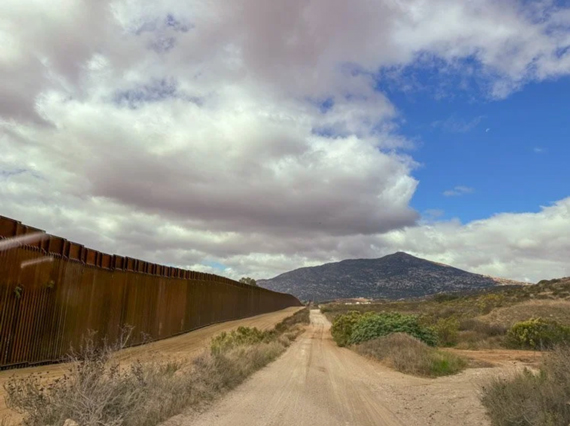 Driving along the border, Kuchamaa ahead. Courtesy 100 Peaks
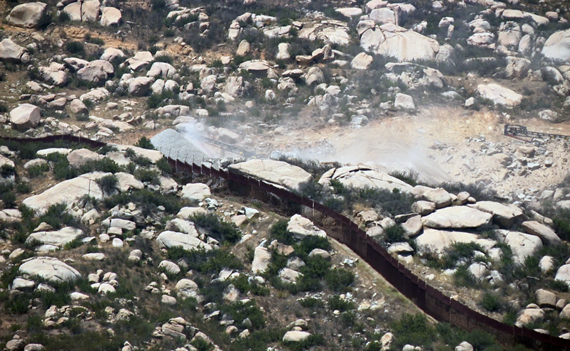 Piles of stone being pulverized to make way for an expansion of the border wall near Tecate on May 21, 2026. Conservationists on the Mexico side of the border said some of these boulders are considered sacred places to the Kumeyaay people. Courtesy KPBS
|
2026
Newly and continued threatened
Sites to watch
Saved
Lost
2025 | 2024 | 2023 | 2022 | 2021
2020 |
2019 |
2018 |
2017 |
2016
2015 |
2014 |
2013 |
2012 |
2011
2010 |
2009 |
2008 |
2007 |
2006
2005 |
2004 |
2003 |
2002 |
2001

|