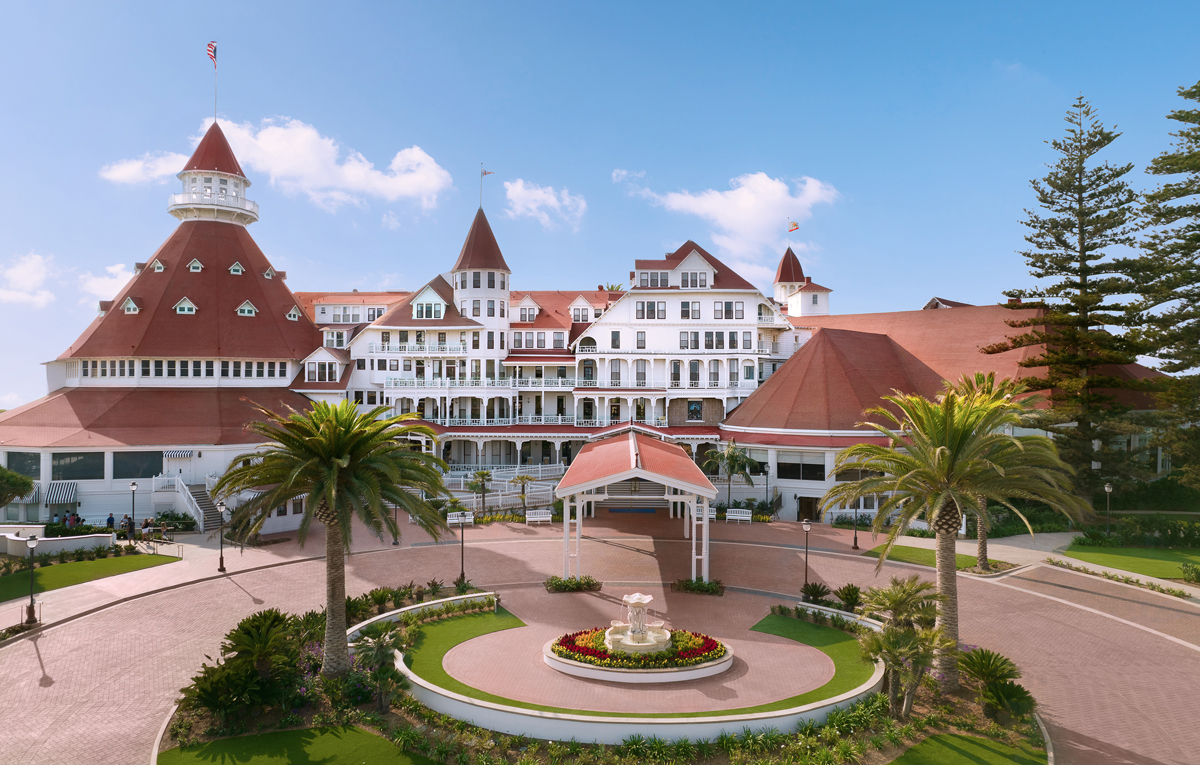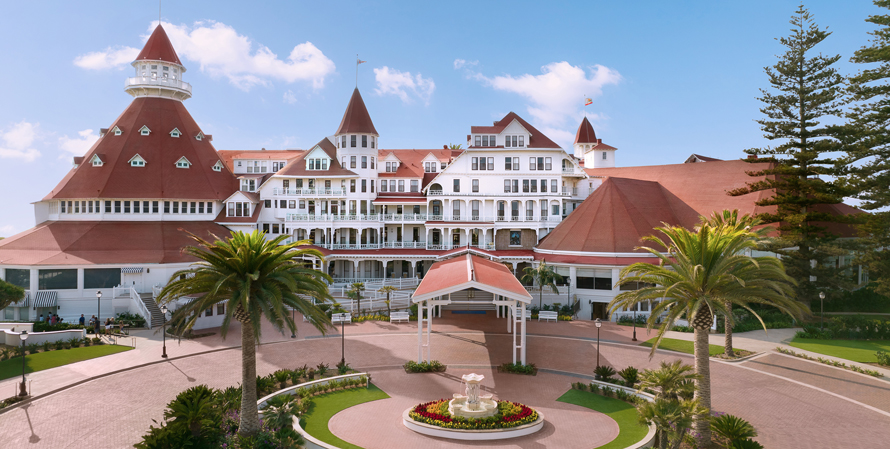
WITH GREAT PRIDE, SOHO honors one of the finest and most complex preservation achievements in San Diego history with an award to a revered national icon, the Hotel del Coronado. Designated a National Historic Landmark in 1977, the Del is not only one of the largest wood-frame buildings extant in the country but a grand and distinguished symbol of San Diego and Southern California’s architectural and cultural heritage.
This latest and final phase of the hotel’s restoration marks the most ambitious and comprehensive renewal in its 135-year history. From 2017 to 2024, the owner took on a multi-year, $155 million full-building renovation with a focused commitment to preservation; the project adhered closely to the Secretary of the Interior’s Standards for the Treatment of Historic Properties.
 |
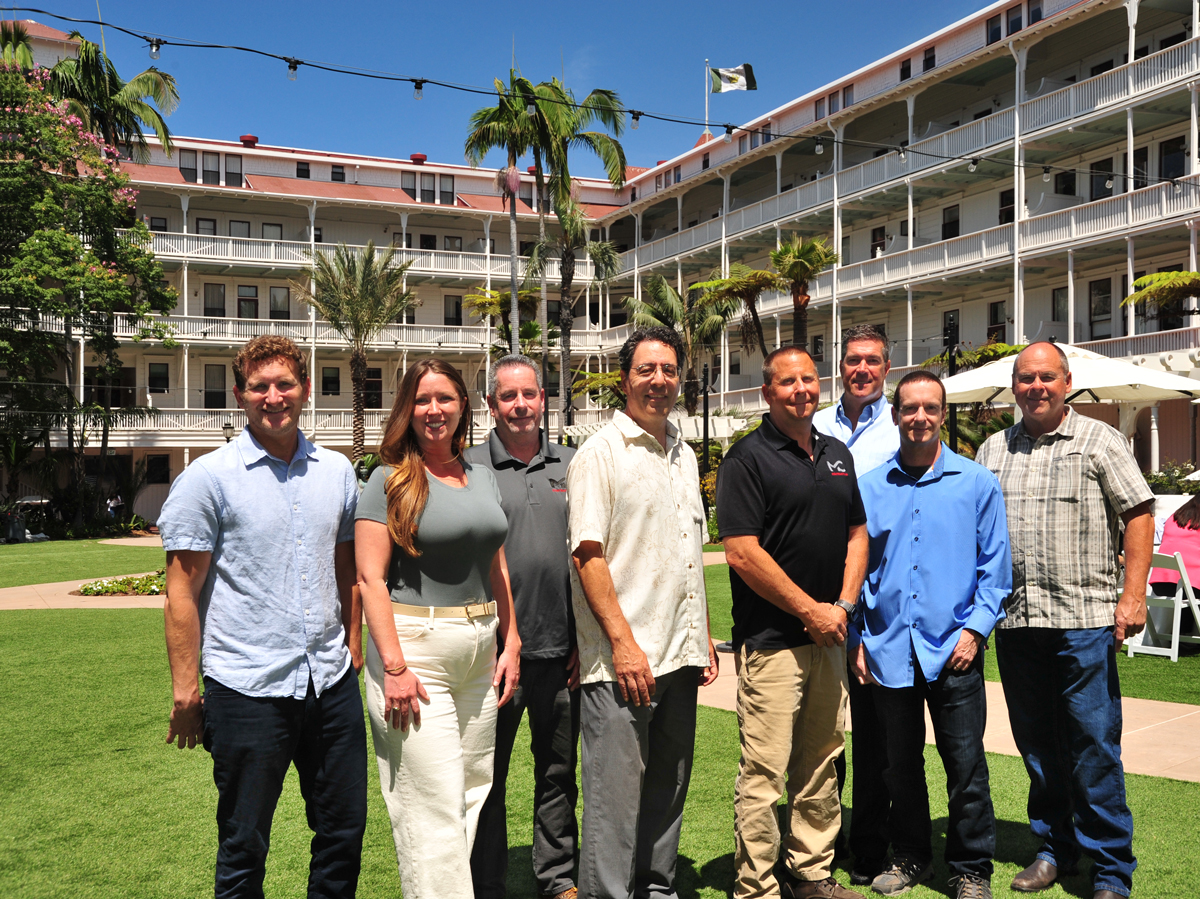
Left to right Reid Katkov, Sarah Hall, Jason Pearson, David Marshall, Scott Foster, Robert Lopez, Thomas Saunders, and Michael Haslett |
 |
Each row left to right Ronald Smith, Michael Hinchey, James Ligon, Brad Edmonds, Paul Nybeck, Carolyn Bennet, and Michelle McElyea, GSB, Inc. Shane Noel, KPFF. Raymond Clark, EXP. |
The architectural team studied original ink-on-linen drawings by the 1888 hotel’s architects, the Reid Brothers of Indiana, as well as photos and archival documents. These informed every detail from replicated balustrades to historically accurate paint finishes.
Following earlier People In Preservation award-winning restorations to the lobby, verandah, and historic laundry building, this phase encompassed 404 guestrooms, meeting rooms, the vast central courtyard, and all remaining facades—a total of 415,000 square feet. Systems upgrades included modernizing plumbing, electrical, HVAC, and fire safety infrastructure, all while carefully retaining the hotel’s historic integrity.
Meticulous craftsmanship defined every aspect of the work. Of the 1,620 windows and 1,770 doors, the originals were restored wherever possible. Inappropriate replacements from the past were swapped with historically accurate replicas, including five-panel wood doors, rosette corner blocks, and decorative casework.
Inside the Crown and Coronet Rooms, the team painstakingly repaired original woodwork. They stripped and refinished oak wainscoting that had been painted, and ordered custom milling of missing cedar beadboard. The Crown Room’s orchestra balcony, previously altered, was restored using archival photos. Even entry doors that had been heavily altered in the 1970s were returned to their original configuration and elegance.
Outside, the Del’s transformation was equally dramatic. Non-historic additions were removed. Patterned shingles and replicated siding once again define the hotel’s facade. The historic Victorian-era color palette was revived, including warm-white walls, red window sashes, and haint blue on all exterior ceilings. The four north-facing balconies, demolished in the 1950s, were recreated in exacting detail. A modern code requirement that could have distorted the railing design was cleverly addressed with frameless laminated glass installed behind restored wood railings, preserving both safety and authenticity.
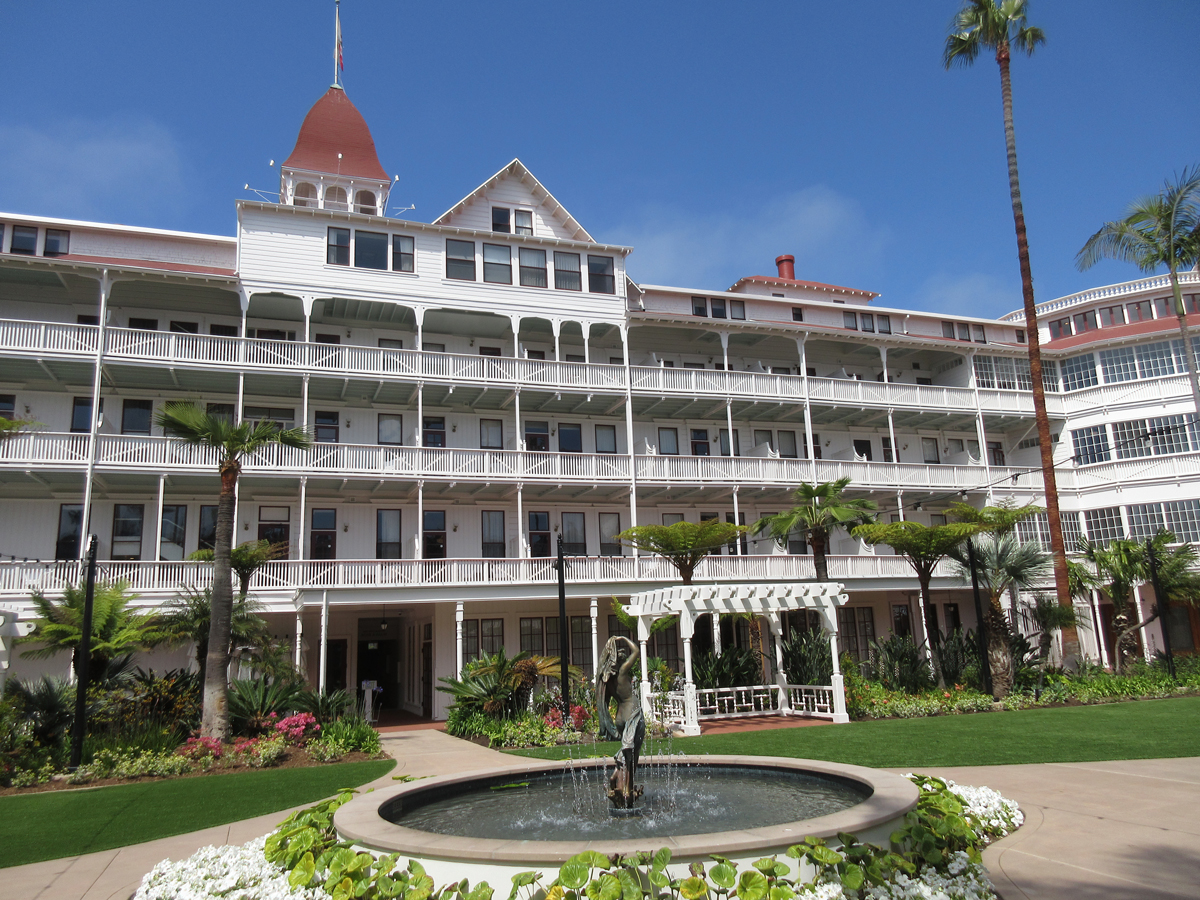
The heart of the Del is its nearly one-acre central courtyard, which now features a recreated fountain as its centerpiece. Its bronze female figure, the original by French sculptor Charles Cordier was part of the Del from 1888 to 1912 but had been lost for many years. The statue was rediscovered when a consultant, recognizing it from a historic photo in his collection, identified the identical statue in Port Townsend, Washington. The discovery enabled an exact replica to be made. Winding walkways were restored with original scoring patterns in concrete, and the lush, tropical landscaping was enhanced with new plantings, some identified in historic courtyard photos.
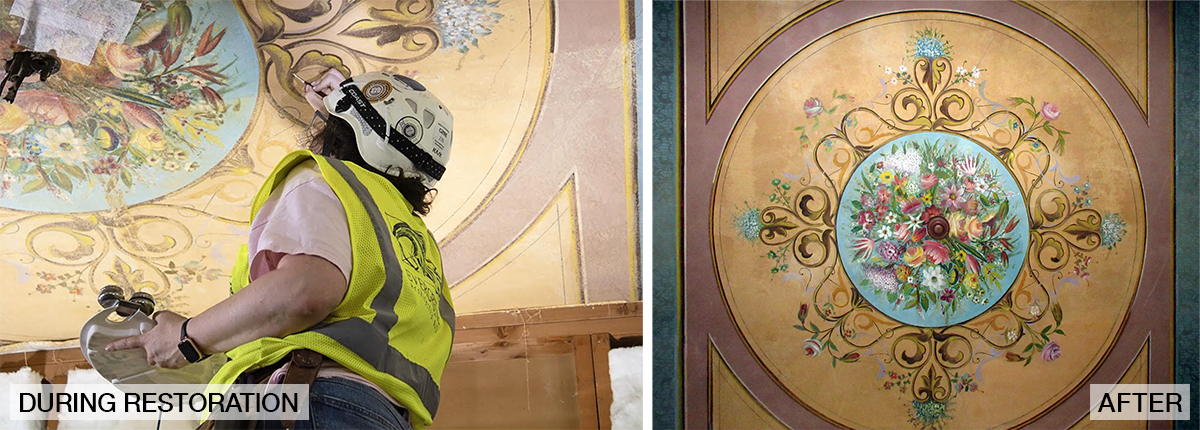
Another exciting discovery was a long-forgotten, ornate floral fresco from 1888 by Danish artists Peter Johan and Waldemar Busch, located on the ceiling of the Victorian building’s ballroom entrance but hidden behind 1940s-era fabric. Damaged and deteriorating, it was stabilized and restored in place. Additional hidden treasures that have come back to life include a second-floor window-wall with amber glass panes, and painted-over and concealed ballroom windows. At night, the ballroom and its cupola glow once again.
THE COMPREHENSIVE, PRESERVATION-FOCUSED approach of BRE Hotels & Resorts set this project apart. This is stewardship at its best.
This restoration is a triumph of expertise, perseverance, and deep respect for history. SOHO congratulates BRE Hotels & Resorts and Michael Haslett, its director of development, and David Marshall of Heritage Architecture & Planning for bringing one of America’s most celebrated seaside landmarks fully back to life. This splendid, heroic effort ensures the Del will continue to inspire, delight, and welcome visitors from around the world for generations to come.
Project Design Team
Lead Architect: GSB Inc. | Preservation Architect: Heritage Architecture & Planning | Meeting Room Architect: WATG | Structural Engineer: KPFF
M/P/E Engineer: Exp U.S. Services Inc. | Landscape Design: Burton Landscape Architecture | Interior Design: Wimberly Interiors
Civil Engineering: Hale Engineering | Additional Engineering: Command Communications | Hotel Operator: Curio Collection by Hilton
Project Construction Team (partial list)
Primary General Contractor: Swinerton Builders | General Contractor (meeting room facades): MC Contracting | Windows and Doors: San Diego Sash Company and Spectra Company | Finish Carpentry: Taber Company
|