|
Whose History Counts?
The Fight to Save San Diego’s Chinese Cultural Heritage
By Alana Coons
November/December 2026
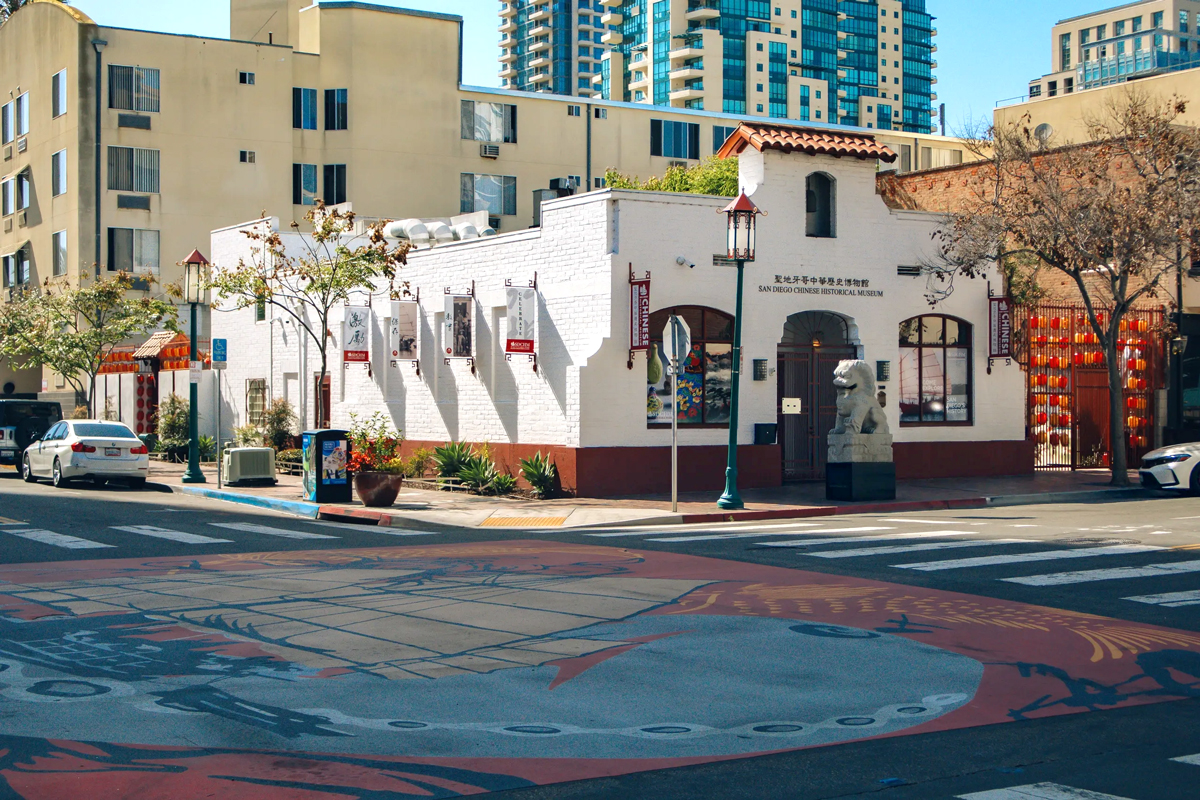
 Courtesy San Diego Chinese Historical Museum |
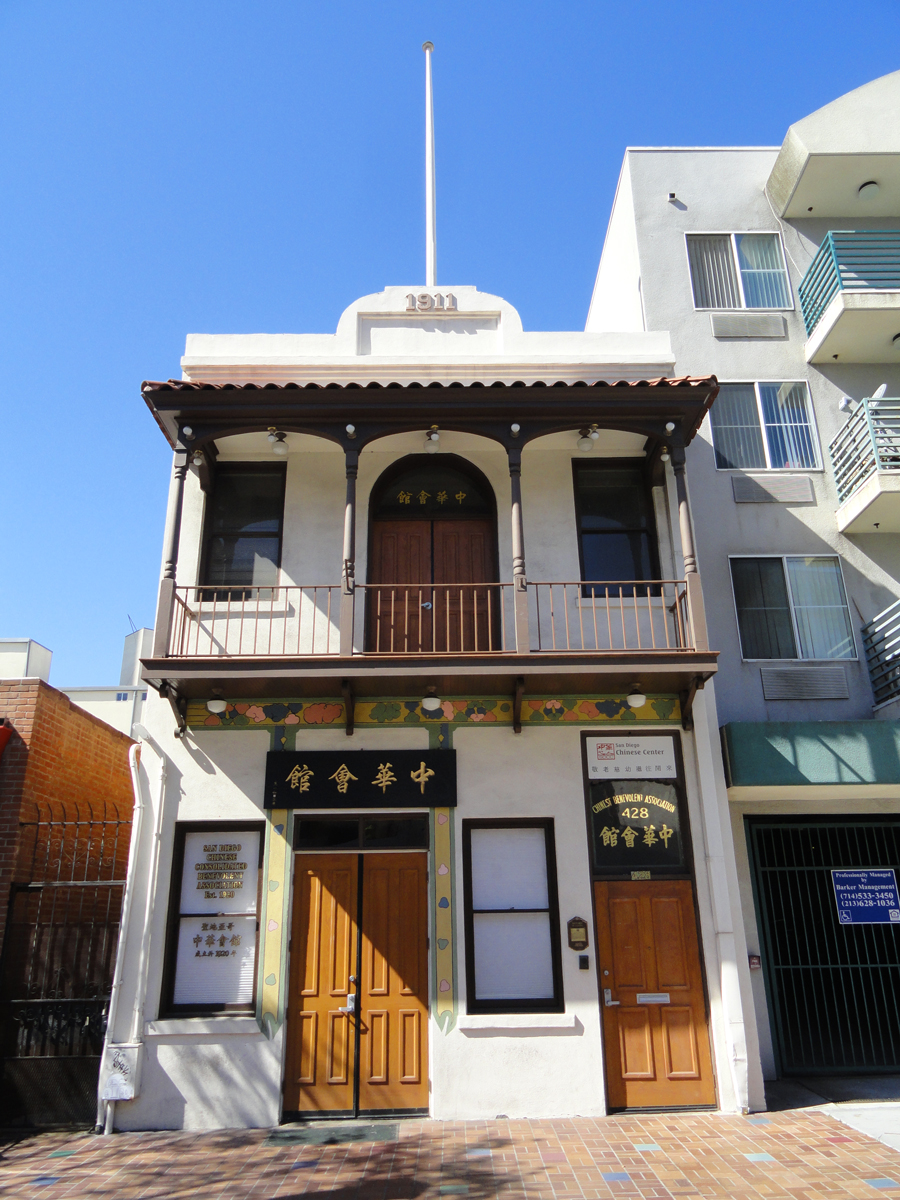
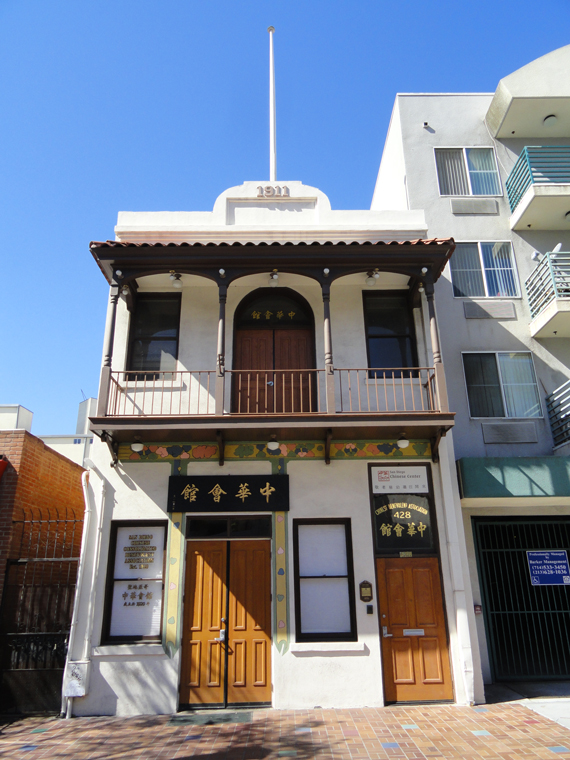 San Diego Chinese Consolidated Benevolent Association. Courtesy Wikimedia |
In the 1980s, as downtown San Diego underwent redevelopment, the architectural remnants of its once-thriving Chinese community faced an uncertain future. Buildings that bore witness to the lives, labor, and contributions of Chinese immigrants were threatened by urban renewal.
Dorothy and Tom Hom, Sally Wong-Avery, and others in the Chinese American community met this upheaval with a determined campaign, which preservation advocates and the City of San Diego historic preservation staff supported. This struggle helped establish the Chinese/Asian Thematic Historic District, including saving the 1927 Chinese Mission building, ultimately giving it a new life that continues to this day as a museum and cultural center.
This story asks whose history is recognized, whose voices are heard, and who gets to decide which places a community preserves in order to honor and tell that history. Decades after the events described here, these questions remain at the forefront of the local and national historic preservation movement.
In 1986, the Centre City Development Corporation (CCDC), San Diego’s downtown redevelopment agency, now defunct, commissioned University of San Diego historian Dr. Ray Brandes to research and evaluate the buildings associated with San Diego’s Chinese community. His report gave the Chinese Mission building a score of just 18 out of 50 points, discounting its significance because it was in poor condition, no longer used as a church, lacked what he described as an “Oriental” architectural appearance, and stood outside the historic Chinese neighborhood.
His assessment placed considerable weight on the building’s condition and architectural appearance, giving insufficient recognition to its cultural and community significance. Designed by Master Architect Louis Gill and built in 1927 with the support of civic leader and philanthropist George Marston, the Mission had been a men’s residence and place of instruction for Chinese immigrants. Its dormitories provided a welcoming place to stay and learn English and American customs. Many of the men who passed through the Mission worked as laborers building the railroads, and many Coronado and San Diego buildings.
Brandes’s findings did not go unchallenged. On July 11, 1986, Ron Buckley, secretary to the City’s Historical Site Board (now called the Historical Resources Board), wrote to CCDC, asserting that the consultant’s report undervalued the historic significance, architectural integrity, and the Chinese community’s concern over the proposed demolition.
Buckley also stated that more of the Mission’s original exterior material remained than Brandes had observed.
CCDC subsequently commissioned another architectural and engineering report on the Chinese Mission by the San Diego firm of Milford W. Donaldson. This study reached markedly different conclusions. It emphasized the buildings’s collective historic value to the Chinese community, found most to be in good structural condition, and concluded that rehabilitation could be accomplished without major expense. The Mission itself was rated “Good” for rehabilitation and for retaining much of its original exterior historic fabric.
Civic and community leaders Dorothy and Tom Hom, a businessman and former City Councel member, were champions of Chinese American heritage and led the push to protect the other remaining Chinese heritage sites downtown. Together they advocated for historic preservation, including the restoration of the Gaslamp Quarter. They understood that these buildings represented much more than aging structures on valuable real estate, and their message soon resonated beyond the Chinese American community.
Sally Wong-Avery joined the Homs in leading the campaign and helping mobilize the Chinese American community to protect the Mission building so essential to their history. Wong-Avery was also a founder and the first president of the Chinese Historical Society of Greater San Diego and Baja California. She helped build the organizational foundation for preserving and sharing San Diego’s Chinese American heritage.
At a CCDC meeting in February 1987, the proposed Chinese/Asian Thematic Historic District advanced toward formal designation. Architect Donaldson, a member of SOHO’s board, presented his firm’s study evaluating the historical and architectural significance and structural condition of nine Chinese buildings.
Representatives of the Chinese community, the San Diego Planning Department, and Carol Lindemulder, SOHO co-founder and a former SOHO president, served on the ad hoc committee working to establish the district. At the time, Lindemulder was also an influential member of City’s Historical Site Board.
SOHO documented and supported this preservation work in our Reflections newsletter. The March 1987 issue reported on the proposed district and recognized the importance of preserving the last remaining evidence of Asian culture, history, and architecture downtown. (See Preserving San Diego's Chinese
Heritage in the March 1987 issue of Reflections, page 4. The Historical Site Board designated the Chinese/Asian Thematic Historic District on April 29, 1987. SOHO commended the decision in the May issue of Reflections, page 3
But, despite the board’s vote, designation was not assured. In October 1987, SOHO reported that the historic district was encountering resistance from some property owners as its final approval was to go before the City Council. SOHO reaffirmed its support for the designation, contributing professional expertise, and we advocated for preservation alongside the Chinese American community and the Historical Site Board and its secretary, Buckley. We urged approval explaining that the buildings were the last vestiges of a community that most certainly deserved a place in San Diego’s changing urban landscape.
The Chinese Mission itself presented a particularly difficult challenge. Its owner, Charles Tyson, sought to demolish the building and develop high-rise housing on the property. Marie Burke Lia, CCDC’s special counsel for historic preservation, supported the Brandes report’s findings on the building’s condition and historic value, and she advised against creating a historic district.
Representing Tyson, in May 1987, Lia formally objected to including the Chinese Mission in the proposed district. Tyson acknowledged the Chinese community’s attachment to the building but argued that its deteriorated condition and changes to the surrounding area meant it no longer represented the congregation’s history. He questioned why the building inspired such strong feelings when, in his view, so little remained of its former use.
Ron Buckley’s response was direct: “For them [Tyson and Lia] to say it’s not significant is to deny its history.”
Eventually, a compromise emerged. In early 1988, the Historical Site Board considered alternatives for the Mission’s future, including relocation to accommodate commercial development. Tom Hom proposed moving the building and adapting it into a Chinese history and cultural museum, complete with Chinese gardens. He requested a one-time City subsidy for relocation, after which the Chinese Consolidated Benevolent Association would assume financial responsibility.
Hom explained the importance of the Mission not only to Chinese Americans but to San Diego as a whole. The men who had lived there had helped build the city, and the landmark could tell a story that would otherwise be lost. As he had argued during the campaign to save it, Hom emphasized that the Mission was not just for the Chinese community; it was a place where all San Diegans could learn about this part of their city’s history.
In March 1988, the Historical Site Board voted to designate the Chinese Mission, along with the Regal and Anita hotels, at 416–422 Fourth Avenue, as historic and accepted Hom’s proposal. The Mission was relocated and dedicated as a Chinese American museum and cultural center in 1996. The larger historic district also preserved important remnants of downtown’s Chinese heritage, ensuring that the community’s history would not disappear entirely beneath redevelopment.
The outcome was not everything the advocates had originally sought. Yet the campaign secured recognition, protected historic resources, and created a place where Chinese immigrants’s contributions could be interpreted and shared with current and future generations. The organized effort also illustrated the importance of community knowledge, independent professional assessment of historic buildings, and sustained preservation advocacy.
This story also offers a sobering lesson about the recurring tensions between development and preservation. Historic resources can often be undervalued when assessments focus narrowly on architectural appearance, physical condition, or immediate economic potential.
Today, the future of San Diego’s Asian Thematic Historic District brings these issues into sharp focus. The City’s recently approved Preservation and Progress Package A changes the way thematic historic districts are treated under its Complete Communities regulations, including provisions that would limit historic district boundaries to include only contributing resources.
SOHO has warned that this approach will weaken protections for historic districts by narrowing their boundaries and diminishing broader historic context. We have taken legal action to prevent this action.
Preservation and Progress Package A strikes at the heart of the 1980s precedent-setting campaign. The Chinese American community understood and proclaimed that their story could not be told through isolated landmarks alone, and that a historic district was crucial to saving this history.
Today’s circumstances are only slightly different, while the underlying questions remain. Will historic districts throughout San Diego be recognized and designated as meaningful expressions of community history, or will their protections be narrowed in ways that leave the surviving pieces of that history more vulnerable?
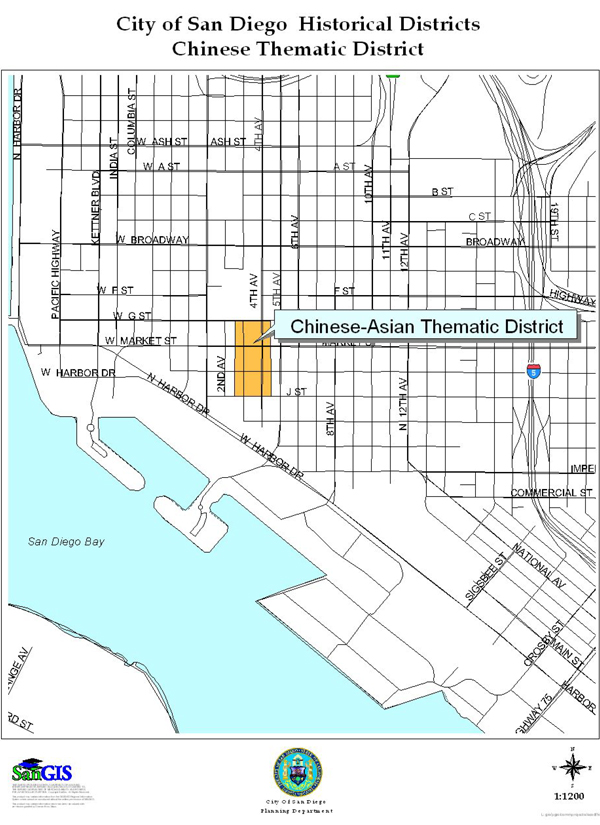
San Diego’s Asian Pacific Thematic Historic District (APTHD) includes 22 contributing structures in an eight-block district adjacent to and partly overlapping the Gaslamp Quarter. Its boundaries are Market Street to the north, Second Avenue to the west, Sixth Avenue to the east and J Street to the south. Take the Asian Pacific Historic District Virtual Walking Tour online.
Learn more in this issue of Our Heritage eNews with Marston House historian Robin Lakin’s latest installment of the Marston family history about the friendship between George Marston and Ah Quinn, the "mayor" of San Diego’s Chinatown.
BACK to table of contents
|
2026
2025
2024
2023
2022
2021
2020
2019
2018
2017
2016
2015
|