|
San Diego Historical Resources: Designations and Board Reports
By Ann Jarmusch
November/December 2025
At the September 2025 meeting of the City of San Diego Historical Resources Board, the members designated five houses and approved a sixth as a Heritage Structure. They also accepted the Historic Preservation Components for the Clairemont and College Area Community Plans.
Because six of the HRB’s 11 members are new, during the public comment period SOHO Executive Director Bruce Coons addressed the board about making Site Development Permit (SDP) recommendations to the Planning Commission. He said the HRB’s purview and responsibilities extend to how a historic resource is to be treated and the proposed project itself, not simply assessing mitigation measures. His comments were partly prompted by the board’s cursory review in August 2025 of an SDP involving the controversial re-use of the Ordway House (c. 1888). See and read about this Little Italy cottage in Our Heritage enews’s August HRB report online .
Preservation architect Ione Stiegler of IS Architecture asked how public comment is being solicited and considered for the City’s Preservation and Progress initiative to update its historic preservation ordinance and policies.
The answer came later in the meeting, when Kelley Stanco, City Planning Department Deputy Director, said a public workshop would be announced soon. Editor’s note: This workshop was held on October 8, 2025 via Zoom and can be viewed on YouTube.
After the full HRB considered Package A at its October 2025 meeting, it will proceed to the Planning Commission, the Land Use and Housing Committee, and, finally, the City Council.
Here are descriptions of the five houses designated in September along with one Heritage Structure:
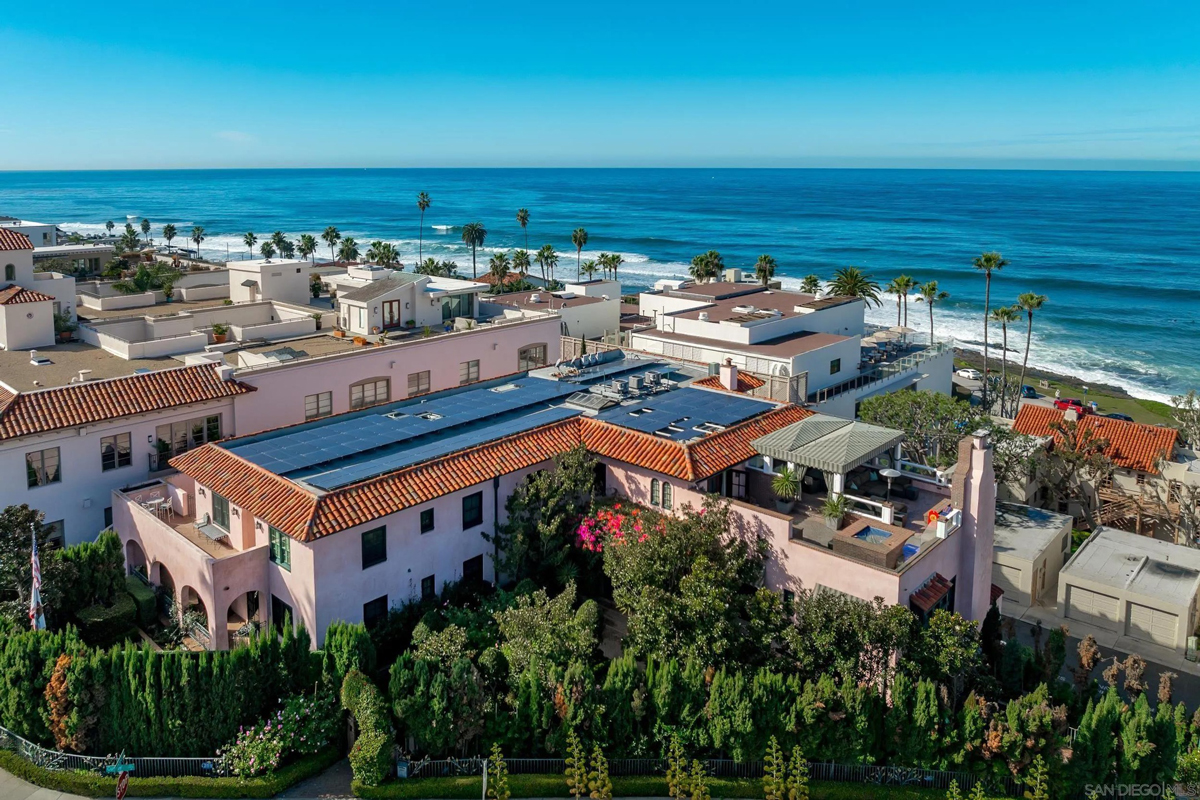
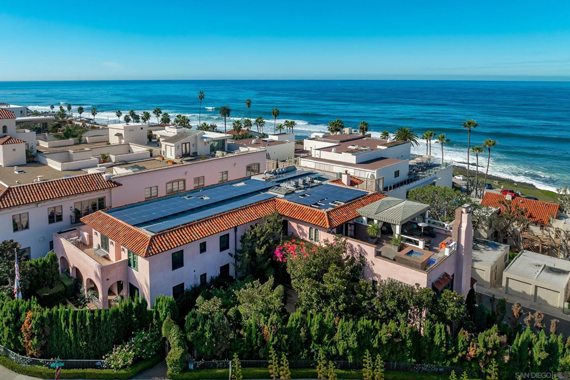 484 Prospect Street in La Jolla was built at the direction of philanthropist Ellen Browning Scripps in 1925 as housing for nurses who worked at the first Scripps Memorial Hospital on the same block. The T-shaped Spanish Revival style residence was later converted to office space. In 2012, it became a single-family home. Ineligible for historic designation due to loss of integrity, the building is recognized as a Heritage Structure worthy of preservation. Its worthiness is because it was an integral part of La Jolla’s early medical industry and part of a neighborhood development style, as well as its association with a historically significant philanthropist. Courtesy Homes.com |
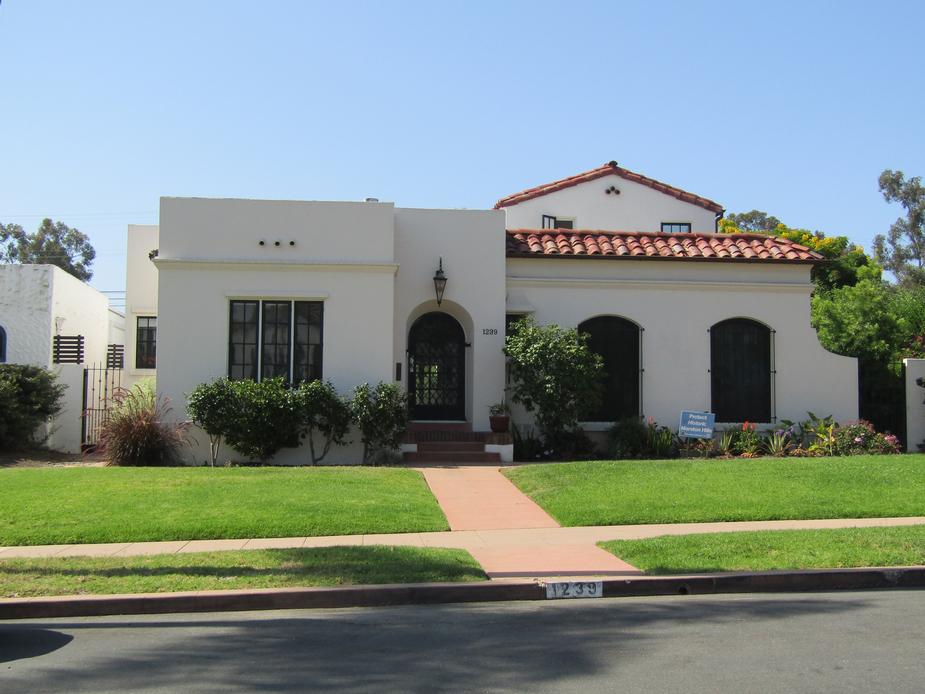 1239 Myrtle Avenue in Hillcrest is the John and Kate Bardsley/A.M. Southard House from 1925. It meets HRB Criteria C (for architecture) and D (for a master builder). The Spanish Colonial Revival style home retains integrity and embodies the style with its asymmetrical facade; recessed arched primary entrance; stucco exterior; varied roof forms, including a flat roof with parapet and low-pitched shed tile roof; arched focal windows; and multi-light wood-framed fenestration. Through this designation, proposed Master Builder A.M. Southard is now officially on the City’s master builder list. The house is a notable work of this prolific and accomplished builder who constructed many quality residences in revival styles in the San Diego area in the 1920s and 1930s. He ran the A.M. Southard Company and the Southard Steel Structures Company. The designation excludes the 1978 second story addition and the 1979 kitchen addition. |
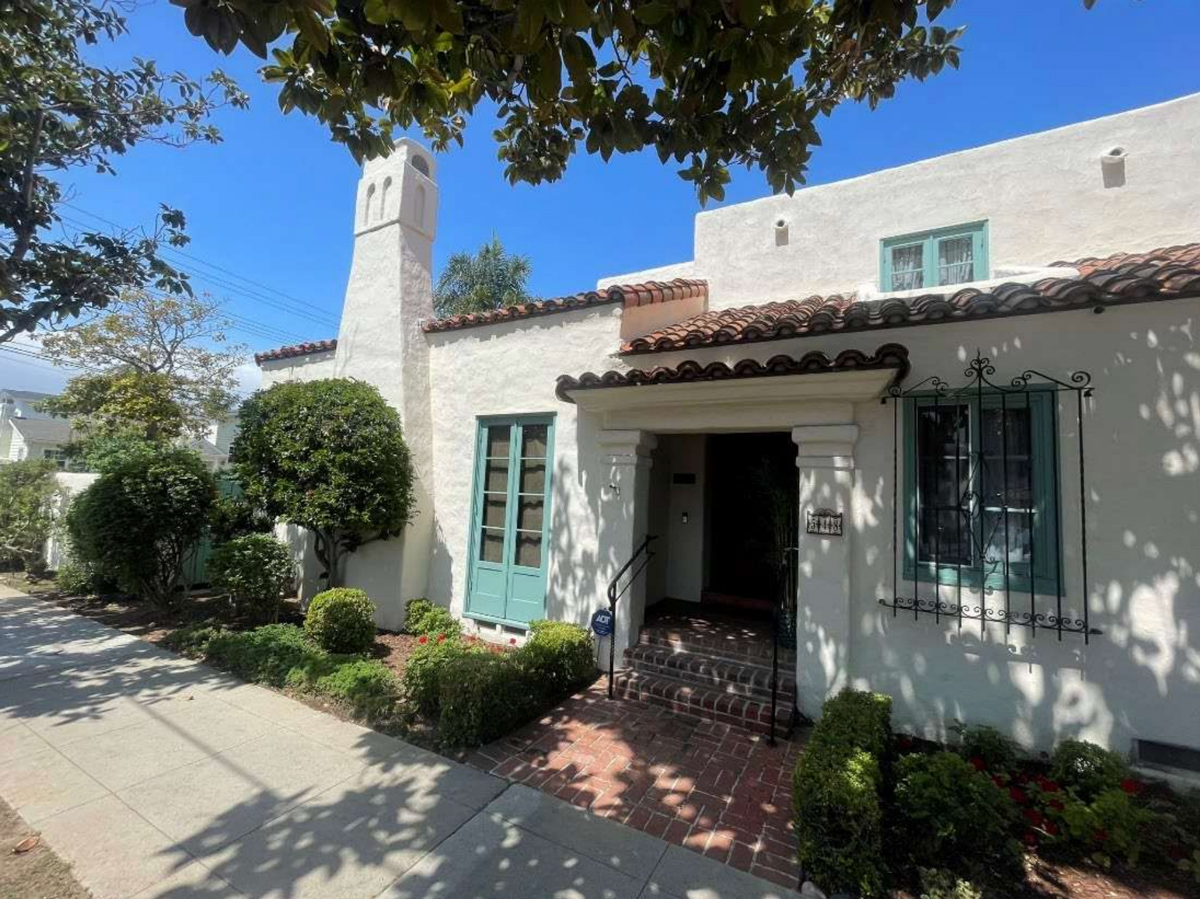
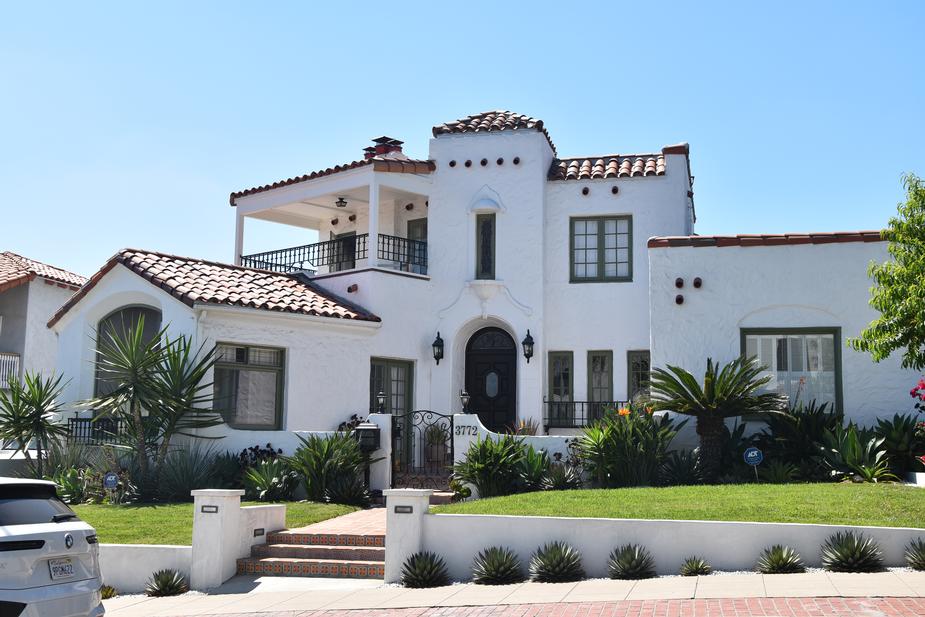 3772 Pringle Street in Mission Hills is the Woodley Phillips House built in 1925 in the Spanish Eclectic style. It is designated under HRB Criterion C for its architecture, which retains integrity and defining characteristics of the style. These architectural elements include an elaborated primary entrance, asymmetrical primary facade, a projecting front gable with an arched focal window, a concrete front porch with stucco side wall, varied roof forms, tile roof with little eave overhang, decorative medium sand stucco exterior, clay tile vents, and original wood-framed fenestration of multi- and single-light fixed and double-hung windows. The designation excludes the 1963 addition. |
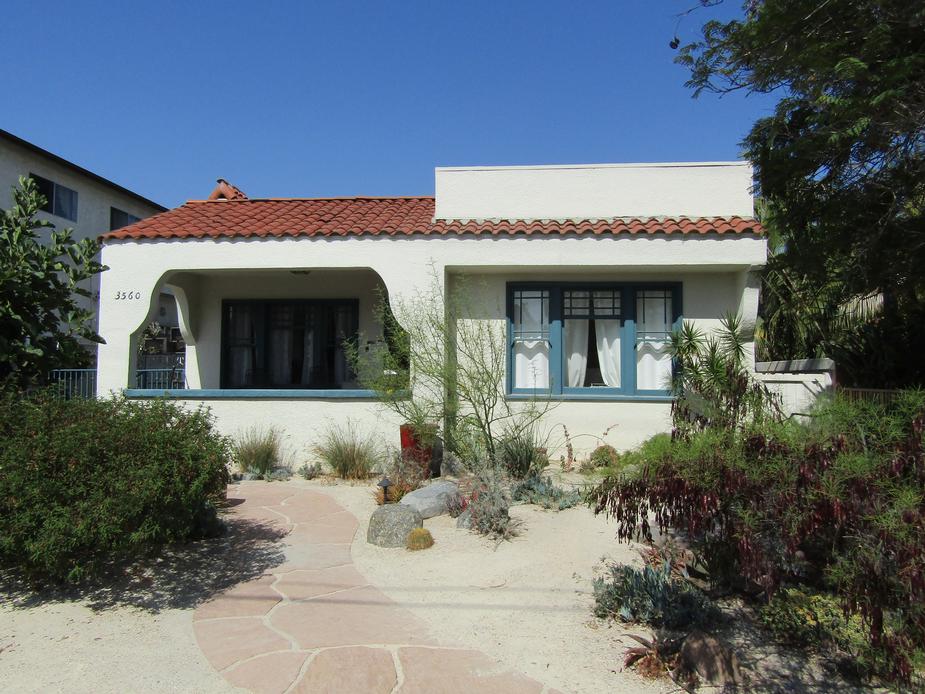 3560 32nd Street in North Park is a Spanish Eclectic style home named the George Carter Spec House #1. The 1927 residence warrants designation for its architecture under HRB Criterion C. It features an asymmetrical facade, stucco cladding, varied roof forms with tile roofing and little eave overhang, stucco chimney, arched porch wall design, and fenestration consisting mainly of wood-framed windows in various light patterns and operations. The designation excludes the accessory dwelling unit and the garage. |
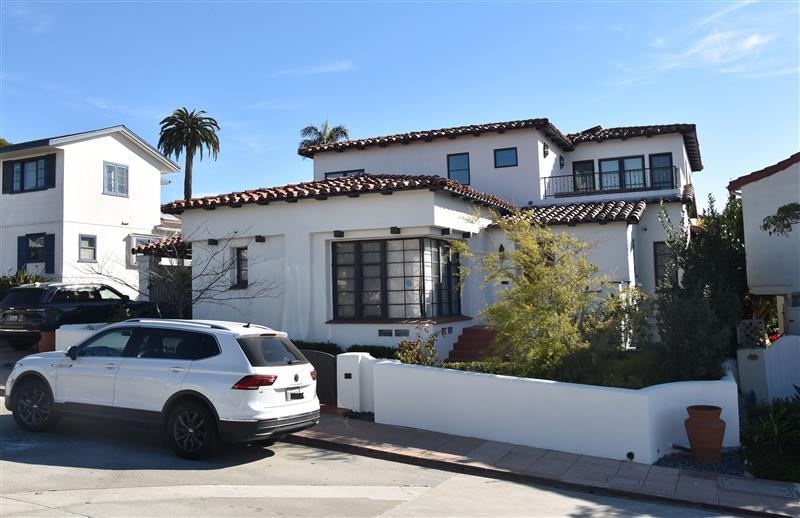 2477 Marilouise Way in Uptown’s Presidio Hills area is the Peterson Lumber & Finance Company/Virgil Cash Spec House #1. This house embodies character-defining features of the Spanish Colonial Revival style with Art Moderne influences and retains integrity from its construction in 1935. It meets HRB Criterion C for architecture, with its asymmetrical facade; low-pitched tile roof with little eave overhang; unenclosed eaves; varied roof forms, including hipped and shed; smooth stucco exterior; decorative beams; wood-framed casement windows and a deep-set decorative window; and porte-cochere with square columns and tile roof. The Art Moderne influence can be seen in the steel corner focal window. The house is also designated under HRB Criterion D as a notable work of proposed Master Builder Virgil Cash, a designer of high-quality residences and commercial properties in the San Diego area during the early 1930s through the early 1950s. It is significant as the only known example of Cash’s transitional period, when he experimented with incorporating Art Moderne design features and fenestra steel windows, a technology that was previously limited to factories. The board’s designation includes acceptance of Cash as a Master Builder. It excludes the 2019 second-story addition and the garage/companion unit. |
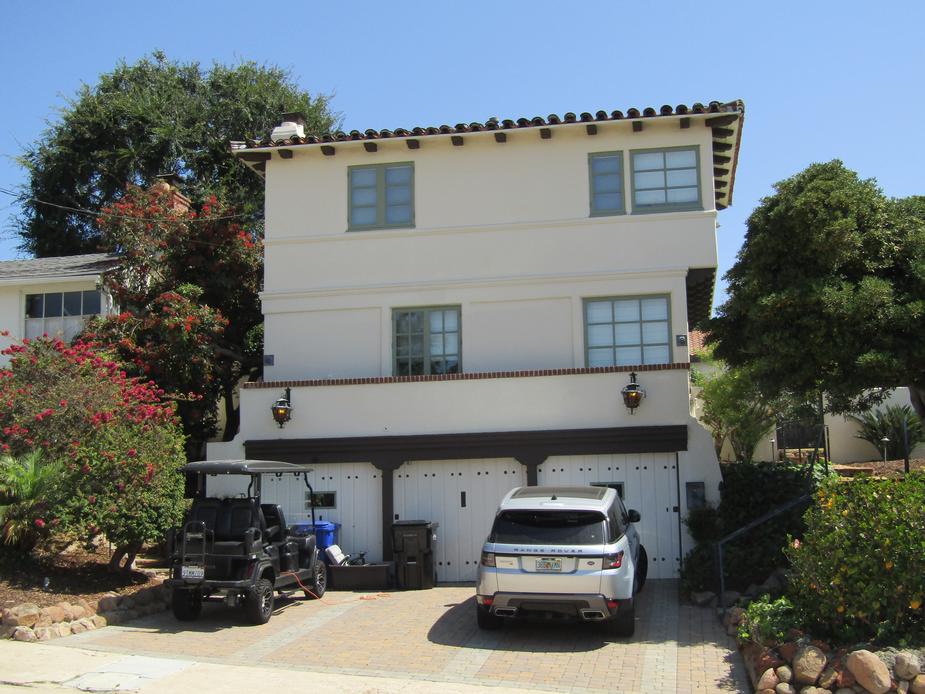 3030 Alcott Street in the Peninsula Community is named the Laura and Harold Conklin House, for the couple who built it as their residence in 1937, and is designated under HRB Criterion C for its Spanish Colonial Revival style architecture. It retains integrity and embodies design elements of the style, including a low-pitched hipped roof with single barrel clay tile, wide eaves with exposed rafter tails, sand stucco siding with belt courses, wood-framed multi-light casement and fixed windows, wood-framed multi-light French doors, diamond pane casement windows, stucco grilles, an open second-story porch with wood posts and beams, battered wing walls, decorative corbels, and a stucco chimney. |
At its October 2025 meeting, the HRB declined to recommend Package A of the City’s Preservation and Progress initiative, a bundle of proposed changes that SOHO and other preservationists argue would weaken the preservation ordinance. The members also designated three houses.
Prior to the board's consideration of the agendized Preservation and Progress item, Kelley Stanco, the Deputy City Planning Director for Climate, Heritage Preservation, and Public Spaces, told the panel that Package A is expected to advance by stages to the City Council on these dates:
- November 6, 2025: Planning Commission (Recommendation to the Council)
- December 11, 2025: Land Use & Housing Committee (Recommendation)
- January 2026: City Council (adoption)
The board's discussion of whether to recommend Package A to other city decisionmakers was complex and detailed.
Read "Preservation Victory at the HRB," SOHO's report online. You can also watch the meeting on YouTube.
Board members, who are appointed for their preservation expertise and knowledge, questioned and ultimately voted down Package A. Here are the key issues they raised:
- The majority wanted more information about the City's lack of environmental review to assess the cumulative impact of Package A, and the forthcoming Package B, on historic resources. Preservationists testified that CEQA requires an EIR.
- Through proposed changes to the designations appeal process, Package A would transfer some of HRB's authority to determine what is historic to the City Council, a move that SOHO and others say would introduce politics and inconsistency to evaluations via de novo evidence. "No to de novo," said member Carla Farley.
- Weakening the volunteer HRB would by extension reduce the role citizens and communities play in preservation decisions. The same is true, members said, if the property owner is the only party who can appeal a designation decision, as Package A specifies. "We're a citizens review board. And I think we're being asked to diminish the power of citizens vis a vis the city, both regarding the board itself and the ability of citizens to challenge governmental rules imposed on them. … Altering the appeal process to privilege land owners over other citizens … has a long and rather sordid history in America. … The rights of citizens should be universal, equal, and without differentiation," said member Dr. Michael Provence.
- Unlike almost all other City boards and commissions, the 11-member HRB is required to reach a supermajority vote (six votes) to designate a resource. This doesn't change if members are absent, and historic resources have been lost as a result. Most board members said they want to address the supermajority discrepancy in Package B in 2026.
After Package A failed to pass, Stanco said staff would inform the Planning Commission of the HRB's no-vote and provide the meeting minutes and video to the commissioners before its November 6, 2025, hearing of the matter.
Finally, during the meeting, Ms. Stanco noted that it generally takes a year for a designation nomination to reach the HRB for a hearing.
Here are the three houses the board added to the city’s historic register:
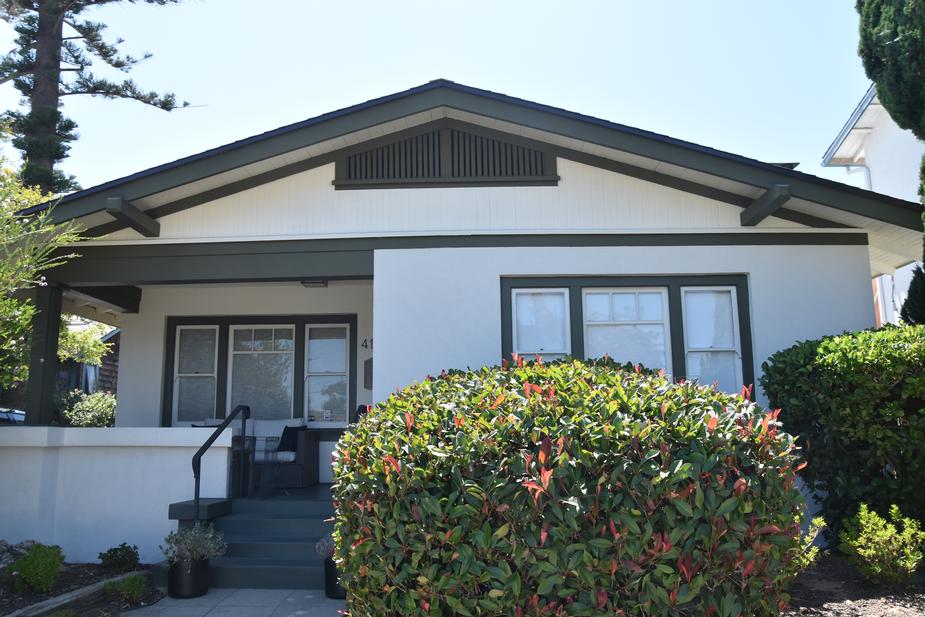 4128 Ibis Street in Mission Hills is a one-story Craftsman style house built in 1920 as the John Samuel Graves Spec House. It is constructed of standard wood frame and hollow clay tile, which was more often used in commercial construction. Previous owners compromised its integrity by replacing original wood-framed doors and windows with vinyl ones (but not on the front facade) and adding a metal railing. The current owners, seeking historic designation, corrected another alteration after receiving approval from the City's Heritage Preservation staff: They removed modern horizontal wood cladding on the front and porch balustrade, uncovering the original stucco. They restored the 1920 stucco finish in 2025. The owners were surprised when staff recently recommended that the HRB not designate the Graves House. The board's discussion focused on how much of the house is intact from 1920, especially on the public-facing front; whether a so-called modest bungalow merits designation, and the communication between staff and the owners. The board ultimately designated it for its Craftsman style architecture (HRB Criterion C) because the remaining non-historic changes are reversible and they aim to designate a range of buildings, not just high-style examples. |
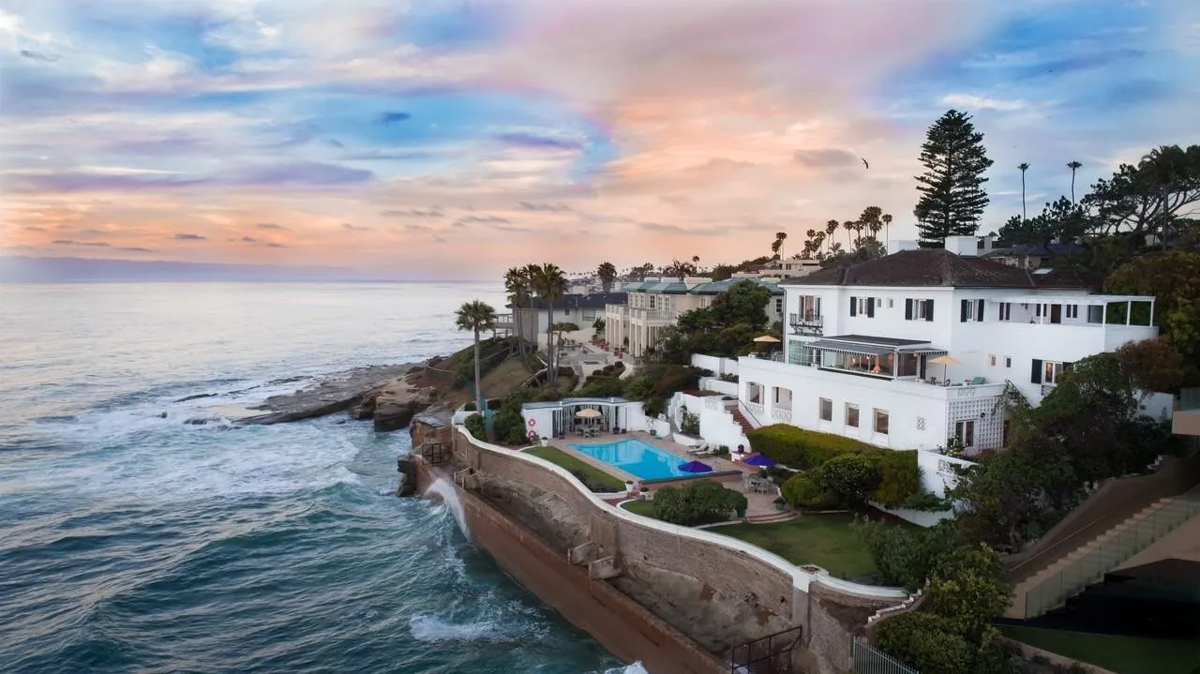 6210 Camino de la Costa in La Jolla is the Fred and Margaret Vesper House, a two-story Colonial Revival style home. It retains integrity from its 1940 construction and embodies character-defining features of the style, so is designated under HRB Criterion C (for architecture). Its Colonial Revival hallmarks include a multi-level low-pitched hipped roof with wood shingles and no eave overhang; white-painted brick cladding with decorative quoining and dentil detailing; a courtyard on the front facade; single- and multi-light double-hung, fixed, and casement wood-framed windows; a recessed archway elaborated by decorative scoring and an arched surround with a keystone centerpiece; wood front-entry doors; wood shutters; decorative grilles; wrought iron ornamentation, pediments, wood-framed French doors, and two brick chimneys. The designation includes the detached cabana on the west elevation. It excludes the enclosures of both the 1948 south upper deck and the 1950 north upper deck, as well as the 1953 sunroom addition on the west elevation. Photo courtesy Realtor.com |
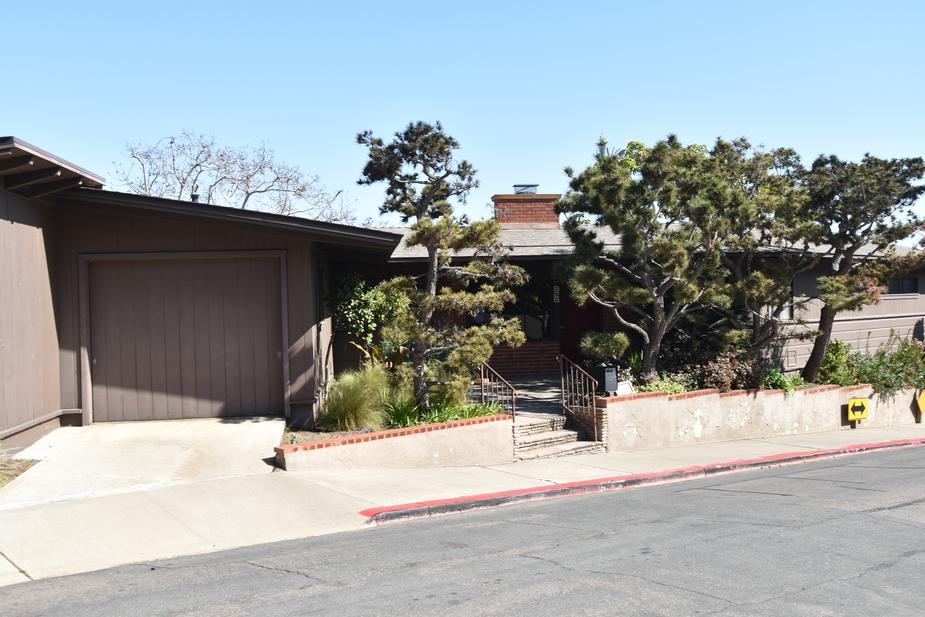 825 Harbor View Place in La Playa is the Lyle and Emily Carringer/Loch Crane House, an Organic Geometric style residence built in 1951. For its architecture and its architect, the house merits designation under HRB Criteria C and D, respectively. Organic Geometric elements include its irregular form; recessed entry; cedar siding with brick accents; low-pitched roof with varying forms and wide overhanging eaves; exposed rafters; large porch; windows in a variety of styles, including fixed and casement metal sash, clerestory, jalousie, and picture windows; and attached garages. This designation elevates Loch Crane, the nominated master architect, to the City's roster of master architects. He was a prominent and accomplished architect and a leader in San Diego’s Modernist movement. The Carringer House is a notable early example of Crane's custom residential work in the Organic Geometric style, which he continued to explore in later designs. Characteristic of Crane's architecture are dominant geometric forms, site-specific design, and a strong indoor connection with exterior views. The designation excludes the 2017 porch enclosure. |
City of Coronado Designations
The Historic Resource Commission designated one house in September 2025:
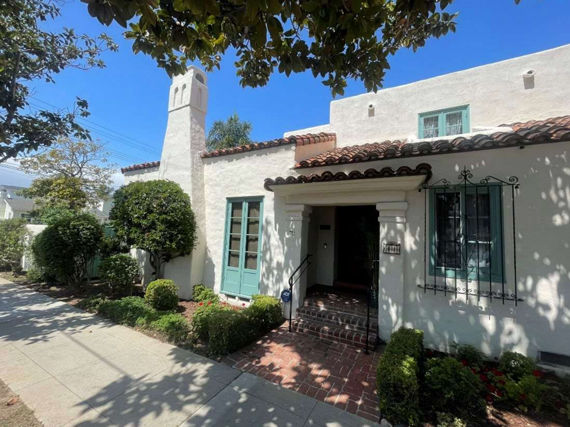 548 Pomona Avenue is a two-story Spanish Colonial Revival house built in 1930, and designated under Coronado's Criteria C, for architecture, and D, for it’s accomplished architect. Character-defining architectural features include simple massing; asymmetrical facades; recessed main entryway; arched entryways on non-primary facades; multi-level roof design with flat sections and low-pitched gables; red barrel clay tiles; elaborate chimney top; white stucco exterior; second-story loggia; a variety of wood-sash, multi-light casement and single-hung windows; and ornamental metal hand railings and window grilles. Its prominent corner location showcases architect Richard M. Bates's command of the style. A graduate of the University of Pennsylvania School of Architecture, he later studied at the École des Beaux-Arts in Paris. In Coronado, Bates is associated with sixteen single-family dwellings, notably several Spanish Colonial Revival residences located on Pomona Avenue, Fifth Street, and Sixth Street. He adapted some of these homes to reflect the community’s aesthetics of scale and massing. Bates's nationally recognized work includes California commissions for the Westlake Theatre in Los Angeles and Azusa City Hall. Courtesy Chronicle Heritage |
All photos are from the California Historical Resources Inventory Database (CHRID), except where noted otherwise. The above designations were reviewed and approved by the City of San Diego Historical Resources Board (HRB), the County of San Diego Historic Site Board (HSB), or the Coronado Historic Resources Commission.
BACK to table of contents
|
2026
2025
2024
2023
2022
2021
2020
2019
2018
2017
2016
2015
|