|
San Diego Historical Resources: Designations and Board Reports
By Ann Jarmusch
September/October 2025
At the July 2025 meeting of the City of San Diego Historical Resources Board, the members designated one house and a condominium building, and forwarded to the Planning Commission, without discussion, their approval of the historical resources section of the Site Development Permit for the San Diego International Sports Arena (HRB #1525). The permit section includes recommendations, findings, and mitigation measures and findings of the site’s environmental document.
City Planning Department Deputy Director Kelley Stanco reported on the City’s Preservation and Progress initiative. She presented elements of the proposal to the HRB Policy Subcommittee at its July 2025 meeting. This included amendments related to noticing, board composition, the Complete Community initiative, and controversial amendments to the appeal process that would add de novo findings and allow the appeal of board decisions not to designate a property.
Preservation advocates at the Policy Subcommittee meeting, including SOHO Executive Director Bruce Coons, strongly objected to adding de novo review to the appeal process because it would allow designations to become politicized. The City Council could consider the merits of a designation, and an owner could appeal if the board declines to designate a property.
Staff also announced that the City Council on July 15, 2025 overturned the designation of the W.C. and Irene Everett Building, HRB Site #1470, 3093-3095 El Cajon Boulevard, citing factual errors and new information.
Here are the two resources the board added to the city’s historic register:
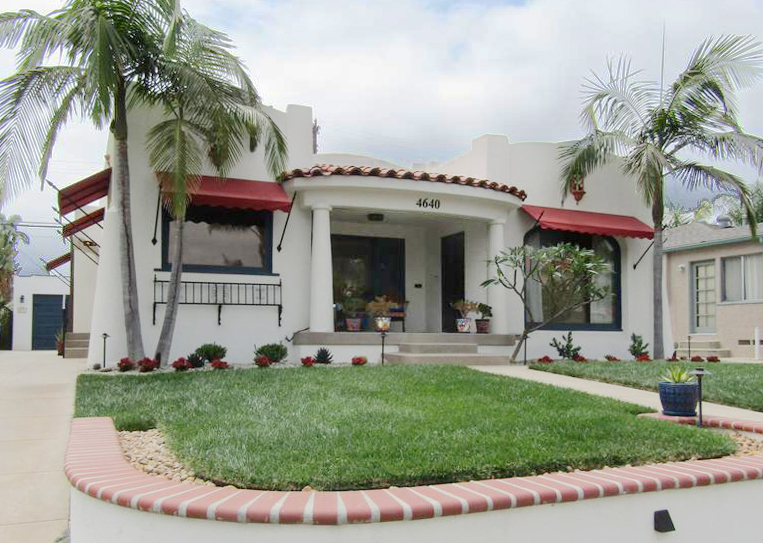
 4640 West Talmadge Drive in Kensington is a 1926 house built in the Mission Revival style. Named the Charles and Geraldine Zurn Spec House, it is designated under HRB Criterion C, for its architecture. The house embodies the style’s distinctive characteristics and retains defining features with integrity. Among these are a flat roof with arched parapets and crenelations, a clay tile visor roof, a clay tile roof covered porch, Tuscan style porch supports, oversized corner bollards, a battered stucco chimney, wood-framed French doors, and several fenestration styles: deeply inset arched focal windows, a tripartite window, and double-hung windows, with walls finished in a light-sand stucco. The designation excludes the detached, modified garage/ADU structure. |
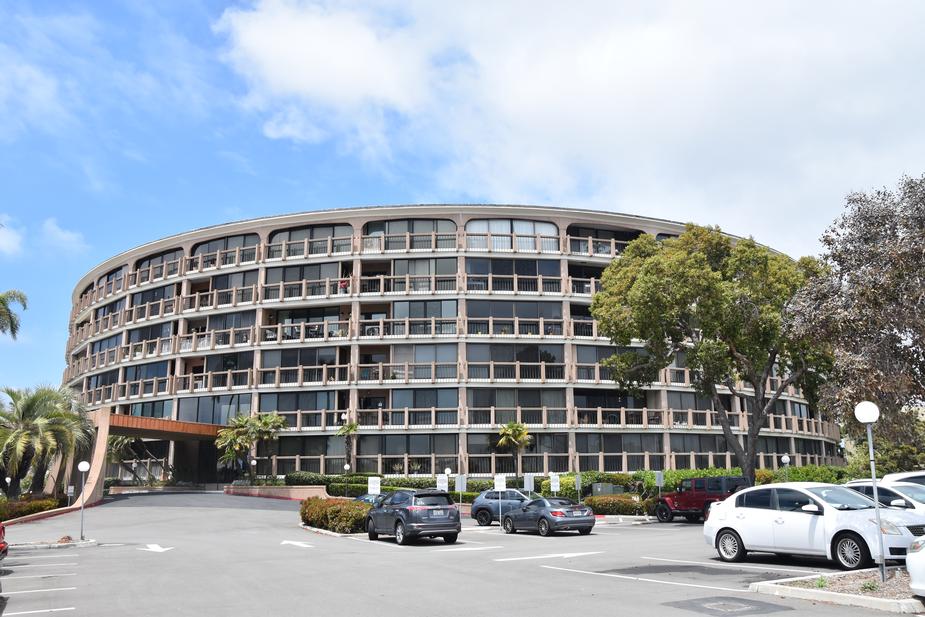 1150 Anchorage Lane in La Playa is a curved, six-story building called Le Rondelet Condominiums. Constructed in 1967, it retains its original Brutalist style with Googie style elements, meriting designation under HRB Criterion C for architecture. Character-defining aspects of its Brutalism include the exposed and expressive concrete structural system, monumental massing, exposed concrete finish, repetitive facade pattern, and intentional avoidance of traditional architectural components or ornament. It also retains Googie style elements, such as its C-shape, expressive flat roof form, large porte cochère, and continuous bands of anodized dark-finished aluminum windows and sliding glass doors. The designation excludes the pool, spa, and cabana. |
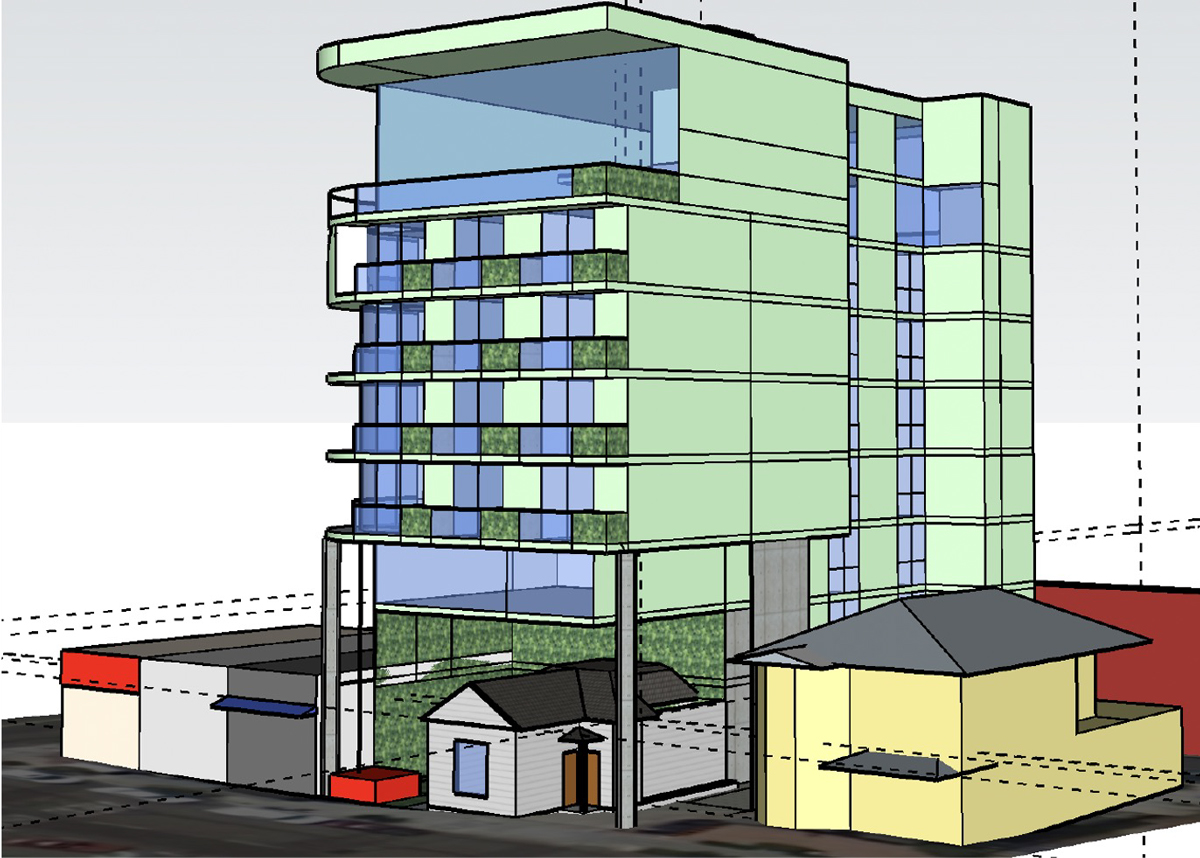
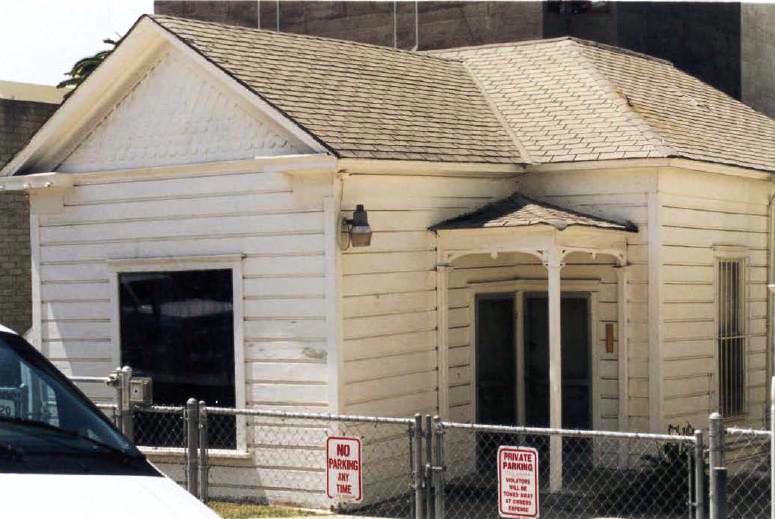
At the HRB’s August meeting, the members designated three houses and sent historical resources recommendations to the Planning Commission for a Site Development Permit for a project at 1620 State Street in Little Italy. The architect-developer wants to preserve and adaptively reuse a historically designated single-story Queen Anne Cottage style house (the Ordway House, c. 1888, HRB #278) that is to be “cocooned,” as chair Kristi Byers creatively put it, by an eight-story mixed-use building. The HRB approved staff’s list of standard mitigation measures, such as requiring HABS (Historic American Buildings Survey) drawings and photographs of the house before it is dismantled, stored, reassembled, and returned to a different spot on the site. The board also required a historic plaque with a QR code, which was the applicant’s idea, to be placed on the house so the public can know its history. It is one of four historic Queen Anne style homes still standing in a row along State Street.
During the board’s discussion, member Michael Provence noted that this house and its three neighbors are significant intact examples of downtown’s oldest period of development. He asked the applicant, Soheil Nakhshab of Nakhshab Development & Design, “Why here?”
In response, Nakhshab, who has completed other contemporary projects that incorporate historic buildings, said he’s a native who loves San Diego, and that inevitably the city will change and grow. His project includes 52 housing units, seven of them affordable, and a public business like a café or coffee bar, will occupy the historic house. He said he’d like to make all of the units affordable someday, as he is providing workforce housing, just as the Ordway House was home to a fisherman and a laborer, among others.
This project did not go before SOHO’s board for consultation or approval.
 |
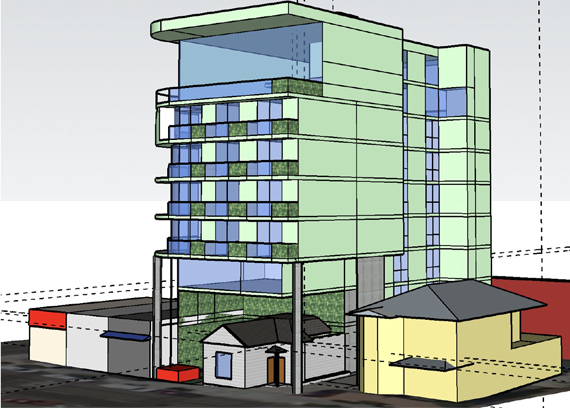 |
Left The Ordway House (c. 1888) in Little Italy is one of the few remaining buildings from downtown San Diego’s oldest development and today stands with three others of its era on State Street. Courtesy the California Historical Resources Inventory Database (CHRID) Right The historic Ordway House, if the San Diego Planning Commission approves, is destined for an unorthodox new life on State Street. A new eight-story, mixed-use project called Celine plans to use the cottage and its rooftop for commercial purposes, surrounded by 52 high-rise rental units. Courtesy economic feasibility report by ZLD Consulting |
Byers announced that there’s a new master architect, Walter Douglas, on San Diego’s historical resources list, and credited architectural historian Kiley Wallace of Landmark Historic Preservation for doing the necessary research. Douglas designed a 1916 Prairie style home at 3140 2nd Avenue, which the board designated historic at the meeting.
Several new members recently joined the HRB, so the board ratified appointments for all to serve on the Policy, Design Assistance, and Archeological and Tribal Cultural Resources Subcommittees.
These three houses are now listed on the City of San Diego historic register:
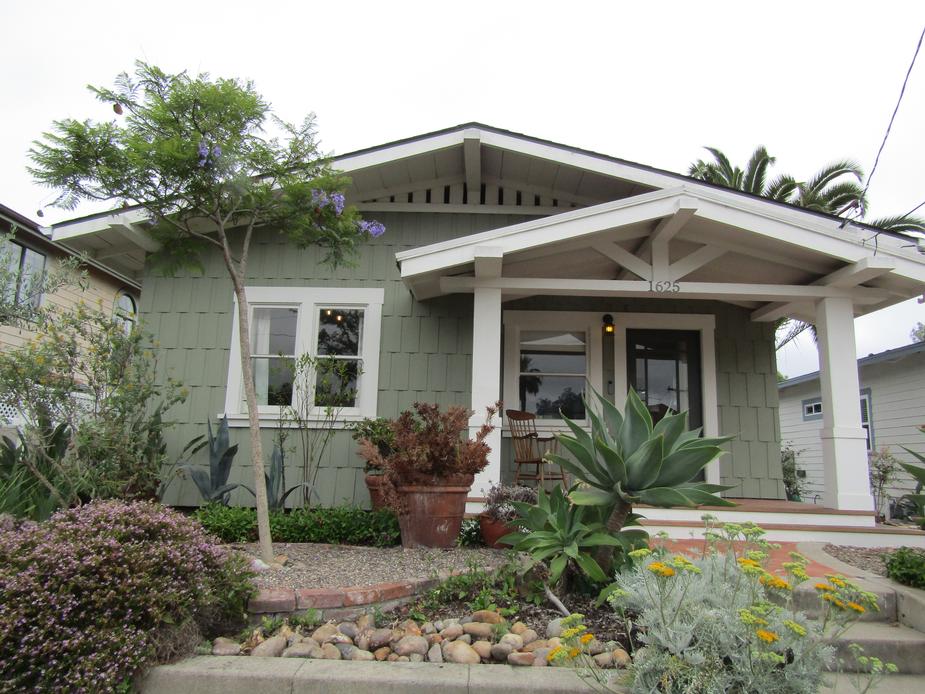 1625 Robinson Avenue in Hillcrest is the Elmo and Angeline Crabtree Spec House #2, built in the Craftsman style in 1913. Because it retains original Craftsman design elements and integrity, the board designated the house on HRB Criterion C, for architecture. Specifically, it features a low-pitched roof, wide unenclosed eaves, exposed rafter tails, extended beams, double front-facing gables, a partial-width front porch, decorative cross-braced beams, square wood columns and piers, wood shingle siding, one-over-one single-hung wood-framed windows with extended sills, and a stucco chimney. The designation excludes the 1957 rear bedroom addition and the east elevation laundry room additions. |
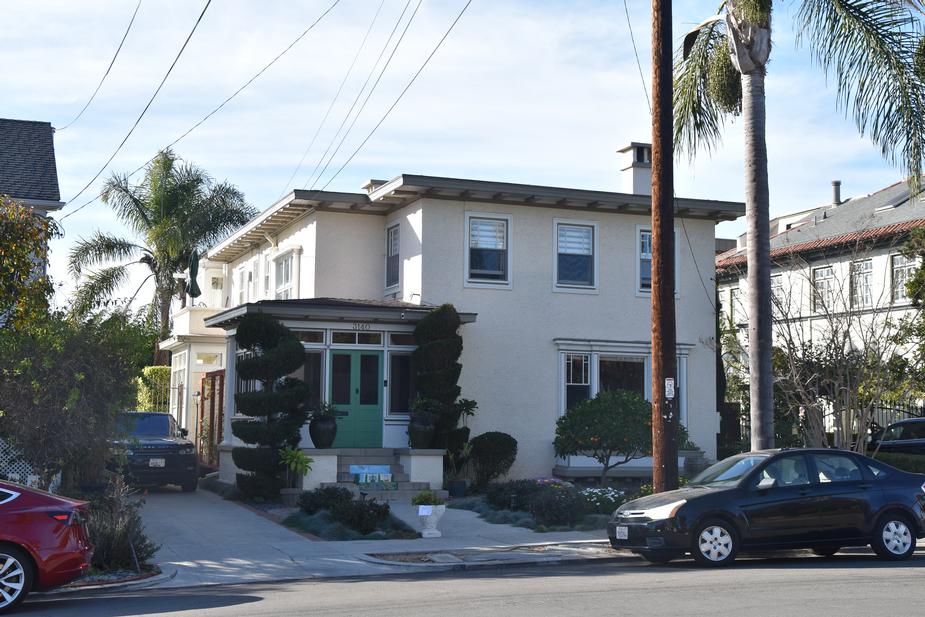 3140 2nd Avenue in Uptown is a 1916 Prairie style home called the Ellen Thompson/Walter Douglas House. It meets HRB Criteria C, for architecture, and D, for a Master Architect. The designation includes several interior elements and the detached garage. It embodies and retains character-defining features of the Prairie style with Italianate influences. Other stylistic elements from its 1916 construction: an asymmetrical primary facade, a flat roof with wide overhanging eaves, brackets, heavy sand stucco cladding, a projecting one-story enclosed front entry with columns, a focal window with partial-width columns and an integrated flower box, and original wood-framed fenestration in a variety of styles, including several fixed stained-glass windows. The original interior stairs and stair railing, stained-glass window at the base of the stair, living room built-in cabinets and dining room buffet are included in the designation and are consistent with the home’s Prairie style and contribute to its significance. The house was also designated under HRB Criterion D as being a notable work of Master Architect Walter Douglas, a prominent and accomplished architect who designed many quality structures in San Diego and the Colorado Springs area, some of which are listed on the Colorado State and National Registers of Historic Places. The house is a significant example of Douglas’ custom residential work in the Prairie style. In designating this house, the board simultaneously approved Douglas’s Master Architect status. |
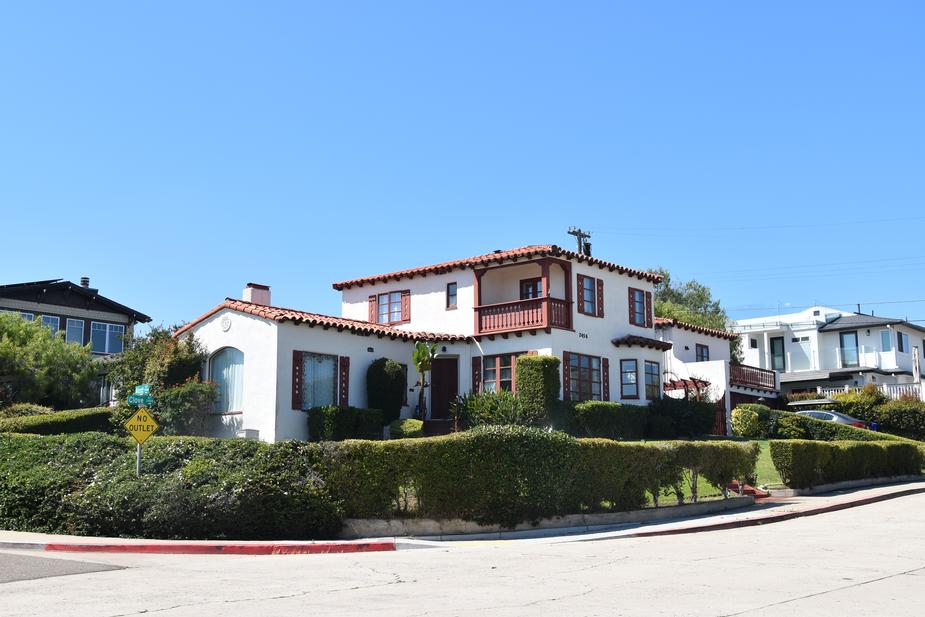 2456 Clove Street in the Loma Portal community is the Samuel Campbell Spec House #1, built in the Spanish Colonial Revival style in 1936. Designated under HRB Criterion C, it retains integrity and exemplifies the Spanish Colonial style with its asymmetrical façade; low-pitched, combined hipped-and-gabled roof with little eave overhang; red tile roof covering; stucco wall surfaces; a roofed balcony with wood railings; decorative wood shutters; and decorative tile vents. |
City of Coronado Designations
The Historic Resource Commission approved its first designation of 2025 in August:
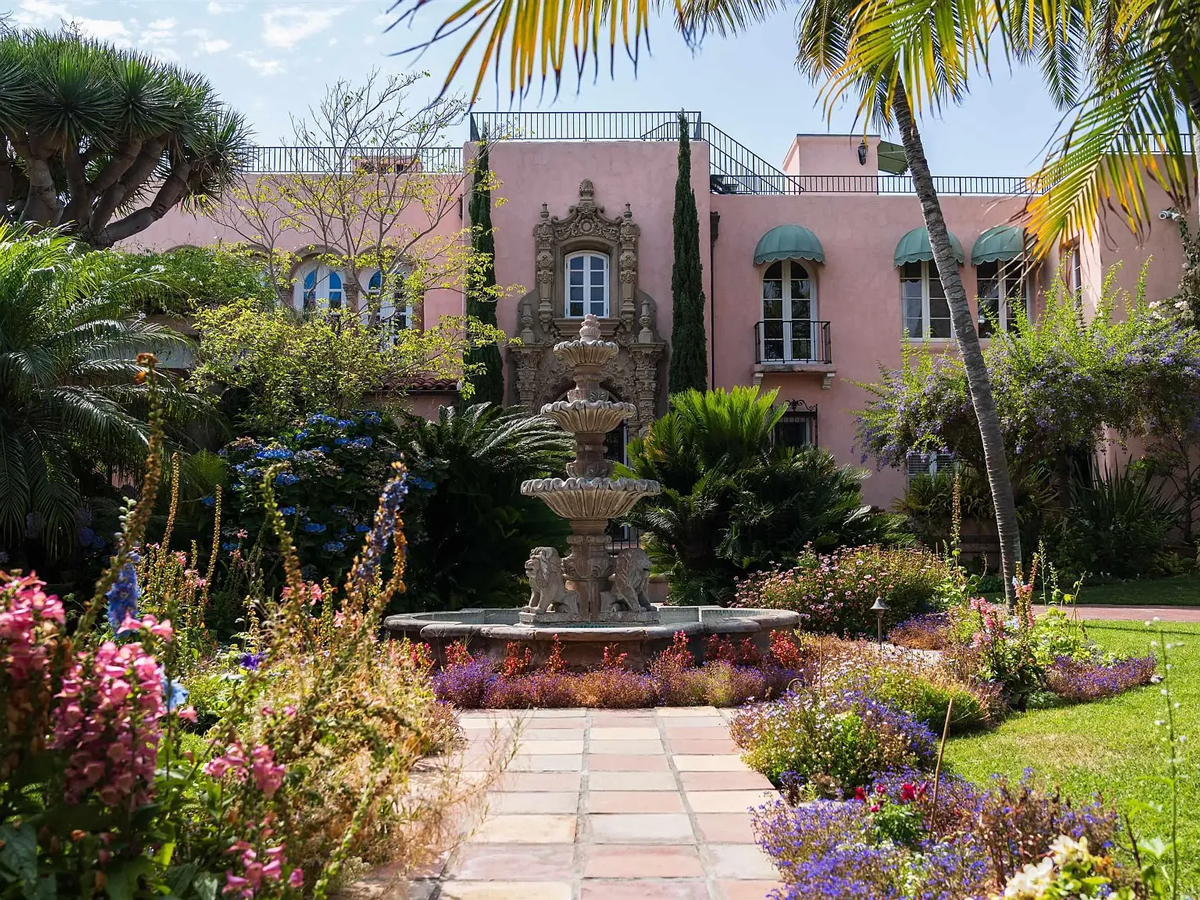
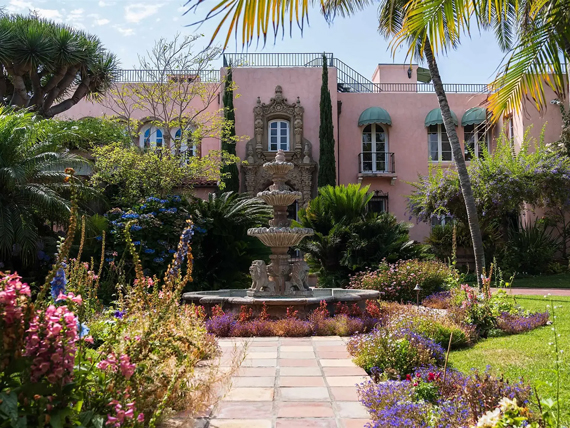 1124 F Avenue is a Mediterranean Revival style house with a detached car portico built in 1919. It merits historic designation under two criteria: (A) as a special element of Coronado military history and (B) for architecture that retains integrity and embodies key features of the style. Former owner Madeleine Sharp donated the house to the Red Cross Coronado branch for its headquarters during World War II. The house retains these elements of the Mediterranean Revival style: simple and imposing massing, two-story height, hipped roof with red clay tiles, boxed eaves with large brackets along the cornice lines, classical columns, articulated window surround, divided-light windows with no trim, and Churrigueresque style sculptural elements around the main entry door. It is one of the only architect-designed, Mediterranean Revival Style estates to be built along or near Ocean Boulevard. Because of that proximity and high level of style, the house is recognized as one of Coronado's earlier, high-profile residences. Pasadena-based architect Elmer Grey designed it, his only project in Coronado. Courtesy Zillow |
All photos are from the California Historical Resources Inventory Database (CHRID), except where noted otherwise. The above designations were reviewed and approved by the City of San Diego Historical Resources Board (HRB), the County of San Diego Historic Site Board (HSB), or the Coronado Historic Resources Commission.
BACK to table of contents
|
2026
2025
2024
2023
2022
2021
2020
2019
2018
2017
2016
2015
|