|
Restoring a Legacy: Behind the Scenes at the Marston House
By Alana Coons and Robin Lakin
September/October 2025
We are delighted to share more wonderful news about the Marston House Museum! With the exterior now beautifully restored, we are focusing on transformative interior work.
In 2009, SOHO began operating the Marston House for the City of San Diego, after the previous operator, the San Diego History Center, decided it no longer aligned with their goals. SDHC removed the valuable paintings and rare furniture they had in the museum. Following their departure, SOHO inherited a wide-ranging array of miscellaneous furnishings throughout the house.
At the time, SOHO agreed to keep these remaining items in place as there were a few well-furnished rooms. The entire east wing was empty and closed to the public, having been used for offices and storage rooms. You can see this in the photo gallery of SOHO's day one.
In 2021, after spending 14 years safeguarding these items, we initiated a thorough review with SDHC’s curatorial staff to update this inventory. This careful, multi-year process not only ensured accuracy of their inventory but also gave us the chance to reassess managing another organization’s holdings. It had certainly become impractical, consuming valuable staff time and limiting our ability to fully re-activate the house as restrictions on the borrowed furnishings hindered our efforts to create an authentic, immersive visitor experience. While this was a long, tedious process, we did not let it keep us from moving forward in our vision where we could. During this time, we created a permanent exhibit on the second floor with original family and Marston Store artifacts and graphic storyboards. The exhibit has drawn great interest and enjoyed notable success, with local visitors saying often remarking that they had never known so much about George Marston and his family.
Finally, after three years of collaboration with SDHC staff, the transition is complete. With all SDHC pieces removed, we now have the exciting opportunity to reimagine the rest of the house with expert-informed interpretation, new exhibits, and expanded public engagement. SOHO is implementing our carefully considered plan to furnish the Marston home to reflect how the family actually lived within its fine redwood and plaster walls for more than eight decades. With family memoirs and photographs as primary references, our goal is to create a welcoming, educational, and immersive experience for all, and to fully introduce the public to the family. For the first time since becoming a museum, the entire Marston family is fully represented, along with a more in-depth understanding of George Marston himself.
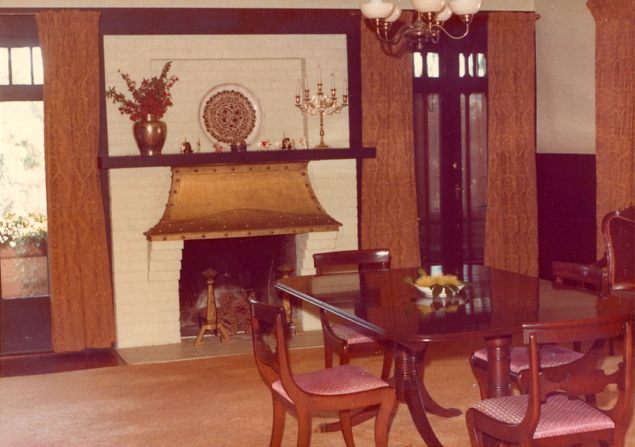
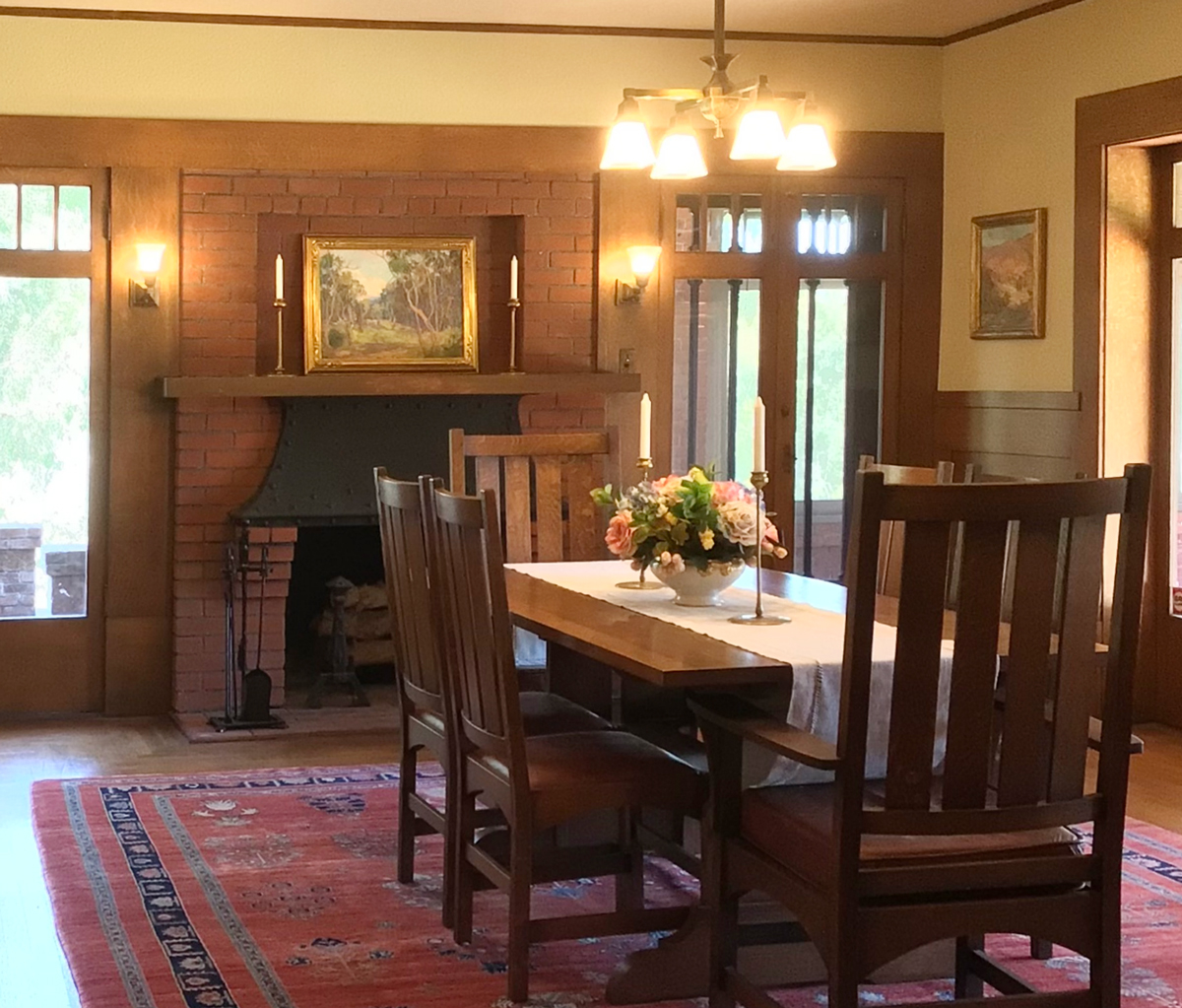
To explain this more, when the home first became a museum, we were at the height of the Arts & Crafts Revival movement. Important restoration was done at this time, specifically the removal of black paint from the entire dining room woodwork and fireplace, which had been applied during the 1950s trend for Asian décor. While the home's room curation focused largely on enhancing a few Craftsman furnishings and highlighting its architecture—with a strong emphasis on this important era in California—it presented a beautiful but somewhat misleading history of the house.
SOHO’s approach to furnishing historic house museums is to tailor the interiors to each home’s unique and true story—its architectural character, condition, and rarity—by promoting historic homes as actual, lived-in residences. Whether a ranch house, a Victorian townhouse, bungalow, or a grand estate, we hope to encourage others to embrace living in historic homes.
By celebrating historic homes as the functional, livable spaces that they are, we raise public awareness about and vividly demonstrate their enduring value. Through active use and appreciation of historic homes, we also help cement their significance in our communities and collective identity, connecting our cultural past with the present, and, potentially, the future. SOHO encourages stewardship of these gems through contemporary, everyday living. The Marston House, an architecturally and historically important family residence of multiple generations for over eight decades is in capable hands with an expert advisory team.
Over the past few years, in anticipation of this change, we’ve gathered period-appropriate furniture through generous donations and long-term loans from SOHO members, the Marston family, and board members. Our staff have handsomely augmented the interpretive vison, and we’ve made remarkable progress.
Several original furniture pieces have been returned to the house.
Armchairs still covered in the original mohair plush velvet fabric purchased between 1910 and 1920, a pair of early Georgian Revival-style wing chairs (reupholstered several times during the 20th century), and two round oak pedestal tables dating to 1905-10 are all back in the house and now reside in what we believe are the original rooms and spaces they once occupied.
Our interiors research extends to wallpaper and drapery fabric. Extant samples of these in the SDHC archives indicate the Marstons preferred botanical and floral patterns in their Seventh Avenue home decor. Their bedroom suite once boasted matching floral chintz curtains throughout. Early 20th-century home and garden magazine photos verify that Craftsman style furniture was often paired with floral drapes and upholstered pillows. This research is ongoing with the goal to reproduce and replace once we have more certainty.
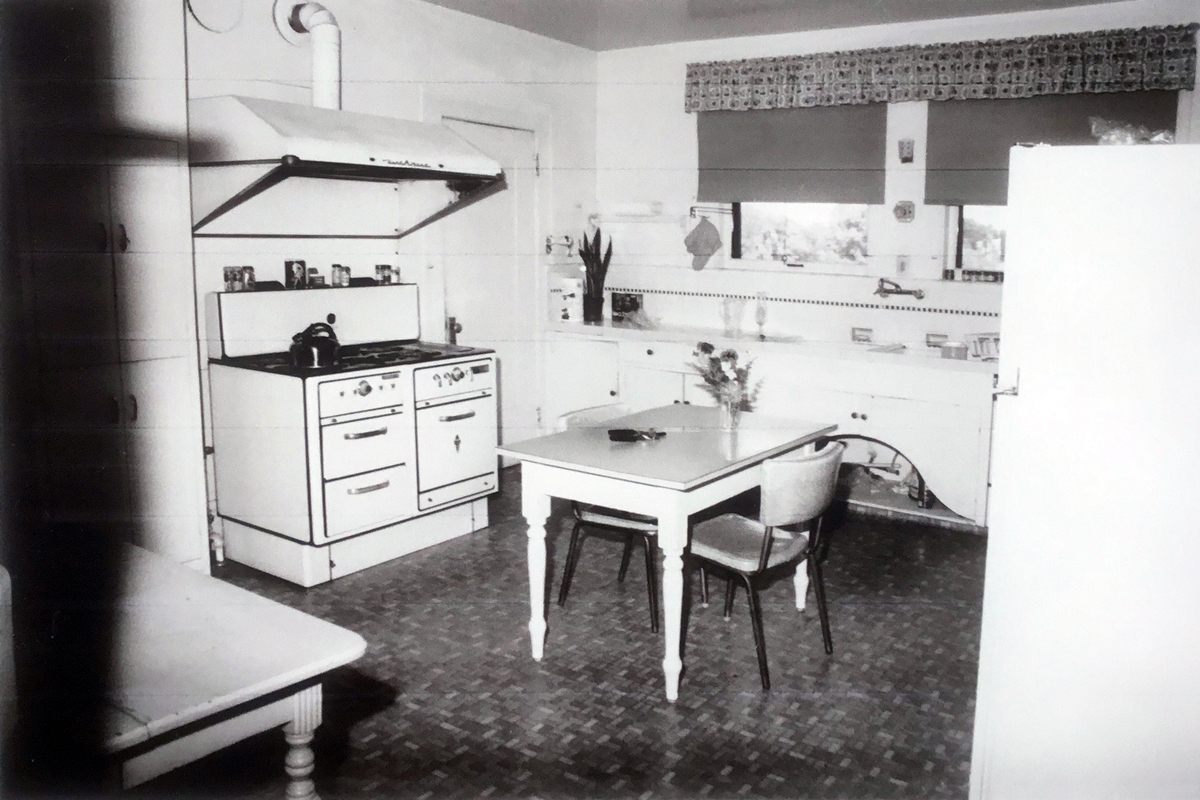
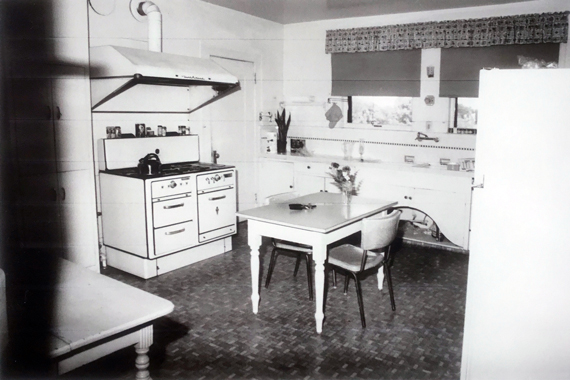
A tenet of historic homes and buildings is that they tend to change over time, they are not static exhibits. Particularly interiors, like any lived-in home, the Marstons updated theirs over time, particularly the kitchen, where Mary Marston introduced improvements for efficiency. An SDHC photo of the home, from the time of its donation to the city in the 1970s, captures these conservative, well thought-out changes.
Using available photographs, written documentation, family oral history, and historic period trends, supplemented with a healthy dose of common sense. All necessities when interpreting a house museum. We can now report that SOHO is well on the way to exhibiting a more accurate reflection of the Marston family’s decades-long residency.
Please note our wish list below for the few remaining items we still require to bring the home fully to life.
We invite everyone to visit and witness these exciting changes in person. Admission is always free SOHO member. Watch future issues of Our Heritage eNews for progress reports about these transformative times at the Marston House Museum. We welcome your participation and support!
Before and after photos
The chronology of our efforts since assuming stewardship includes documenting our first day inside with room-by-room photos, then cleaning, repairing and restoring, and doing a full condition assessment.
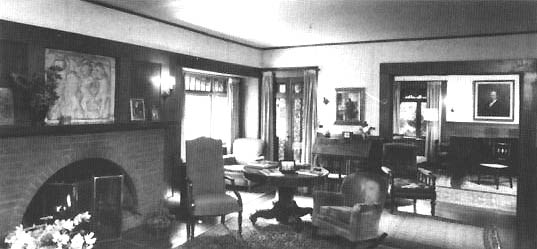
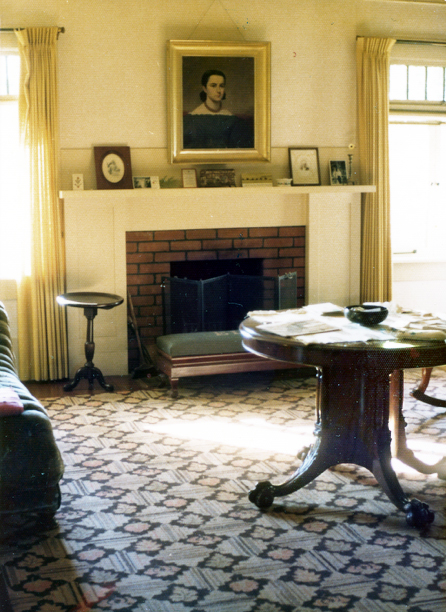
For a record of this evolving history, the captions and photos here illustrate four distinct periods. The first set, from the 1970s when the house was given to the city, is followed by the most recent period, with current-day photos showing how we have restored the rooms to their appearance during the Marstons’ time and our interpretation comes more fully into view. The second and third periods are presented in Marston House Before and After Photos, which juxtapose SOHO’s first day inside in 2010 with later images of our improvements, showing how we integrated furnishings left behind with those we introduced to create a coherent whole.
 |
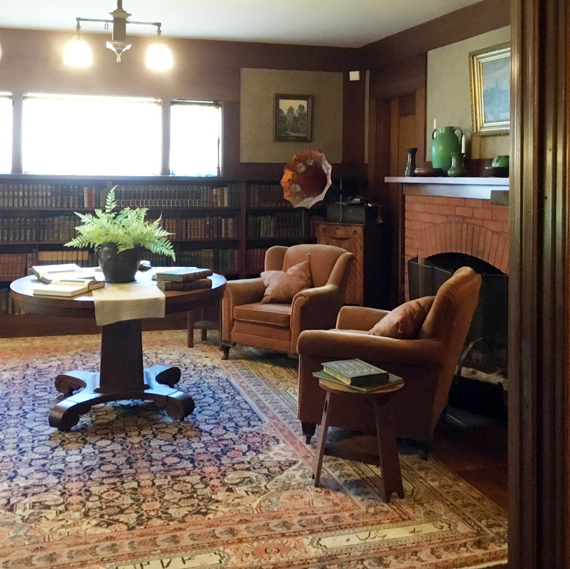 |
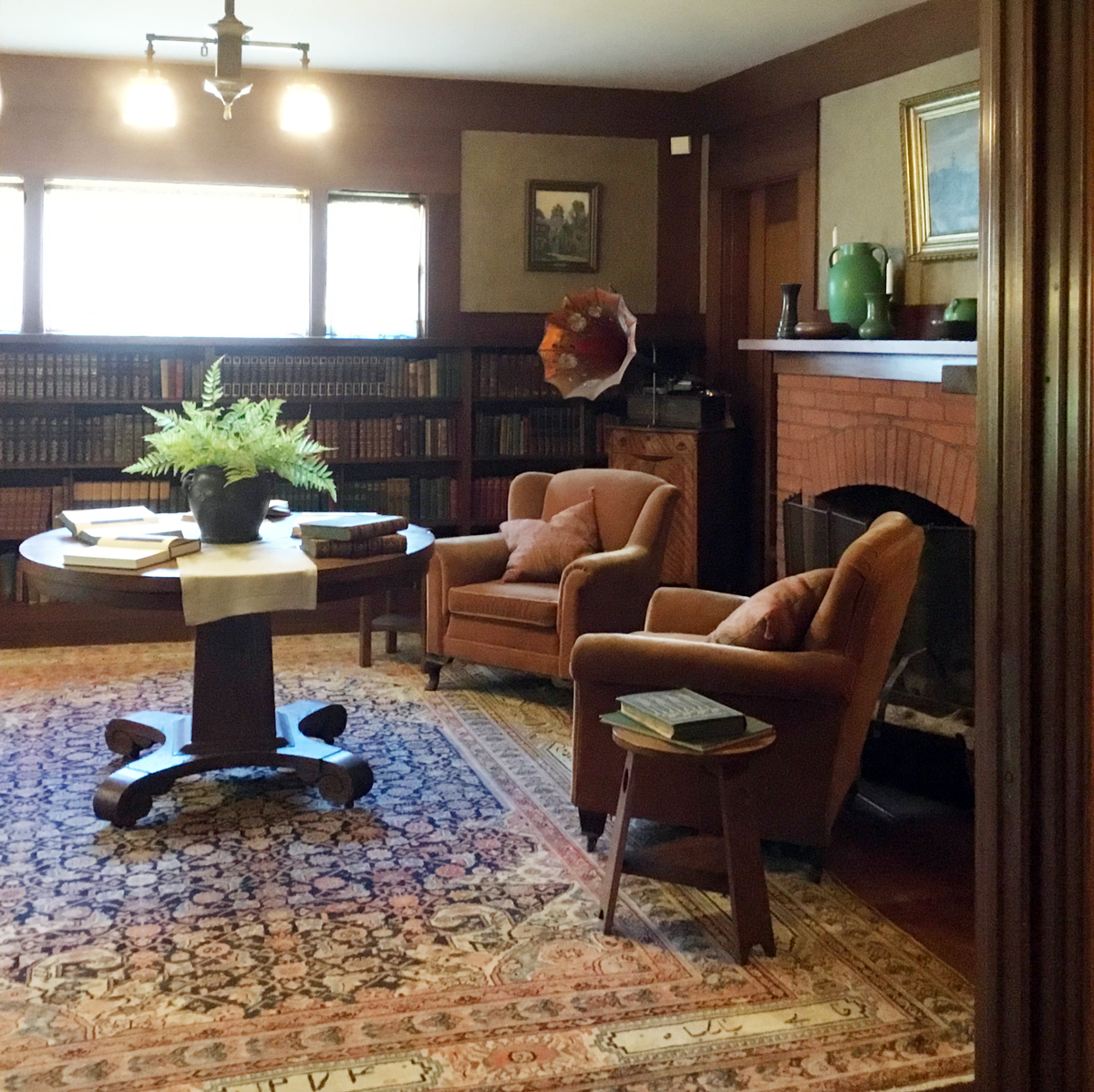
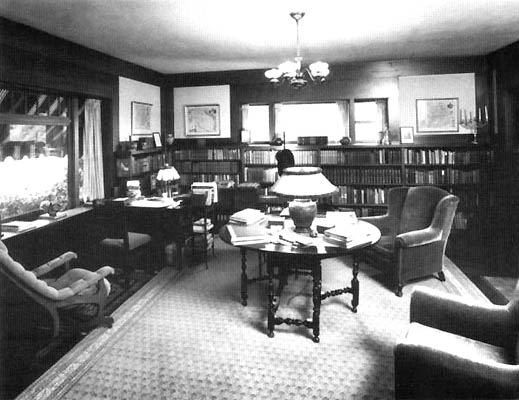
Mary Marston, the eldest daughter and the last person to live in the house, largely kept the library as her father left it at his passing in 1946. SOHO has furnished the room to closely resemble its appearance in earlier photographs. The mohair plush velvet armchairs are seen flanking the fireplace, and that is where you’ll find them today. The photos also depict a round, early American gateleg table, likely inherited by a family member, in the center of the room. |
 |
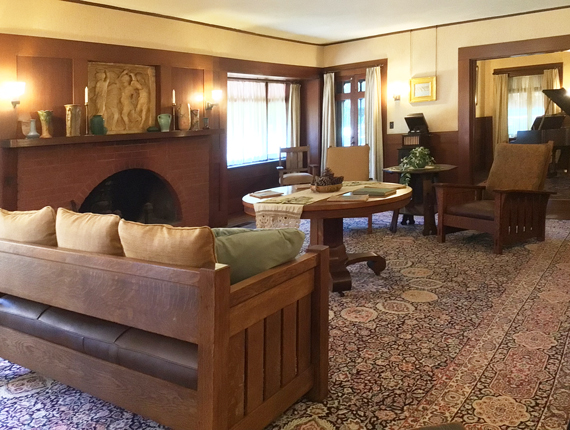 |
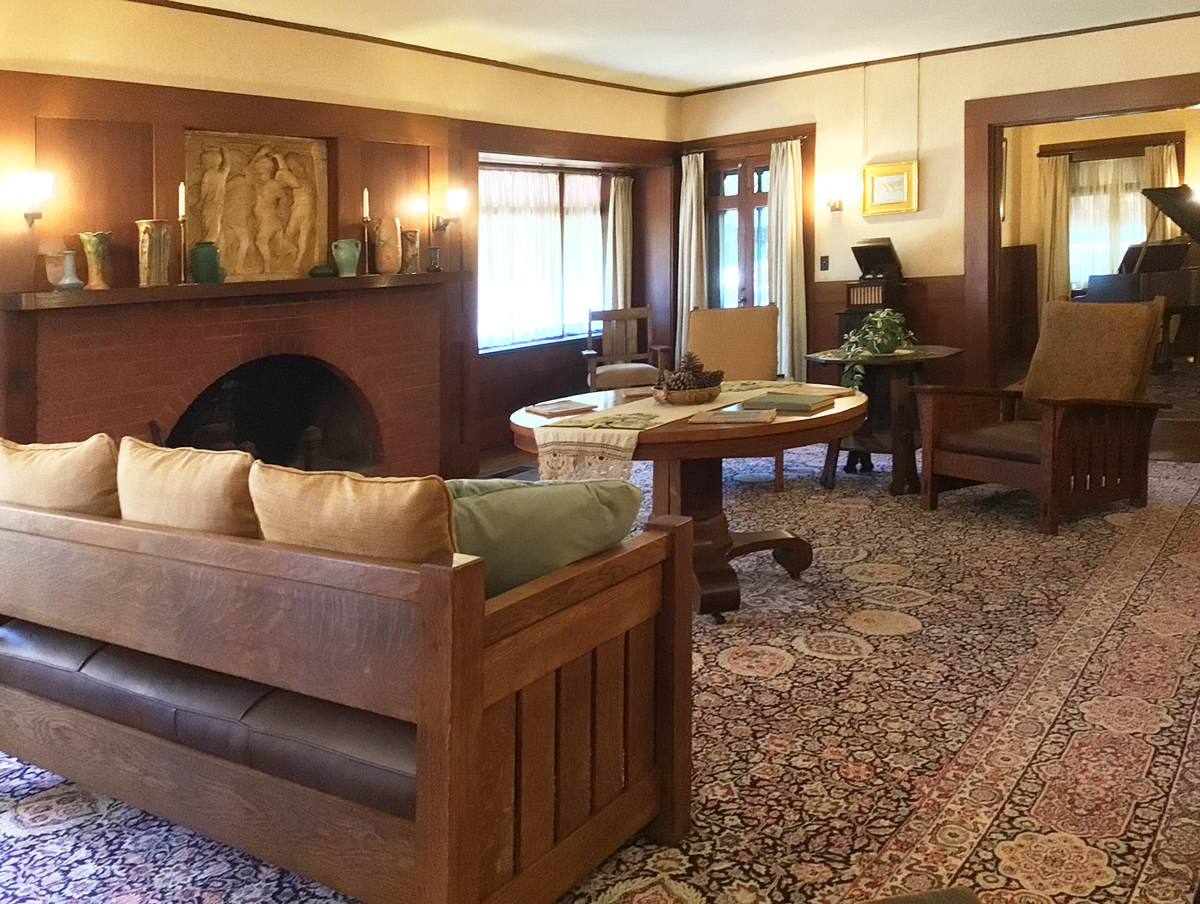
Currently, a suite of Hile reproduction Stickley oak dining furniture, donated by the Friends of the Marston House many years ago, fills the dining room, so the second, more substantial oak pedestal dining table now plays a central role in the living room. Due to its age, it is very likely the table that George Marston and his cohort gathered around to plan Balboa Park and the 1915 Panama-California Exposition. It is also probably where Teddy Roosevelt and a host of other VIPs once dined with the Marstons. |
 |
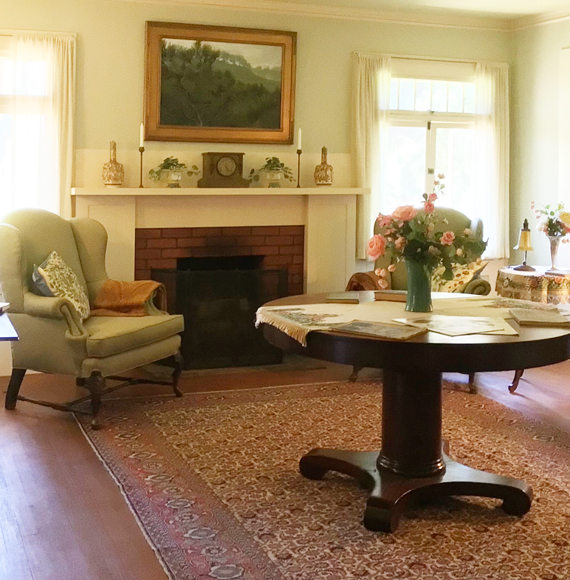 |
Today, the Georgian style wing chairs again stand companionably on either side of George and Anna Lee Marston’s sitting room fireplace. Mary Marston revealed in George White Marston, A Family Chronicle, “In their later years father’s favorite chair was at the right of the fireplace, mother’s was on the left. When we came home in the late afternoons, mother was nearly always sitting there with her knitting or tatting or a book. She made a lovely picture with the light on her silvery hair, which waved so beautifully back from her forehead, and she welcomed us with a lovely smile.” |
 |
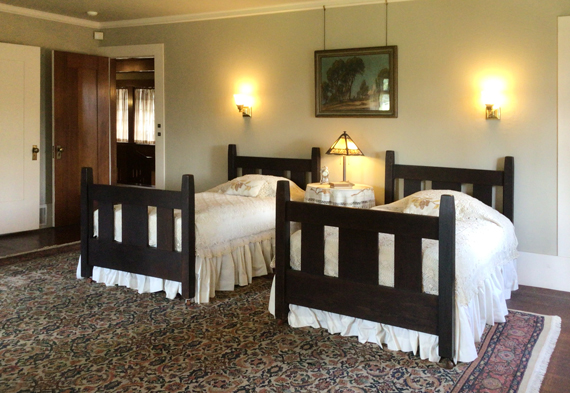 |
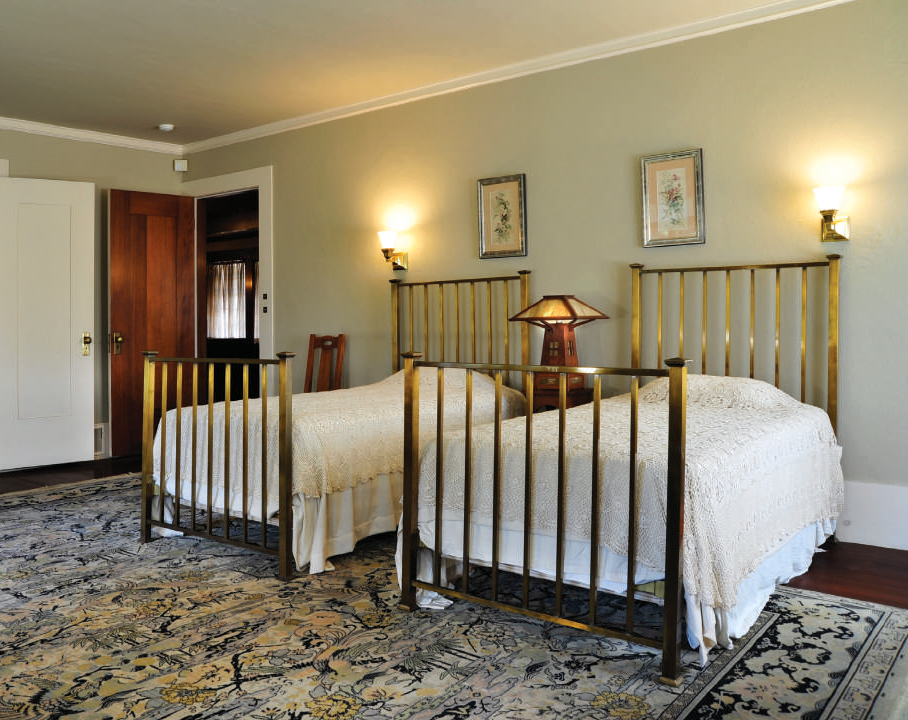
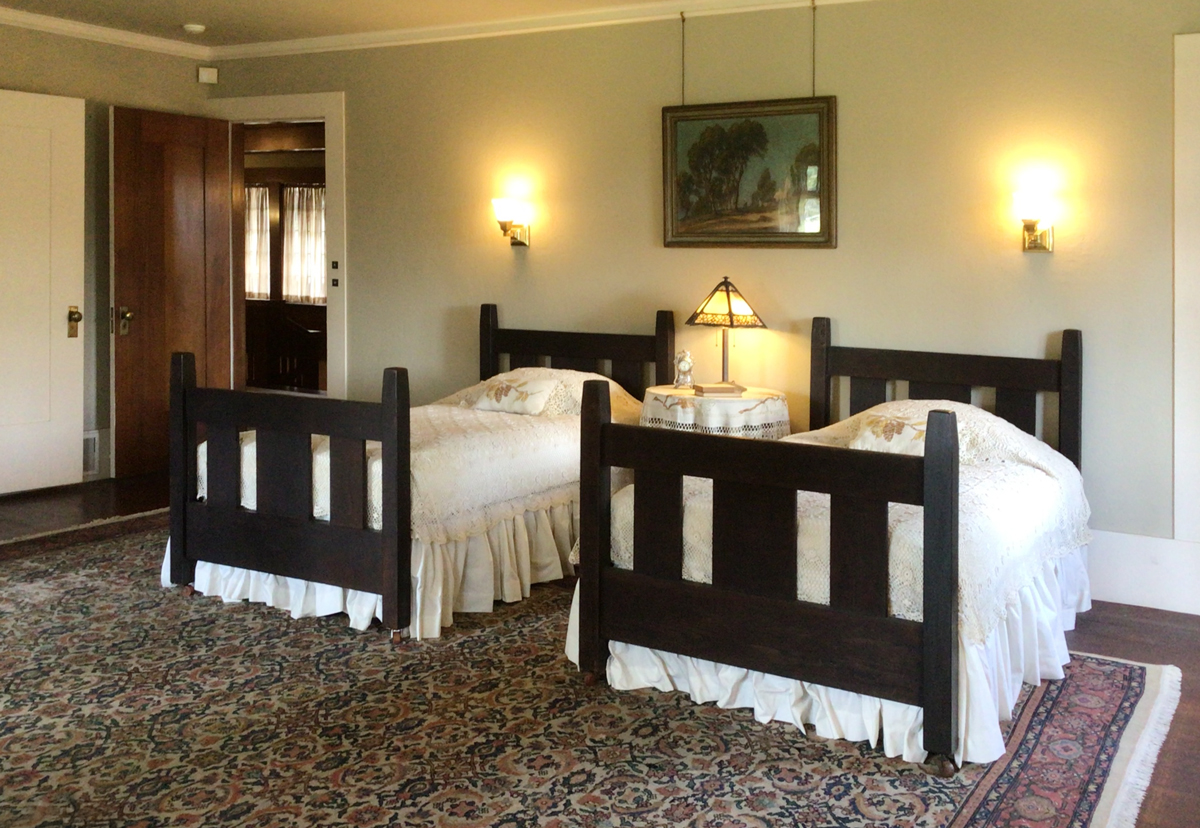
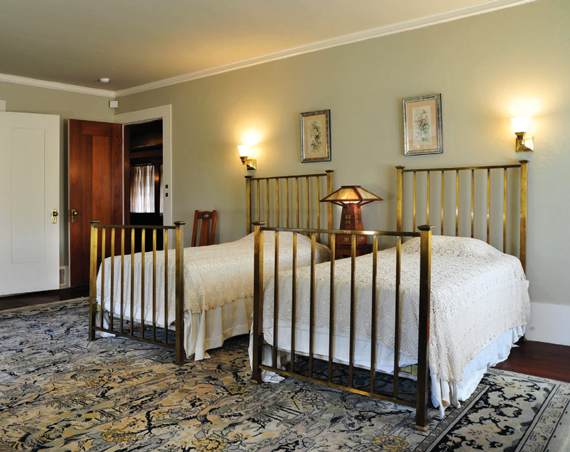
The donation of a twin set of early L & JG Stickley, from their Onondaga Shops pencil post beds, helped round out SOHO’s new interpretation for the primary bedroom suite. The placement of the original wall sconces indicates that twin beds occupied this same position in 1905. While George and Anna Marston may not have used this exact style of bedroom furniture, we have established the family link. Their daughter, Elizabeth Marston Bade, moved into this bedroom upon her father’s passing and used the extant furniture in the room, including twin beds, according to Eleanor Bade, the Marstons’ granddaughter-in-law. Elizabeth had left her Berkeley home and returned to live with her mother after her husband, William Bade, died. |
 |
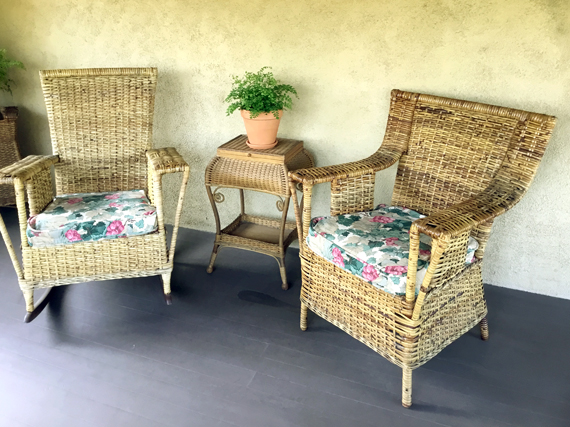 |
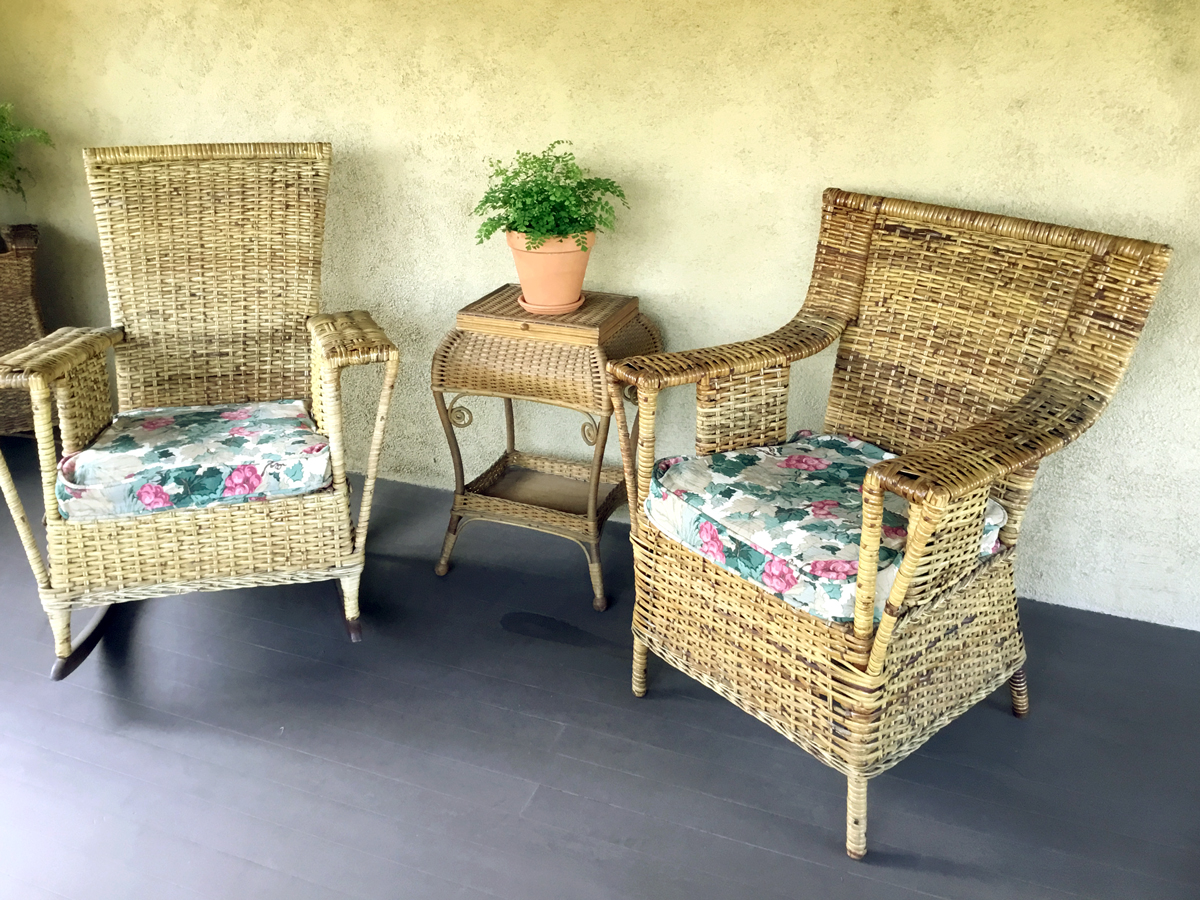
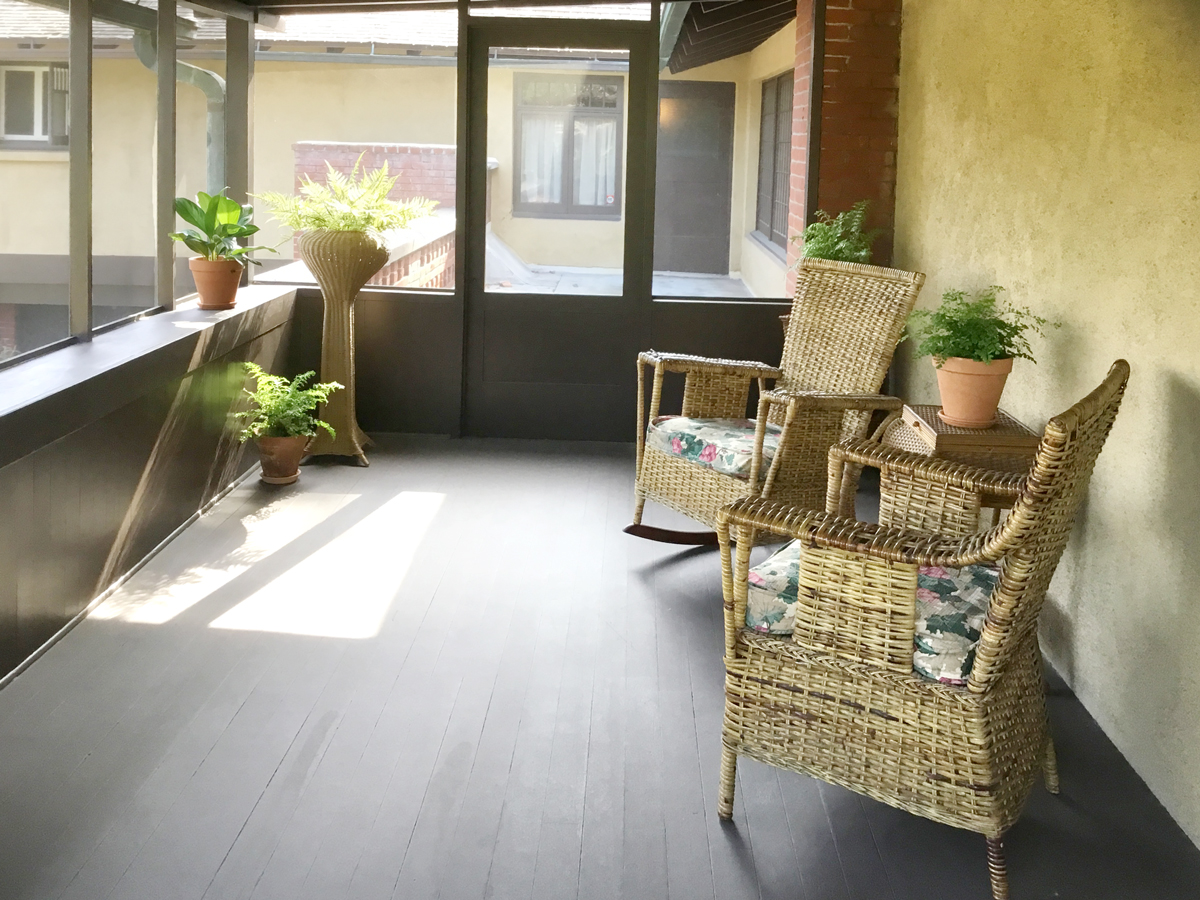
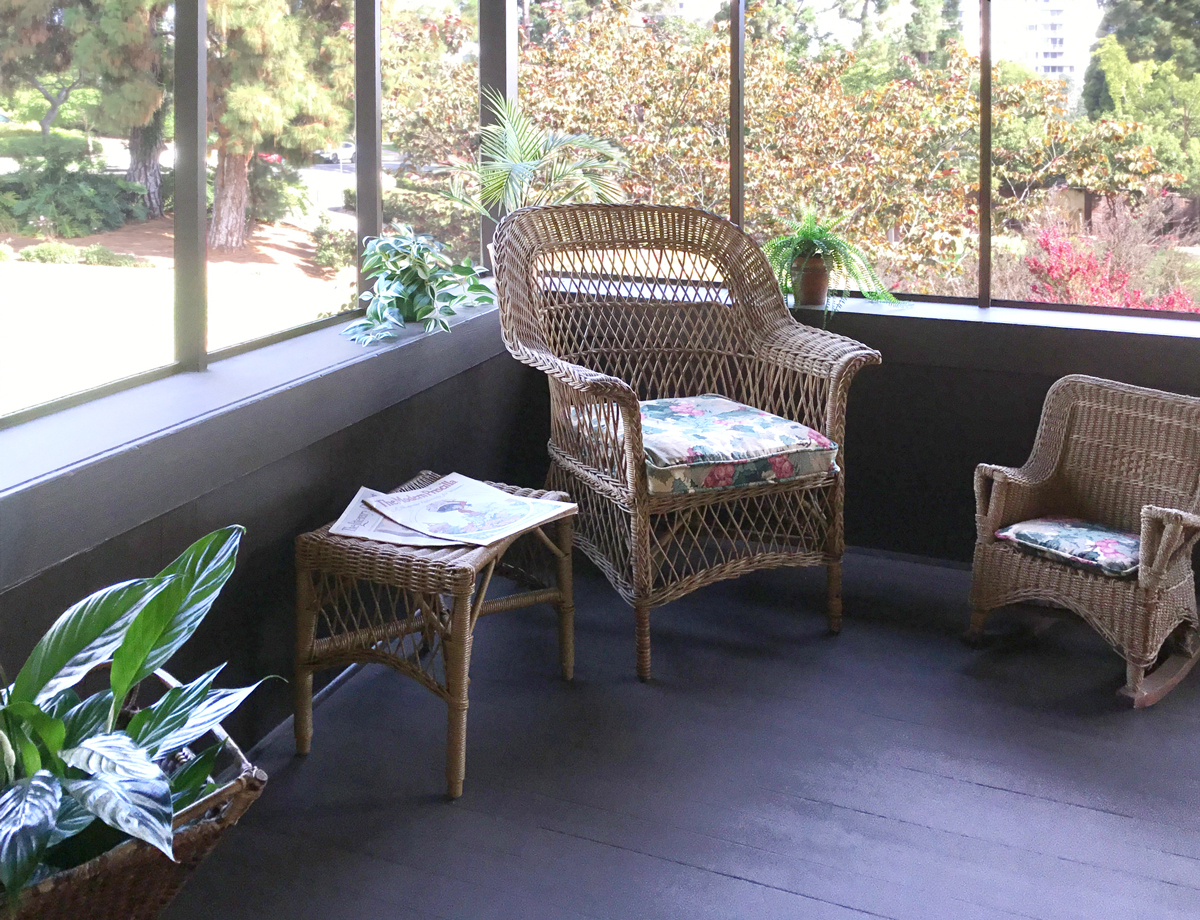
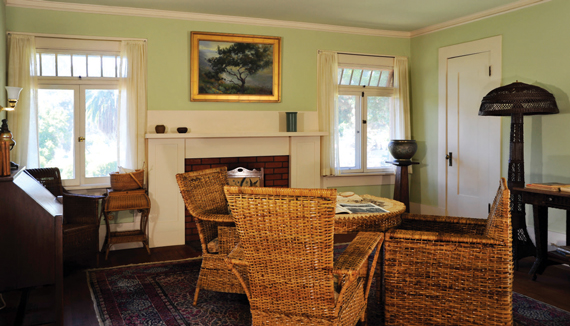
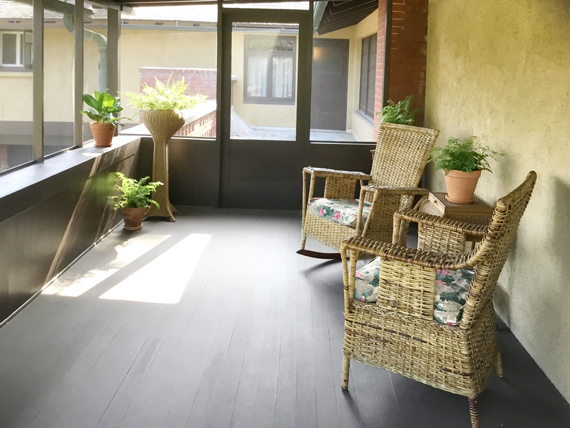
During SDHC’s deaccessioning process, some of their Marston House interpretive furnishings surfaced at a local consignment shop. As we understood the significance of items to the family’s story, we acted quickly to reclaim them. Among these items were a pair of the Marstons’ original brass Colonial Revival fireplace andirons, which we returned to the library fireplace, and three historic wicker chairs that now grace the enclosed sleeping porch, where they naturally seem to belong and offer a tangible connection to Helen Marston, the couple’s fifth and last child. |
 |
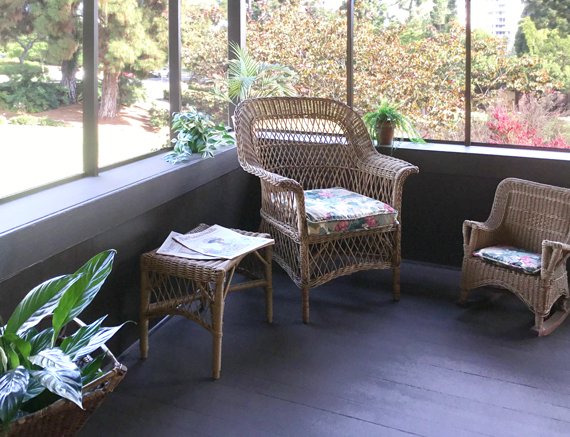 |
This second floor sleeping porch, designed for warm-weather comfort and garden views, is enhanced by the wicker chairs’ history: They originally were from the 1914 Elaine Sweet House (435 W. Spruce Street, San Diego, a Mead & Requa design), the contents of which were dispersed when the home was sold, with some items repurposed to the Marston House, these are marked San Diego Rattan Co. Elaine Sweet’s close friendship with Helen, daughter of the Marstons led the two women to become travel companions and longtime bridge partners. So, it is fitting that these chairs, likely used by Helen when visiting Elaine, have found their way back.
To preserve these chairs, we move them inside when the house is closed to visitors. To protect their original cretonne upholstered cushions, we added slipcovers in a reproduction fabric pattern that was available in 1913 called “Grape Trellis,” in the same color scheme as the cretonne cushions. |
 |
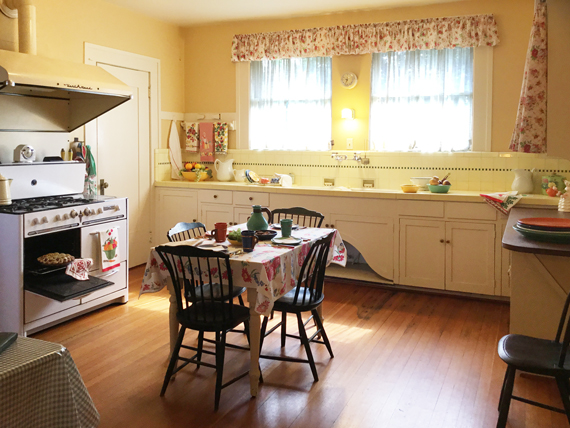 |
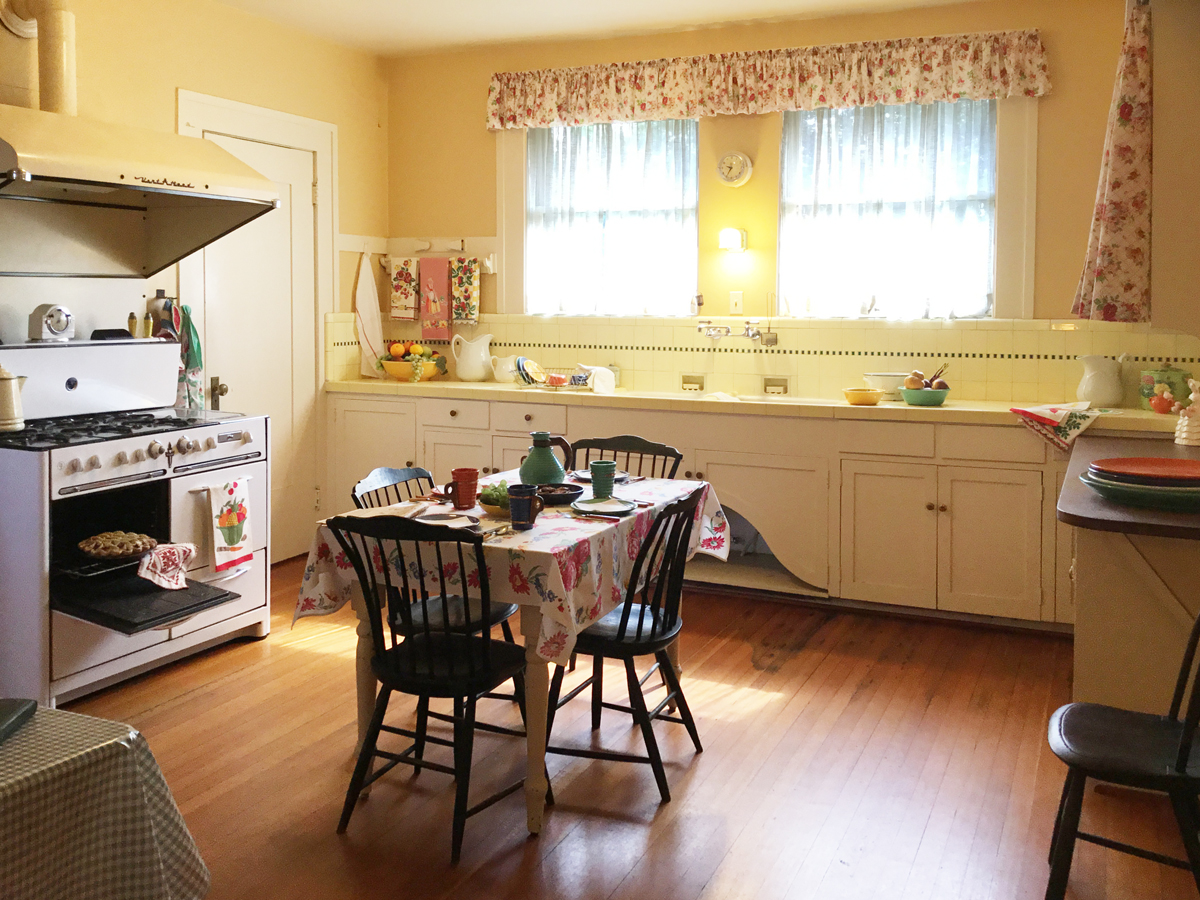
The family valued quality and practicality over fleeting trends, after four decades of use, they replaced countertops with pale yellow and green tile. Sometime, between the late 1930’s and 40s, they installed a state-of-the-art six-burner with griddle, dual-oven Wedgewood stove and Vent-a-Hood, as well as linoleum flooring. Only the refrigerators would need to be upgraded over the ensuing decades, due to the advances in capacity and energy efficiency.
The family valued quality and practicality over fleeting trends, after four decades of use, they replaced countertops with pale yellow and green tile. Sometime, between the late 1930’s and 40s, they installed a state-of-the-art six-burner with griddle, dual-oven Wedgewood stove and Vent-a-Hood, as well as linoleum flooring. Only the refrigerators would need to be upgraded over the ensuing decades, due to the advances in capacity and energy efficiency.
We have restored this kitchen’s post war character by installing a donated 1936 Wedgewood stove, which is nearly identical and placed it back beneath the original Vent-a-Hood which fortunately had remained. Two utility kitchen tables, in the home since 1905, are now displayed in the kitchen, as shown in historic photos. The larger, extendable table dates to the late 1870s and was likely the newlywed Marstons’ first dining table, used in their small rented Victorian cottages. Both tables were painted green at some point in the family history, later painted white and their tops covered in linoleum. Perhaps the tables’ longevity and color changes are an indication of family sentimentality and economy and trends, as painting mid-Victorian walnut furniture was popular by the turn of the 20th century.
By restoring the kitchen to the most recent 50-year time span it served the Marstons, we are honoring the family’s 82 years in the home, with authenticity, thoughtfulness, and care. The only period piece we lack to complete our kitchen interpretation is a flat top refrigerator from the mid-1930s to early 1940s.
|
Beyond the kitchen, we have a furnishings wish list that is evolving as we fine-tune and add depth and texture to the Marston House. If you can help, please reach out. We’d love to hear from you.
Marston House Furnishings Wish List
The Marston House is more than a historic landmark—it is a home with stories still to tell. Each furnishing and detail helps us capture the rhythms of daily life for one of San Diego’s most influential families. Your support makes this possible. By donating period-appropriate items, or contributing to our Furnishings Fund, you can help us recreate the atmosphere of a living home and reflect the Marston family’s world.
Perhaps you have one of these treasures ready to pass on, or would like to help us find just the right piece.
- A 1940s–50s Refrigerator
While the house reflects many eras, the kitchen remains a space where history and practicality meet. A refrigerator from the mid-20th century, no wider than 35", would anchor the room and remind us of how the home evolved with changing times.
- Plant Pots & Stands
By the early 1900s, no home was complete without a touch of greenery. The Marstons, like many families, filled their rooms with potted ferns and flowering plants. We hope to restore this charm with glazed ceramic planters from the American Art Pottery movement (such as McCoy and Roseville), along with pedestal and fern stands in oak or pottery.
- A Chess Set, circa 1900–1940s
Leisure was as much a part of life at the Marston House as work and civic duty. In her 1956 memoir George White Marston, A Family Chronicle, daughter Mary recalls her father’s fondness for testing wits over chess. George played regularly with family and friends, finding both challenge and camaraderie in the game. A period chess set would help restore this intimate pastime to the library where so many matches were once enjoyed.
- Waste Baskets
Even the smallest details matter. Period waste baskets—woven, wooden, or metal—would complete the rooms where the Marstons worked, read, or prepared for the day.
- Picture Frames
Family photographs and art prints were proudly displayed throughout the home. Period frames, ranging from the turn of the century to the 1940s, would allow us to showcase the Marstons’ connections, interests, and memories.
- Art Pottery
Decorative pottery was a hallmark of taste in the early 20th century. Pieces from this era would lend beauty, color, and authenticity to the house, reflecting both national trends and the Marstons’ own collecting habits.
- Bathroom Stools
These short, three-legged wooden stools, often painted white, were once common in bathrooms but are rare today. These would give a glimpse into the practical, everyday routines of the family.
BACK to table of contents
|
2025
2024
2023
2022
2021
2020
2019
2018
2017
2016
2015
|