
Saved buildings
save our heritage organisation

Allá en el Rancho Grande (Over at the big ranch)
San Diego County’s California State Historic Landmarked Adobe Ranch Houses

Hiding in Plain Site, Part 6
By Alexander D. Bevil, California State Parks Historian II (Retired)
November/December 2026

Aside from the crumbling ruins of a Spanish mission, perhaps no other image evokes California’s romanticized “days of the dons” more than the white-washed adobe-walled ranch house. Whether a simple red tiled- or flat-roofed shack or a grand hacienda built around a central courtyard, they served as the homes of the rancheros. During California’s Mexican Era—1821 to 1846—these relatively affluent ranchers participated in California’s lucrative hide and tallow trade, exchanging cattle hides, horns, and tallow for manufactured foreign goods imported by sea.
On the larger ranchos, a small army of domestic servants and vaqueros, or ranch hands, lived either in the main ranch house or in adjacent bunkhouses. The majority were former Mission Indians, who, while no longer tethered to the missions due to the latter’s secularization, were treated like indentured servants. Many of this era’s adobe ranch houses are now California Historic Landmarks (CHL).

CHL No. 982: Historic Planned Community of Rancho Santa Fe
Librado Silva built an adobe ranch house in the heart of the former Mission Indian ranchería of San Dieguito in 1831. Five years later, San Diego’s first alcalde (mayor), Juan María Osuna, took possession of the entire 9,000-acre rancho. Around 1845, Osuna erected a larger adobe, while his son Leandro lived in the former Silva adobe. After a 16-year effort to establish a eucalyptus plantation for railroad ties failed, the Santa Fe Land Improvement Company partnered with San Diegans Col. Ed Fletcher and William G. Henshaw in 1922 to develop the former rancho into the community of Rancho Santa Fe. The Osuna adobes inspired lead architect Lilian Rice to design it as one of California’s first planned communities unified by a single architectural theme, Spanish Colonial Revival.

CHL No. 425: La Cañada de Los Coches Rancho
In 1834, Mission San Diego transferred ownership of Rancho Cañada de los Coches to 41-year-old Apolinaria Lorenzana. A gift to “La Beata” (the Pious One) for her unselfish fidelity and public service, it was also a means to protect part of the mission’s lands from secularization. Named after the Spanish word for a glen (la cañada), it contained a perennial spring where Mission Indians had watered swine. Surrounded by the massive Rancho El Cajón, at less than 30 acres doña Apolinaria’s rancho was the smallest Mexican land grant in California. After 1859, its new owners, former ship’s captain Jesse Wilbur Ames and his wife doña Perfecta Espinosa, hosted many barbecues and fiestas at their Mexican-style adobe ranch house. During the 1880s, treasure-seeking vandals destroyed the by then abandoned home, which was never rebuilt. After a succession of land owners, the historic rancho is now part of an RV park.

CHL No. 1026: Santa Margarita Ranch House
Between 1841 and 1844, the Pico brothers acquired the 133,440-acre Rancho Santa Margarita y Las Flores. Extending inland from the present San Onofre State Beach into Marine Corps Base Camp Pendleton, it included a small adobe ranch house on a tree-shaded knoll overlooking the Santa Margarita River. Between 1864 and 1881, John Foster, brother-in-law of the Picos, enlarged the ranch house, which later served as a transcontinental train stop from 1882 until 1884. On September 25, 1942, President Franklin D. Roosevelt toured the historic ranch house, which served (until recently) as the Camp Pendleton commandant’s residence. The adobe, which was listed on the National Register of Historic Places on May 6, 1971, became a California State Landmark on February 5, 1998.

CHL No. 311: Warner’s Ranch
In 1844, Governor Manuel Micheltorena granted 44,322 acres of former Mission San Luis Rey ranchland to Juan José [Jonathan Trumbull] Warner. Warner’s adobe ranch house held a strategic position as the first important rest stop and trading post along the Southern Emigrant Trail. During the War with Mexico, U.S. dragoons and Mormon Battalion volunteers camped nearby. On November 22, 1851, Antonio Garra, a Cupeño chieftain living on the ranch, led a group of warriors who attacked and burned down the ranch house. Six years later, California rancheros don José Ramón Carrillo and his wife doña Vicenta de Carrillo erected the current adobe home and barn in 1857 just south of the original ranch house; it has no relationship to John Warner. In 1862, during a smallpox outbreak, doña Vicenta converted the barn into a makeshift hospital where she personally cared for sick ranch hands. During the Civil War, doña Vicenta’s son Ramón, while serving as a Union Army Scout, provided beef and rations to the men at nearby Camp Wright. Although widowed for the second time in 1864, doña Vicenta continued to manage the ranch as an important rest stop for several overland mail and stage coach lines, playing a leading role in the history of the American West, as it was built directly beside the emigrant trail. See caption CHL 311.

CHL No. 940: Rancho Guajome
Located roughly four miles east of Mission San Luís Rey, the 2,219-acre “Frog Pond Ranch,” had been an 1851 wedding present from land baron don Abel Stearns to his sister-in-law doña Ysidora Bandini and her husband Cave Couts. Between 1852 and 1853, Couts erected what was considered one of the finest extant examples of the traditional Spanish-Mexican one-story hacienda with an inner-outer courtyard plan. As sub-agent for the native Luiseño people, “Colonel” Couts exploited their labor to improve Rancho Guajome, as well as the nearby Buena Vista and Vallecitos de San Marcos ranchos. Owned and occupied by members of the Couts family for ninety-two years, San Diego County Parks acquired Rancho Guajome in 1973, and after an extensive restoration, transformed it into Guajome Regional Park.

CHL No. 626: Bancroft Ranch House
Local politician (and squatter) “Squire” Augustus S. Ensworth built this adobe-walled ranch house in 1863, describing it as more “Yankee-looking.” Its curved oak beams, timbers, and lintels purportedly came from the Clarissa Andrews, a former coaling hulk used by the Pacific Mail Steamship Company. Two years later, Captain Rufus K. Porter purchased the 160-acre ranch from the Ensworth estate. The area’s Spanish name, Las Fuentes de San Jorge (St. George’s Fountains) inspired Captain Porter to Anglicize it as Spring Valley. From 1885 until 1918, it was the home of eminent Western historian Hubert Howe Bancroft, author of the monumental History of California.

CHL No. 1020: Leo Carrillo Ranch (Rancho de Los Kiotes or Quiotes)
Named after the towering stalks of the native yucca, specifically called Spanish dagger plants, the 1,700-acre Los Kiotes Rancho (the “Ranch of the Spanish Daggers”) was owned by Matthew Kelly from 1868 to 1885. While not a historic Mexican land grant, a later owner, Leopoldo Antonio Carrillo, a noted Hollywood actor and relative of José Ramón Carrillo of Warner’s Ranch (CHL No. 311), would treat it as such. From 1937 to 1940, Carrillo added additional adobe and wood-framed buildings. A working ranch, where livestock brandished the “Flying L C” brand, it also served as Carrillo’s weekend retreat. While known primarily today as Pancho, the humorous malaprop-spouting sidekick to 1950s TV’s The Cisco Kid, Carrillo was a noted conservationist. During his tenure on the California Beaches and Parks Commission, from 1942 until 1961, he played an active role in securing Hearst Castle for the state park system and establishing Anza-Borrego Desert State Park. Leo Carrillo State Park along the Malibu coast was named in his honor. In 1977, the City of Carlsbad acquired and converted the ranch’s central core into what is now the California- and National Register of Historic Places-listed Leo Carrillo Ranch Historic Park.

SLIDE SHOW

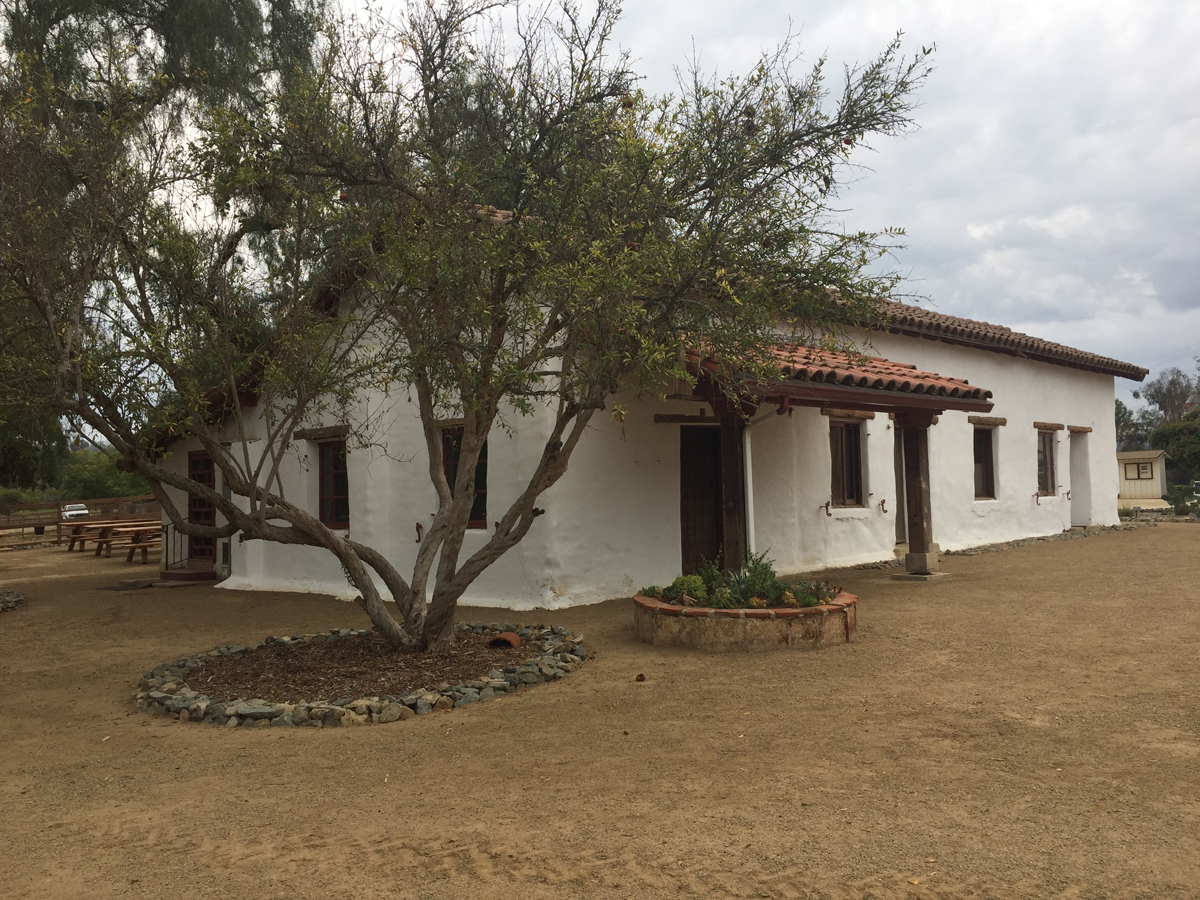
The don Juan María Osuna Adobe at the Historic Planned Community of Rancho Santa Fe, CHL No. 982 - San Diego Master Architect Lilian Rice’s sympathetic rehabilitation of the National Register of Historic Places-listed don Juan María Osuna adobe inspired her overall design of one of California’s first planned communities with strict architectural covenants. Hollywood crooner Bing Crosby and his family lived there in the mid-1930s, while he helped to develop the nearby Del Mar Racetrack and raced thoroughbreds from his own stables. Photo courtesy California Office of Historic Preservation
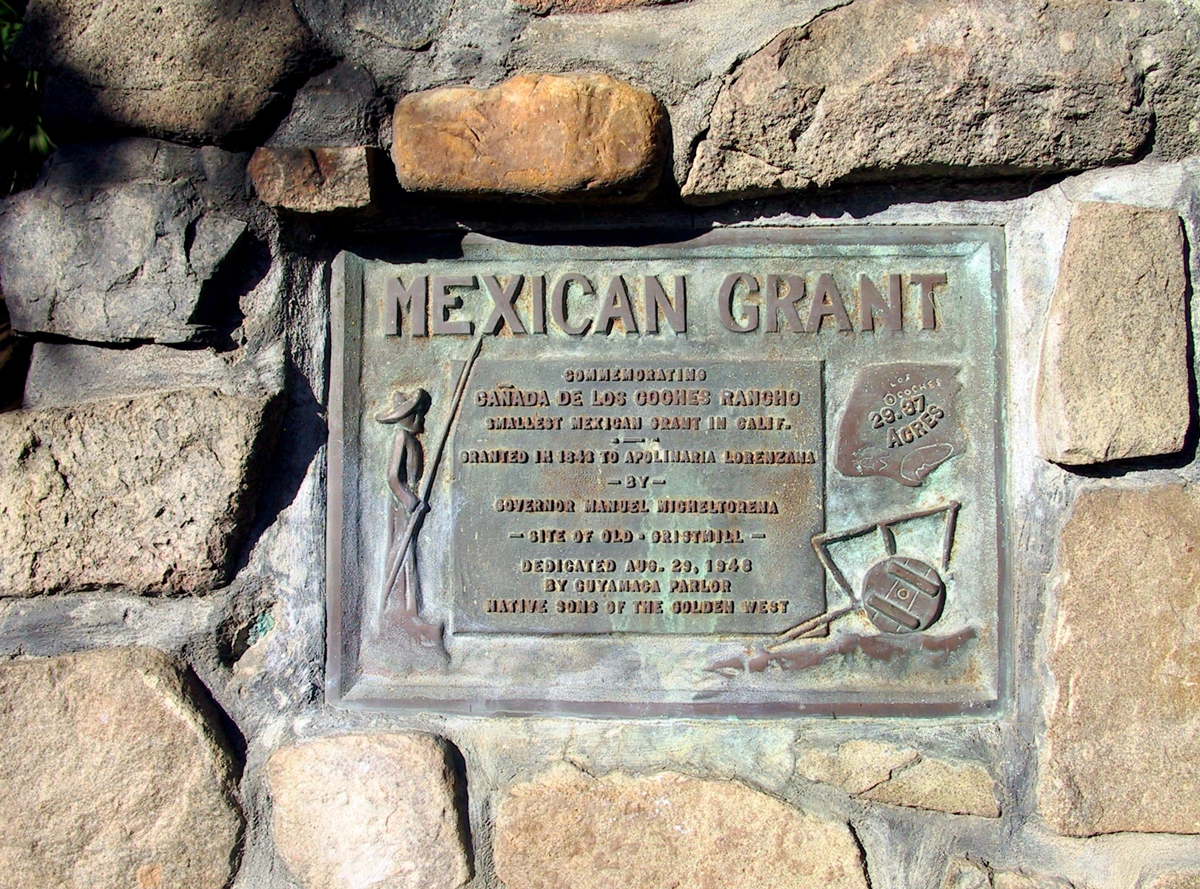
Mexican Grant plaque at La Cañada de Los Coches Rancho, CHL No. 425. Dedicated on August 29, 1948 by Cuyamaca Parlor Native Sons of the Golden West, the small plaque indicates that it was the site of an old grist mill erected by former ship’s captain Jesse Wilbur Ames in 1859. Now the site of an RV park, its entrance sign incongruously features a windmill. Horses, not wind, reportedly powered the original grist mill. Photo courtesy Michael Kindig
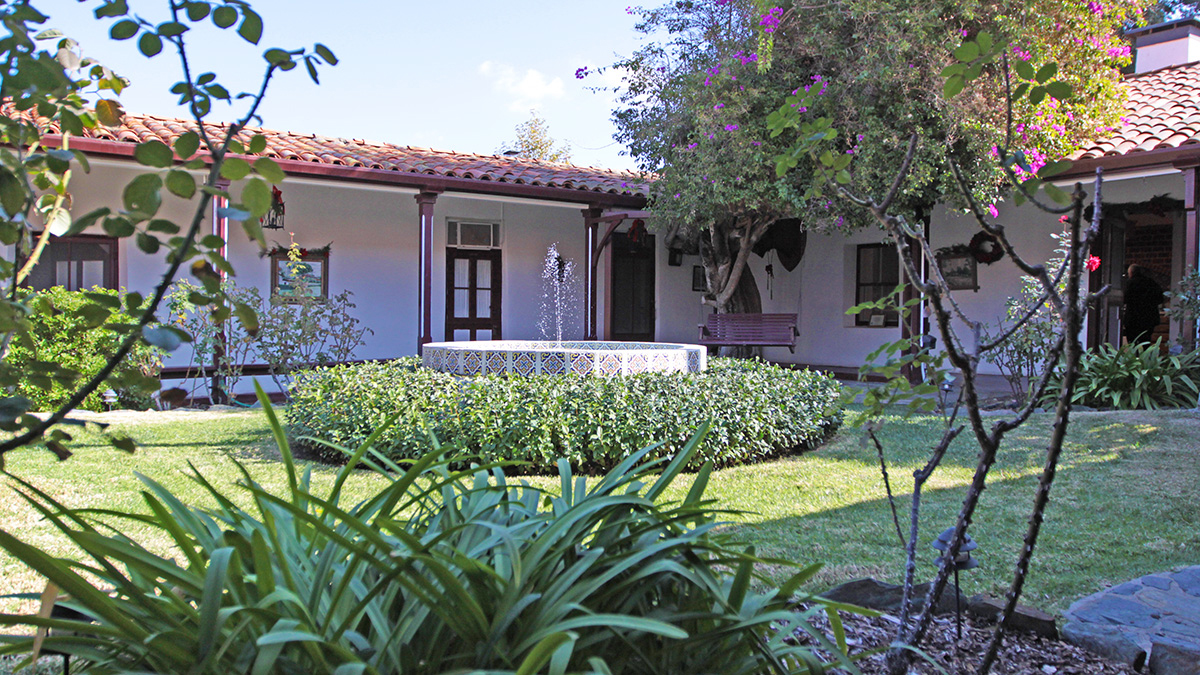
Interior courtyard and fountain of Santa Margarita Ranch House, CHL No. 1026. Pausing in one of the adobe’s bedrooms during his visit, President Franklin D. Roosevelt suggested that the base commandant “reserve this room for the next ex-president of the United States.” Although FDR died while in office, the Marine Corps traditionally refers to it as the President’s Room. Photo courtesy The Cultural Landscape Foundation
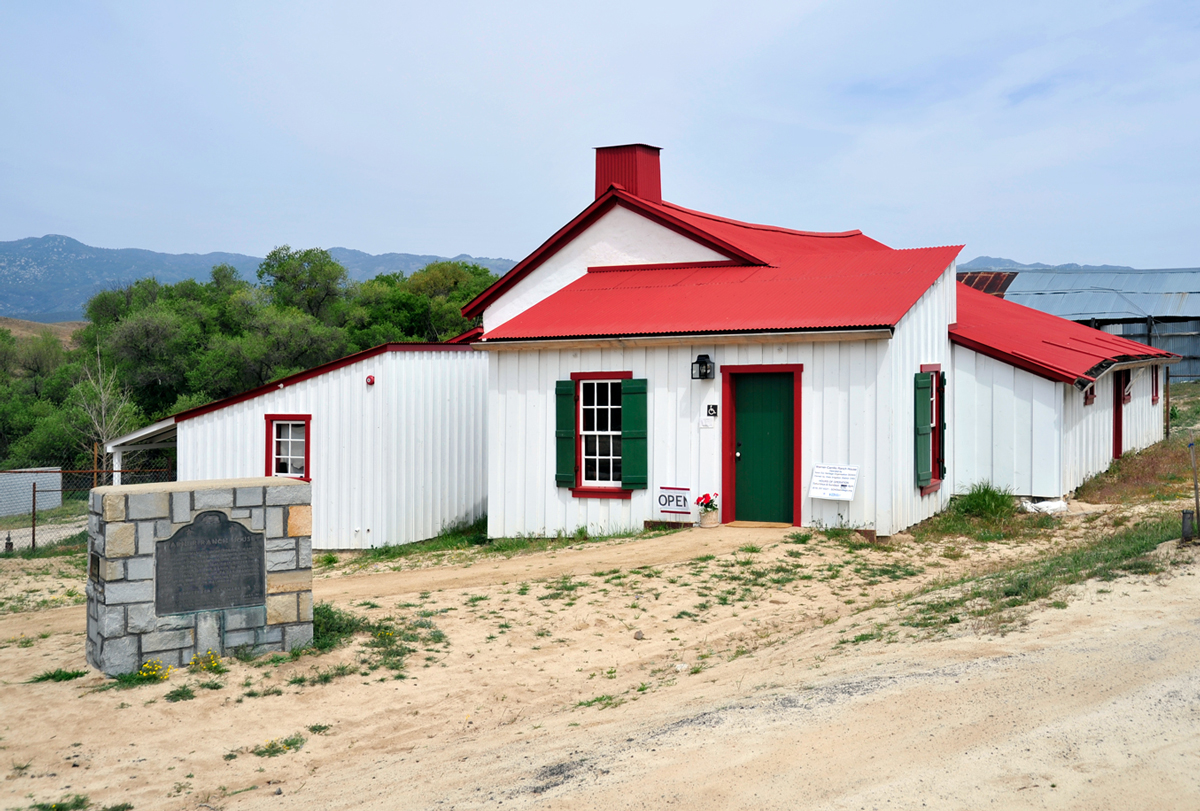
Landmark plaque in front of the Warner–Carrillo Adobe Ranch House, CHL No. 311. The plaque’s wording is inaccurate; local Cupeño Indians had burnt down Warner’s ranch house in 1851. Don José Ramón Carrillo and his wife doña Vicenta de Carrillo built the current adobe-walled ranch house and adjacent barn near the site six years later. The Carrillo home represents Native American, Mexican, and American contact; the Frontier period of the westward migration; the Gold Rush; and the cattle ranching industry from 19th-century California through the 20th century. The San Diego County Board of Supervisors and the Historical Markers Committee erected a historical plaque in 1964. Save Our Heritage Organisation (SOHO) now operates the restored Warner–Carrillo Adobe Ranch House as a historic house museum for the owner, Vista Irrigation District. Photo by Sandé Lollis
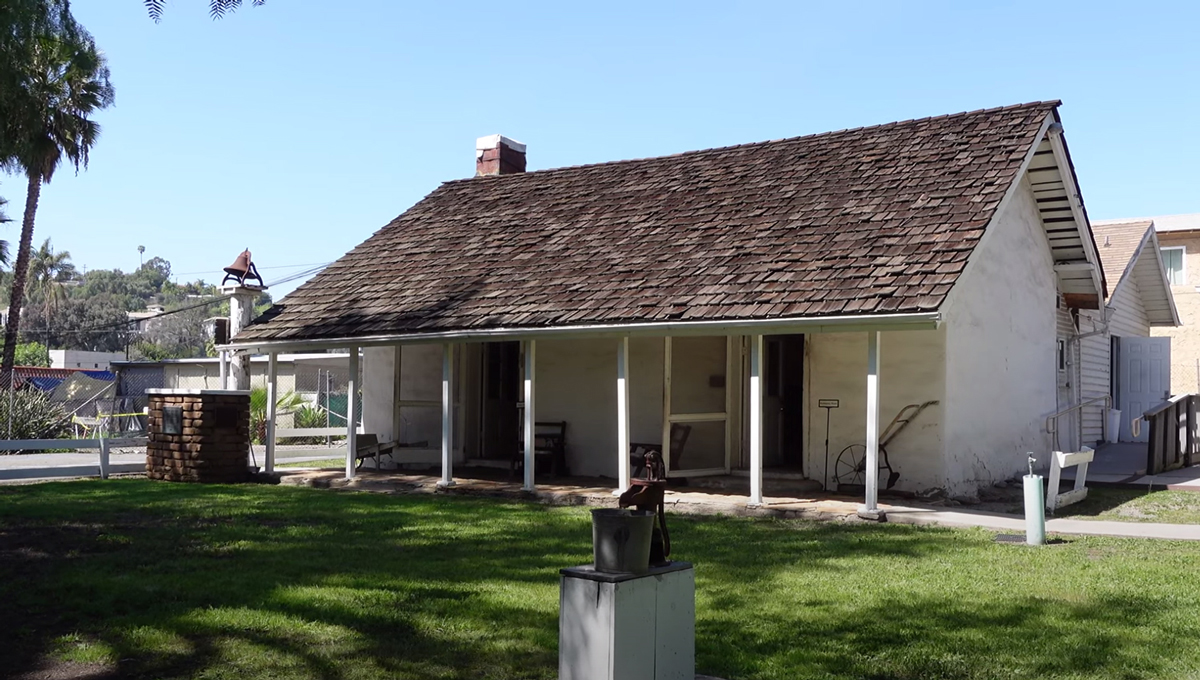
Bancroft Ranch House, CHL No. 626. Spring Valley’s purported oldest Anglo-American building was originally surrounded by over 700 acres devoted to growing raisin and table grapevines and olive and guava orchards. The Spring Valley Historical Society now runs the California and National Historical Landmark as a house museum. Courtesy Google street view
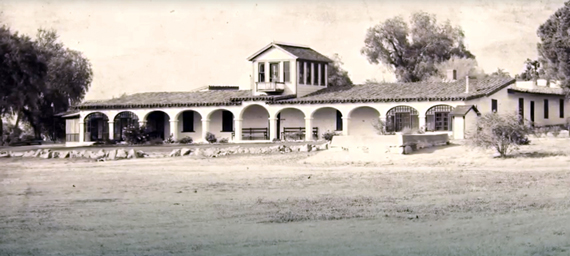
Front arcade of the Rancho Guajome Adobe, CHL No. 940. The San Diego County Department of Parks and Recreation manages this restored California- and National Register of Historic Places-listed landmark as a house museum. Photo courtesy City of Vista
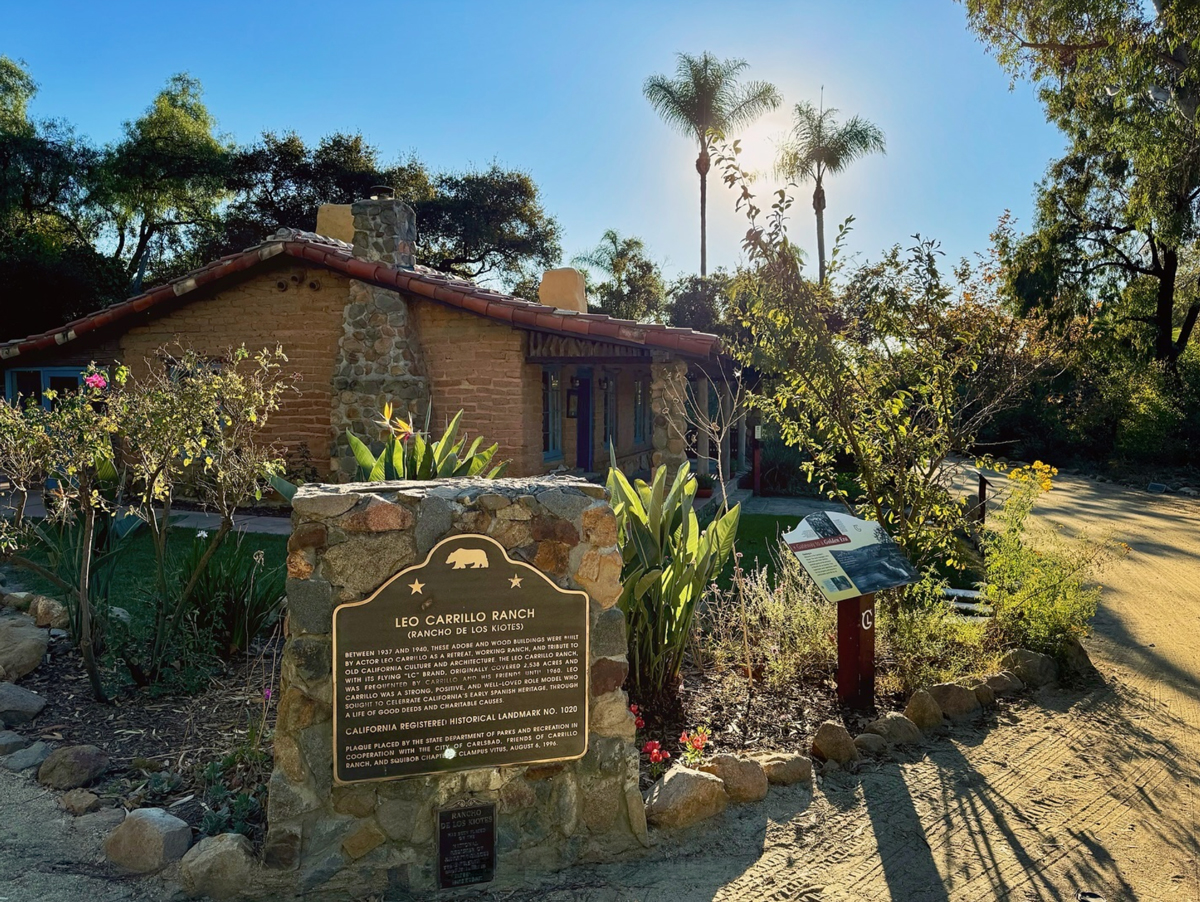
California Historic Landmark plaque in front of caretaker’s house, Leo Carrillo Ranch (Rancho de Los Kiotes or Quiotes), CHL No. 1020. While Leo Carrillo regarded adobe as his “birthstone” in his 1961 biography, he had thought differently some 23 years earlier when he had to abandon his mired automobile and slog five miles on foot through “thick, sticky chocolate syrup” adobe mud to his ranch house. He successfully petitioned the San Diego County Board of Supervisors to improve the road so that, according to a 1938 San Diego Union article, it could “at least be kept passable.” Photo by Noah and Tori Unsworth


BACK to table of contents


Read the rest of the ongoing Hiding in Plain Site Series.

SOHO eNEWS

2026

2025

2024

2023

2022

2021

2020

2019

2018

2017

2016

2015

Mailing - PO Box 80788 · San Diego CA 92138 | Offices - 3525 Seventh Avenue · San Diego CA 92103
Offices, Museums & Shops (619) 297-9327
Home | Contact