|
Picturesque San Diego
The Marstons: A California Family - Part 21
By Robin Lakin
November/December 2025
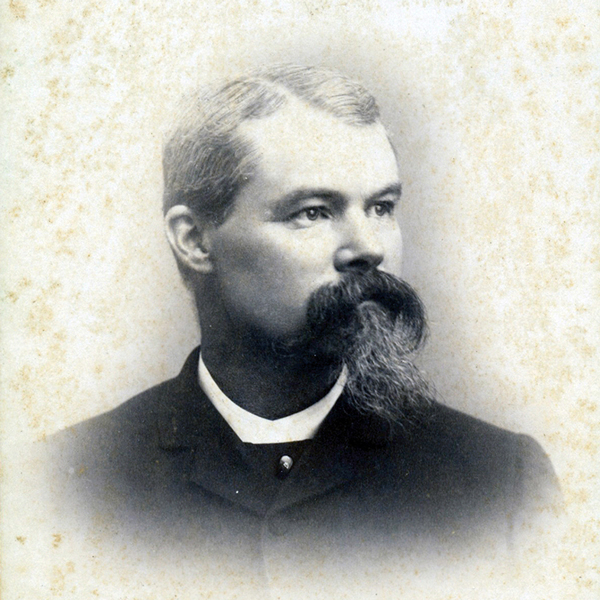 Douglas Gunn in 1885, two years before creating a visual record of San Diego’s architecture and landscape for his book, Picturesque San Diego, published in 1887. |
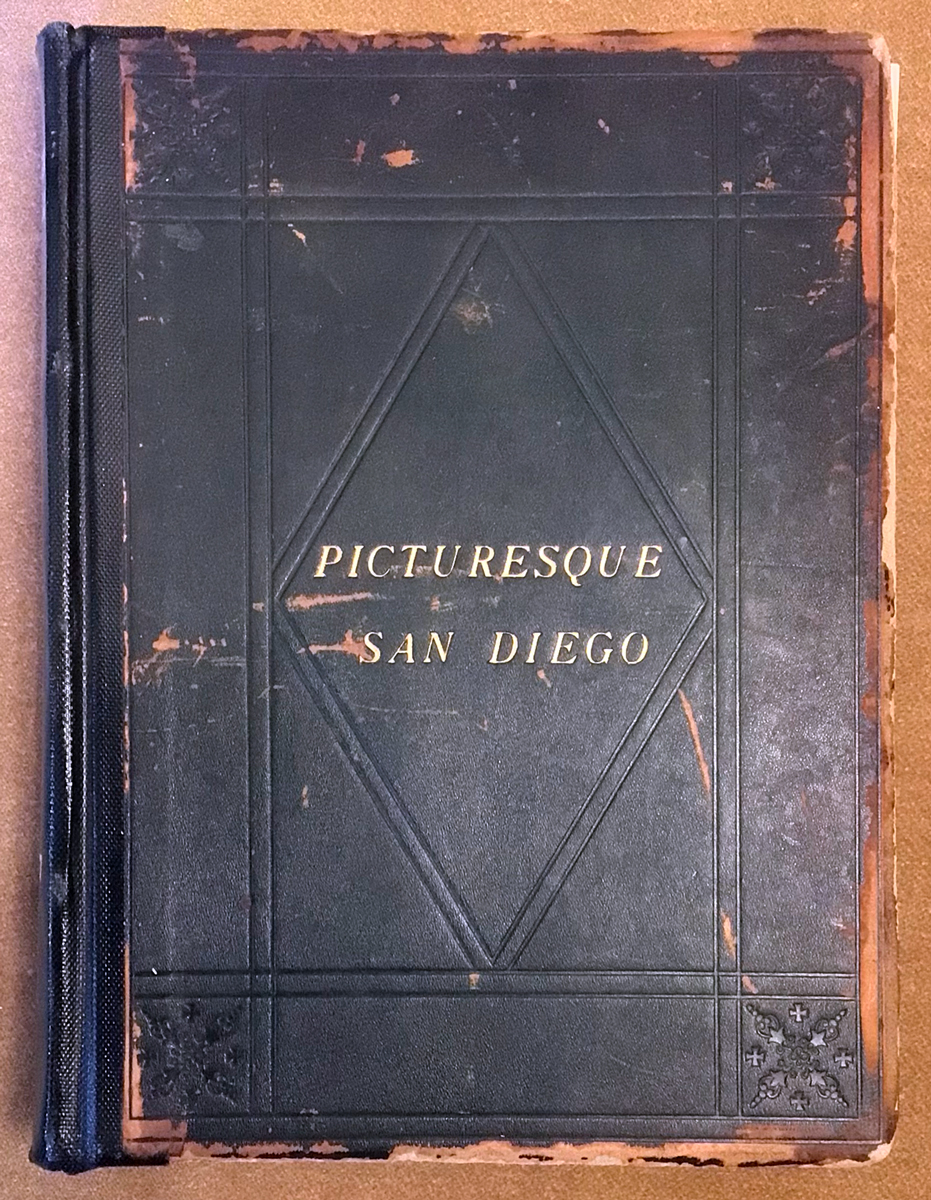
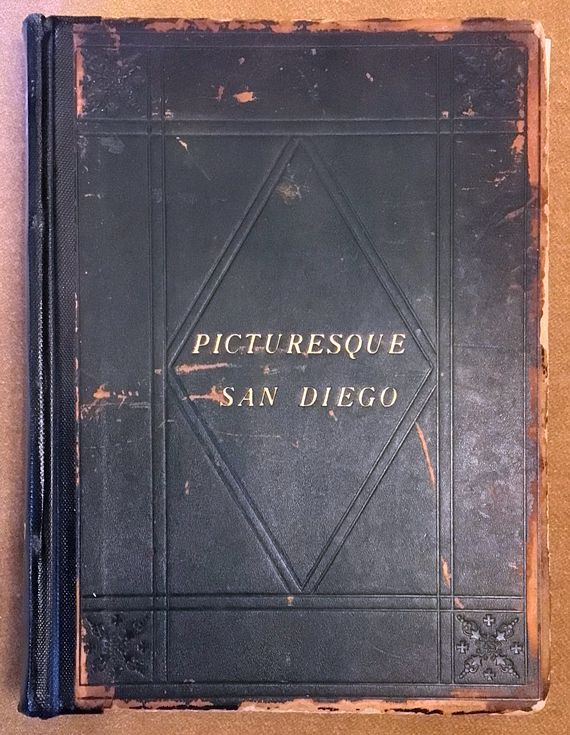 Picturesque San Diego, Douglas Gunn’s handsome, promotional leather-bound book touting the city, featured 97 architectural and landscape images and gilt-edged pages. |
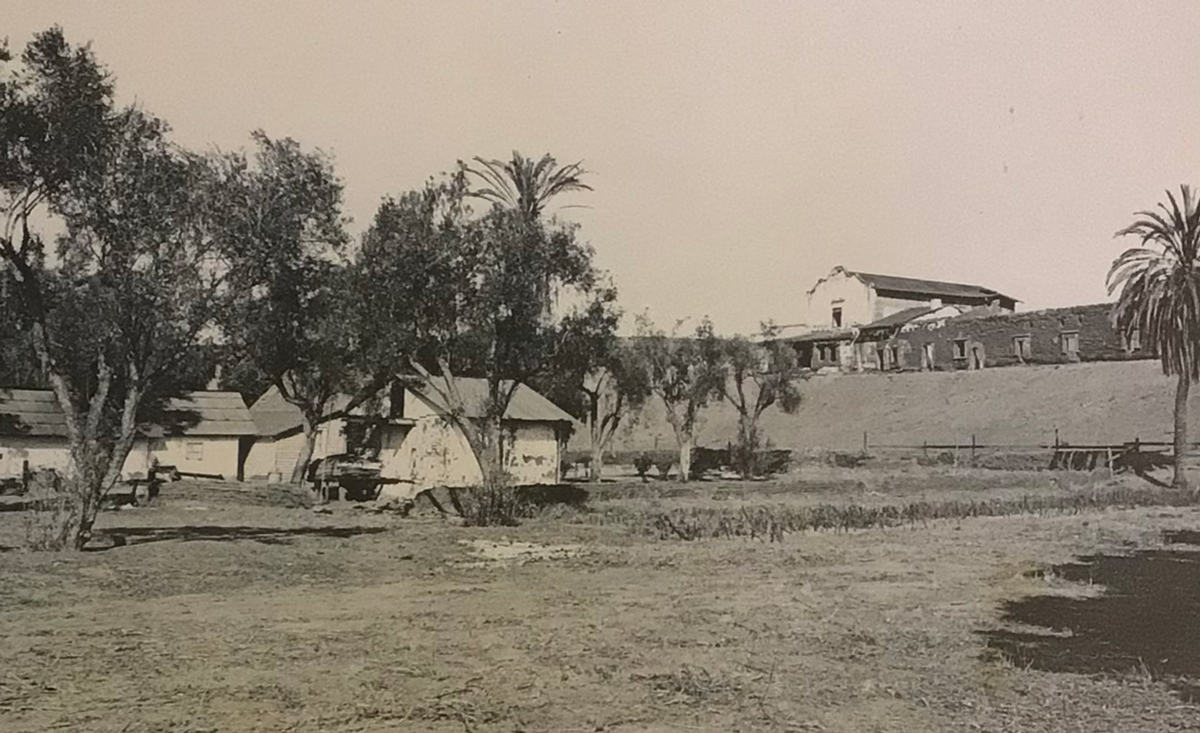
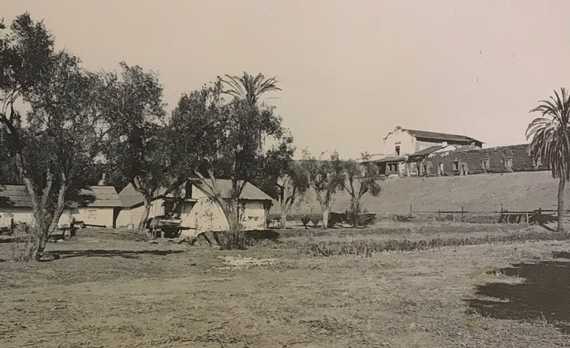 Photogravure image of the ruins of Mission San Diego de Alcalá as seen from its olive grove in 1887 for Gunn’s book. Gunn’s brother-in-law, George W. Marston, would later spearhead the mission’s restoration, preserving it to eventually become one of San Diego’s most visited historic places. |
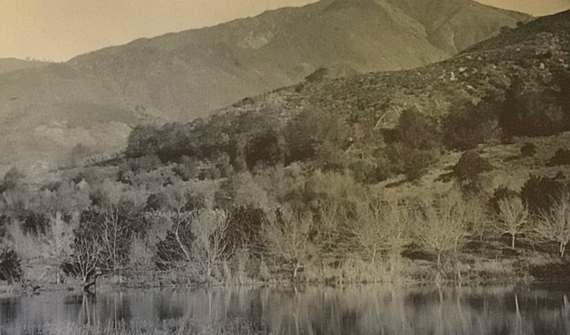 Photogravure image of the pond at Agua Tibia, the home of Douglas’s sister Sarah Utt and her family, a place where Gunn’s nieces and nephews from the extended family, including the Marstons, spent their childhood summers cooling off, swimming and fishing. |
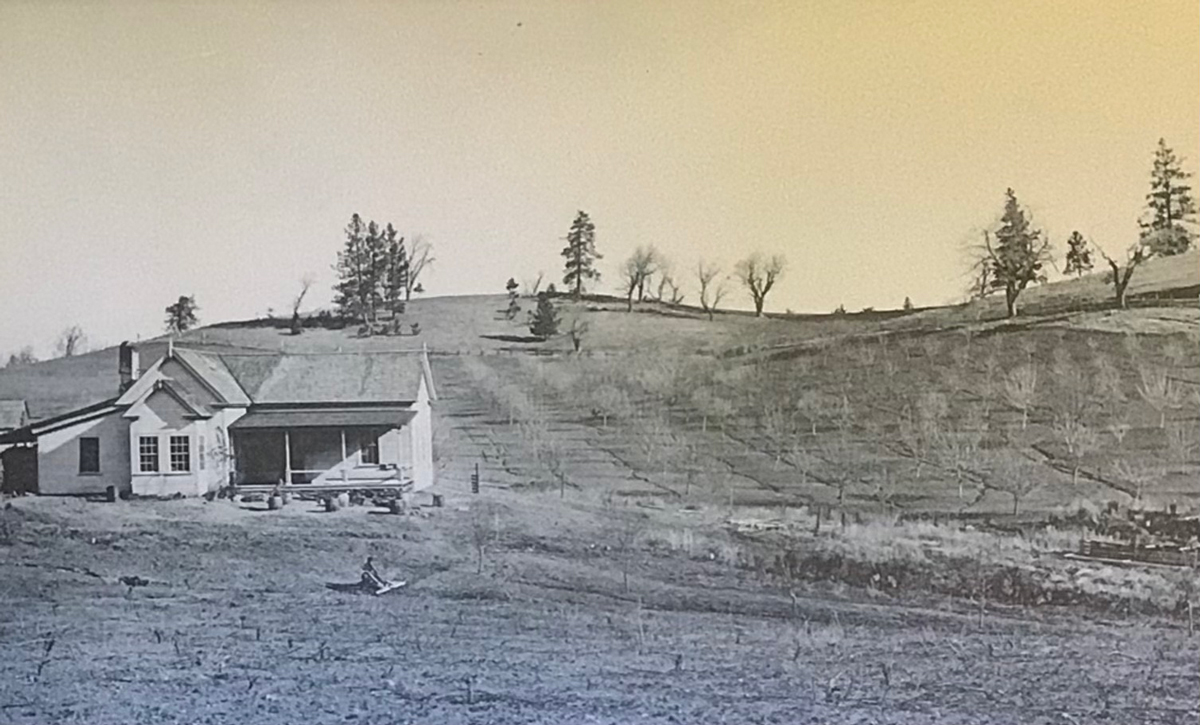
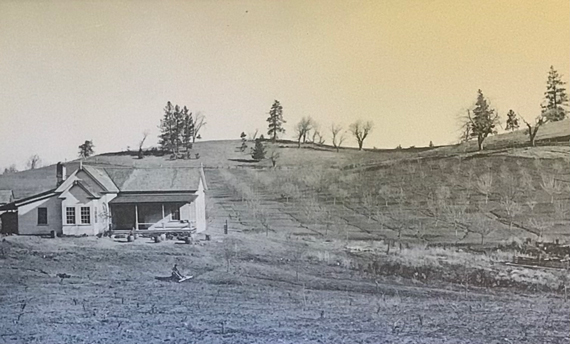 Photogravure image of the Julian home and apple ranch of Chester Gunn, Douglas’s brother. Chester’s ranch was the region’s first, biggest, and best producer of apples. |
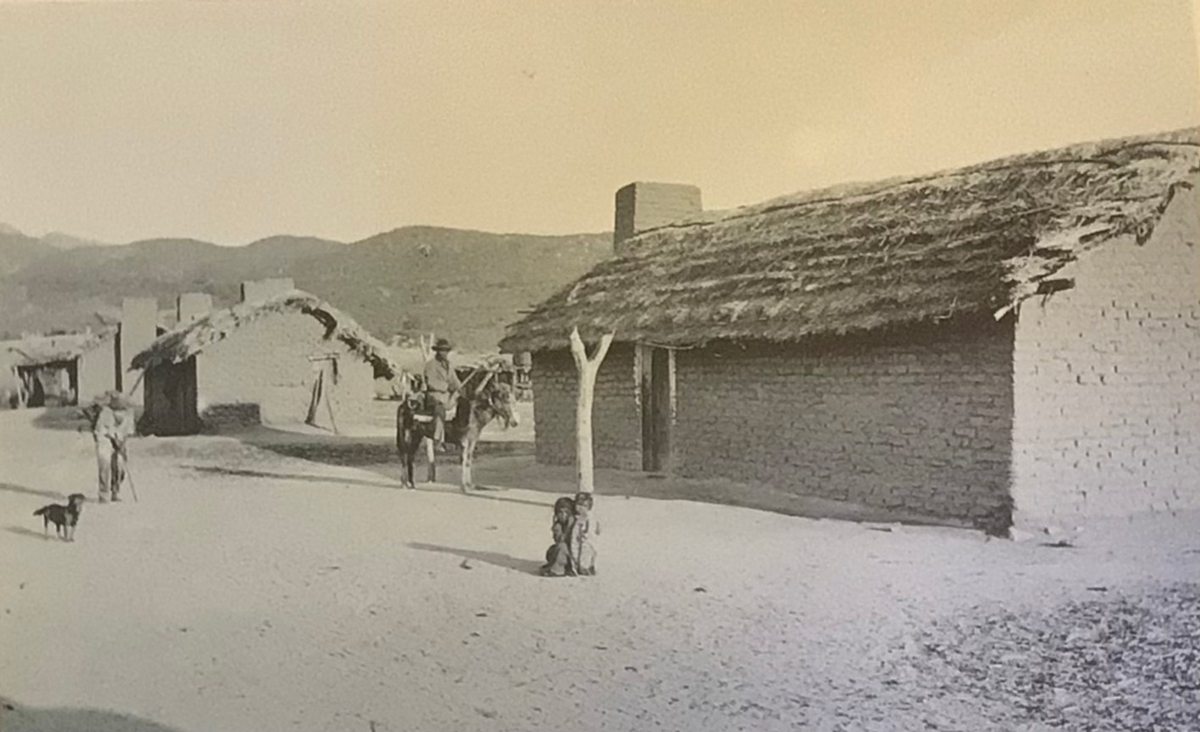
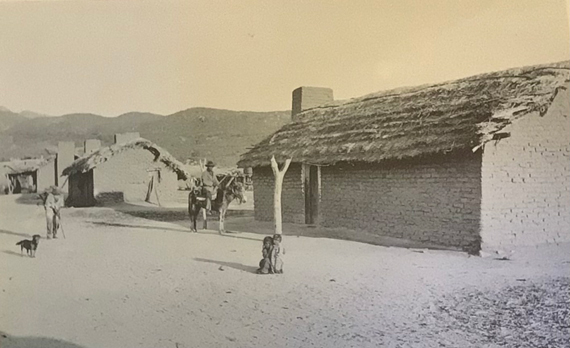 Photogravure image of the Cupa village at Agua Caliente. Sixteen years after this image was made, Douglas’s brother-in-law, George W. Marston, joined the Sequoyah League, founded by John Muir and Charles Fletcher Lummis to establish rights for Native Americans being removed from their land. The tragic eviction at Agua Caliente in 1903 prompted the league to provide much needed food, clothing, shoes, and blankets for the Cupa people. |
Douglas Gunn, Anna Lee Marston’s brother, spent his childhood in Philadelphia and the Northern California mining towns of Sonora and San Francisco, but he considered San Diego his true home. Gunn spent his adult life promoting the value, growth, and improvement of his adopted city.
Through his proprietorship of the San Diego Union, Douglas presented an annual review of the progress throughout the county, eventually publishing the information in pamphlet form. With increasing demand for this material, he published over 35,000 copies of these pamphlets in 1885.
Encouraged by the interest in the “San Diego” pamphlet series, Douglas elected to publish a substantial bound and illustrated book, beautiful enough to display with pride upon parlor center tables while simultaneously promoting San Diego through distributorship across the United States.
Douglas found the perfect partner for his enterprise in landscape and architectural photographer Herve (Hervey) Friend, a Massachusetts native skilled in the art of gravure, a printmaking process utilizing acid to etch a copper plate coated with a photosensitive gelatin layer. Combining photography and etching in this way produces high quality, velvety prints with continuous, richly detailed tones.
Herve listed his occupation in the 1880 census as commercial traveler, and as Daguerreian photographer in the census taken a decade earlier. He and his wife Lucy traveled the country as he took architectural and landscape photographs. They settled in Los Angeles just prior to connecting with Douglas in late 1886 or early 1887.
Collecting images for the San Diego book necessitated a photographic journey encompassing 1,500 miles of San Diego County. Local newspapers covered the men’s trips, with one reporting that Douglas and Herve looked “thoroughly sun-browned” as a result of their work. They photographed Agua Caliente, Agua Tibia, Ballena, Bear Valley, Campo, Cuyamaca, Escondido, Julian, Mesa Grande, Murrieta, Oceanside, Palomar, San Felipe valley, San Luis Rey, Santa Ysabel, Spring Valley, Temecula, Warner’s Ranch, Volcan Mountain and the works of the Flume Company.
Douglas made sure to include a photographic record of his brother Chester Gunn’s home and apple ranch in Julian as well as his sister Sarah Utt’s land at Agua Tibia, where she and her husband Lewis Utt farmed a wide variety of produce. Both couples provided fruit and produce that their sisters Elizabeth and Anna Lee and their families enjoyed back “in town.”
Published by Knight & Leonard Co. in Chicago, Douglas’s book, ultimately titled Picturesque San Diego, became available to San Diegans at $10 each in December 1887. The limited edition of 1,000 leather-bound, hardcover books contained 97 pages boasting 72 crisp photogravure plates featuring architecture (businesses and private residences) and landscapes. The tome included descriptive and historical notes, information for tourists and people seeking health cures, guides to the topography and historical sites, and a primer on the importance of San Diego’s port.
After receiving rave reviews, Douglas printed a paperback edition with woodcut illustrations, available for $1 each. At his own expense he distributed over 2,000 copies throughout the United States to promote San Diego.
In announcing the publication of Picturesque San Diego, the San Francisco Daily Bulletin edition for December 31, 1887 claimed, “No man in California was better fitted to undertake what this book presents - a graphic description of the scenery and resources of San Diego and the territory tributary to it. Mr. Gunn has been thoroughly identified with San Diego for twenty years. For eighteen years of that period he was editor of the Union, which, during his management, held a foremost position among Southern California journals.”
Soon after, Friend went on to publish Picturesque Los Angeles. Douglas Gunn's subsequent gift of service to his beloved San Diego was to serve as mayor.
BACK to table of contents
Read the rest of the ongoing The Marstons: A California Story History Series.
|
2026
2025
2024
2023
2022
2021
2020
2019
2018
2017
2016
2015
|