|
Douglas Gunn, San Diego’s Original Modern Mayor
The Marstons: A California Family - Part 26
By Robin Lakin
September/October 2026
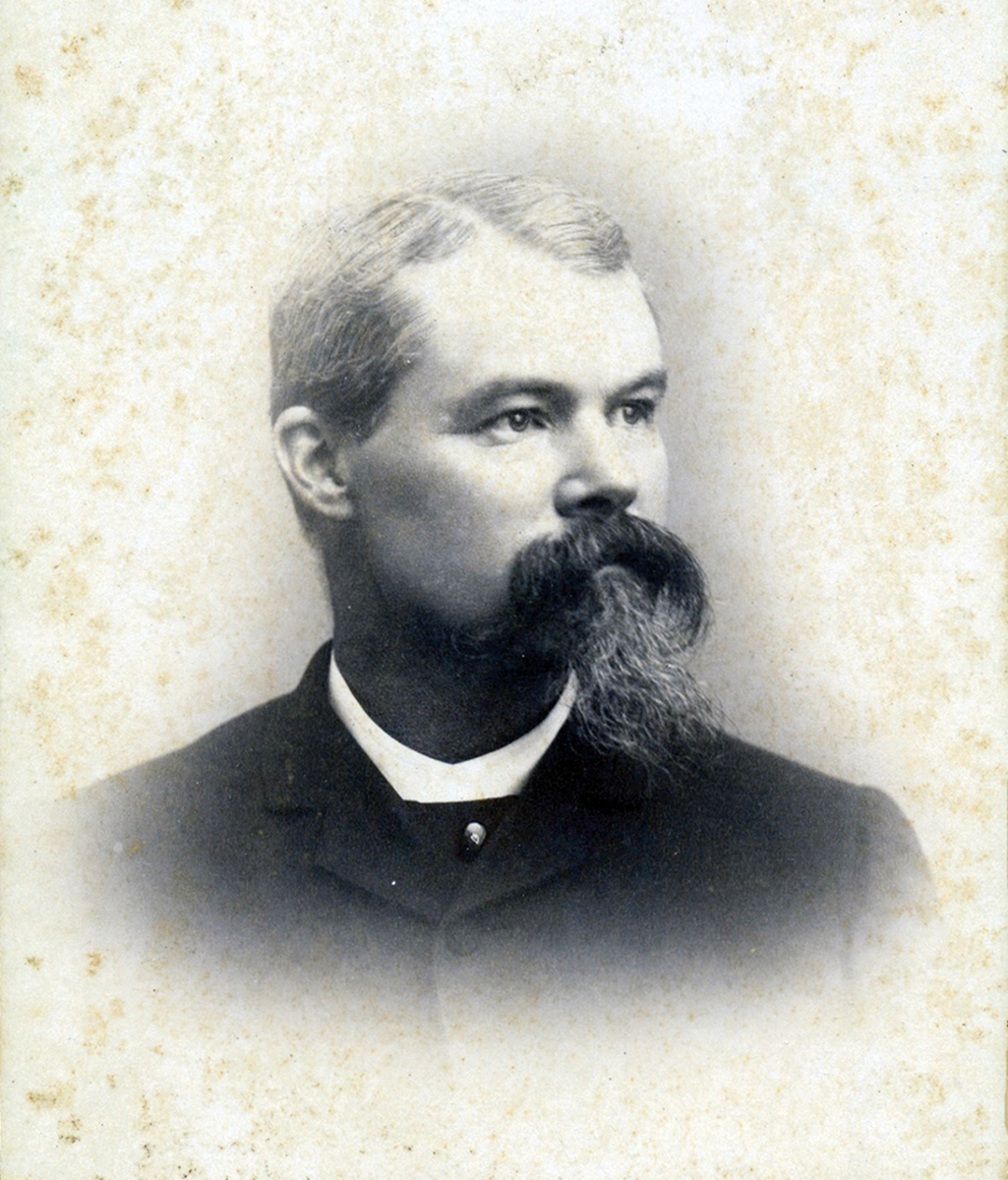
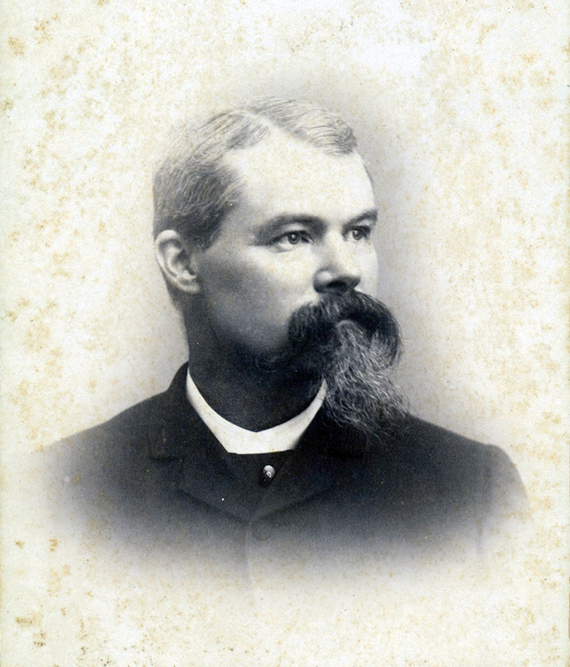 San Diego’s first “modern” mayor, Douglas Gunn, circa 1885, approximately 40 years old, shortly before selling the San Diego Union to Col. John R. Berry, who would run against him in the 1889 mayoral race. This is likely the last professional photograph taken of Douglas and generally represents his appearance when elected mayor in 1889. Courtesy SOHO |
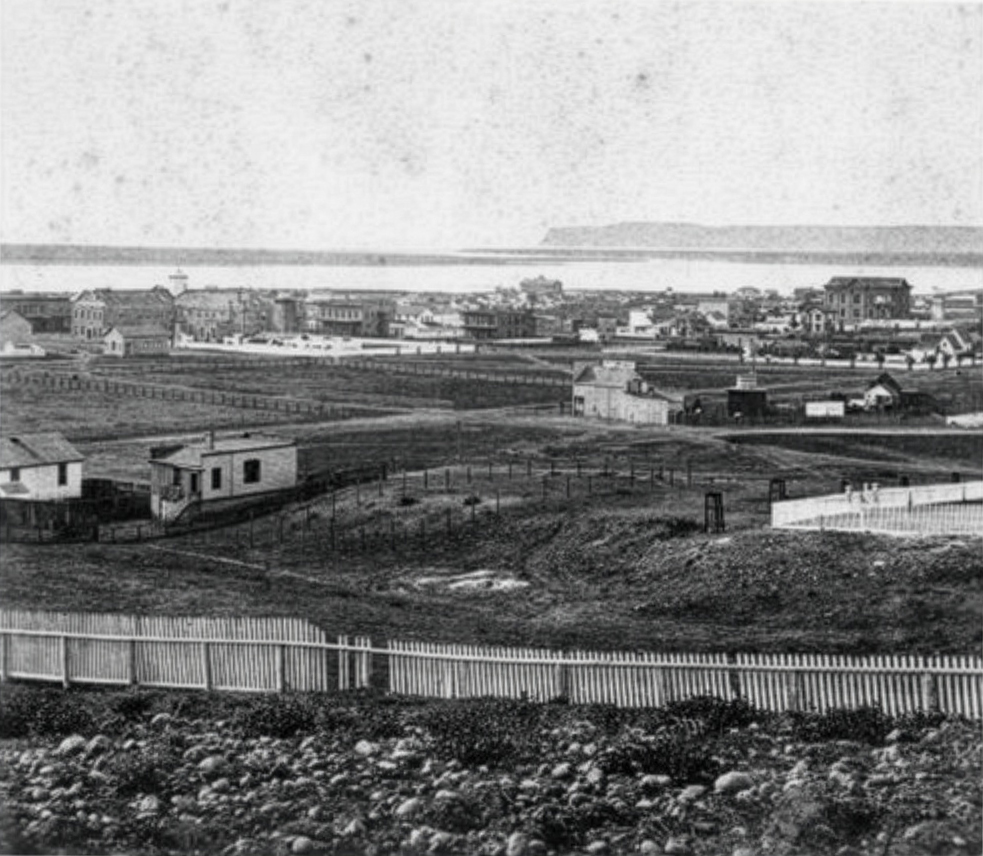
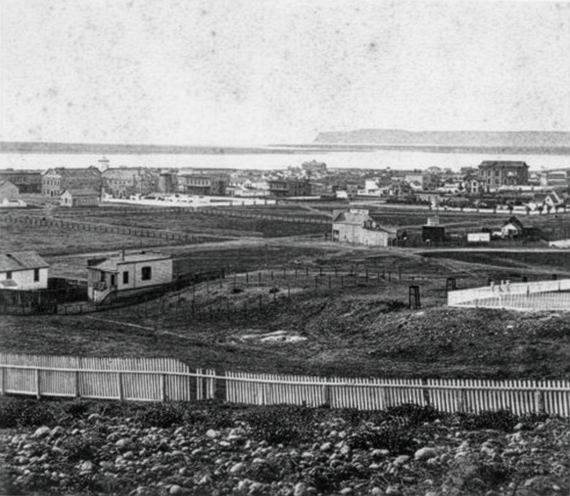 Sparsely settled New Town San Diego in 1873, following its founding by Alonzo Horton. This is how it looked when Gunn purchased the San Diego Union as the owner and editor. Courtesy San Diego History Center (SDHC) |
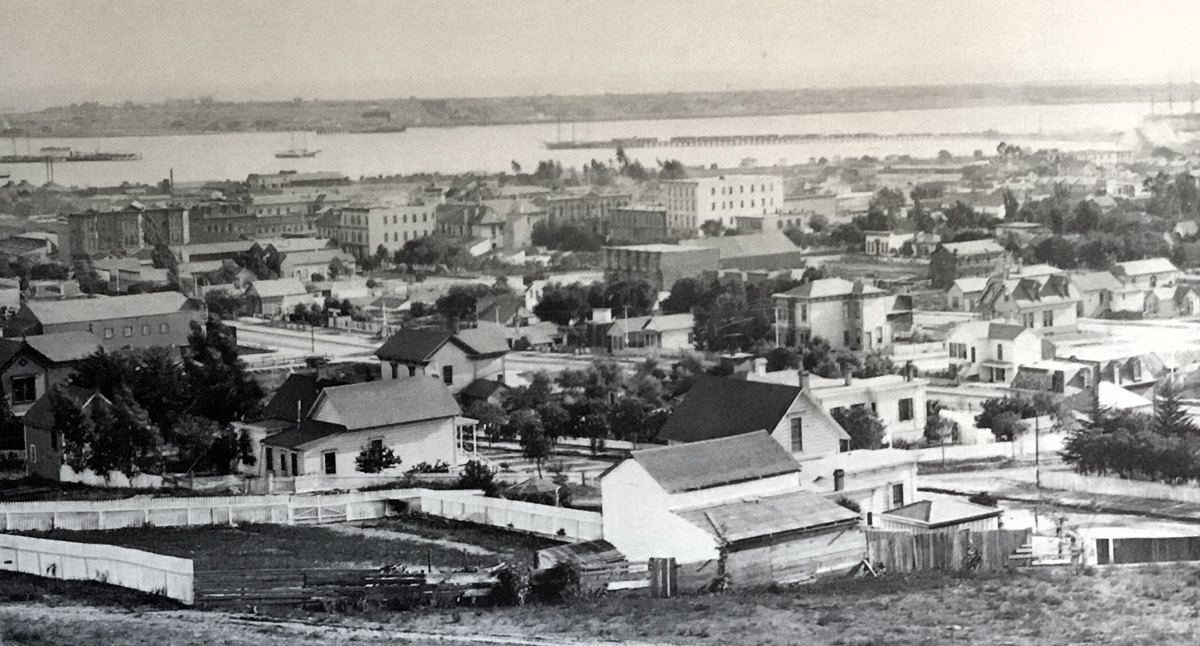
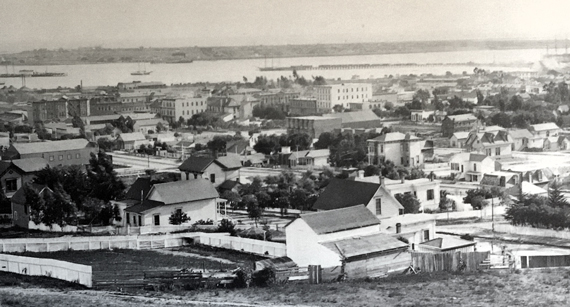 This photogravure view of San Diego, facing southwest, with Coronado in the distance, was taken in 1889 by Herve Friend for Gunn’s promotional leather-bound book Picturesque San Diego. and represents the small town’s tremendous growth following a financial boom and shortly before Gunn’s successful run for mayor. Courtesy SOHO |
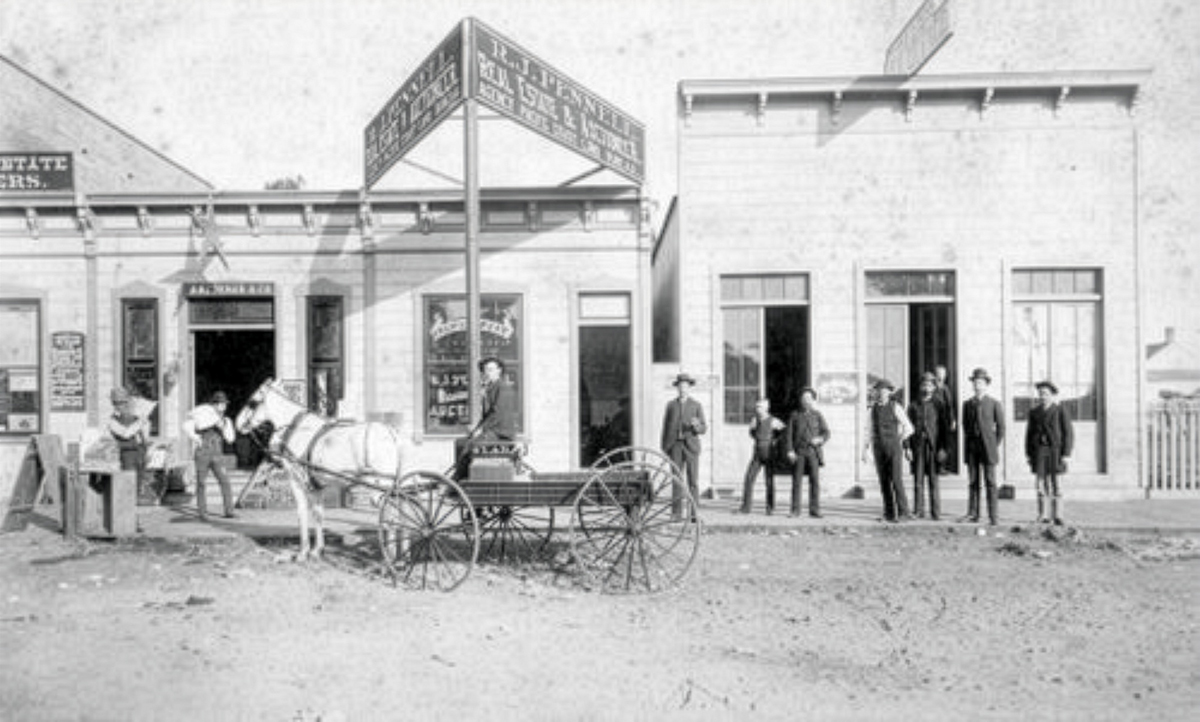
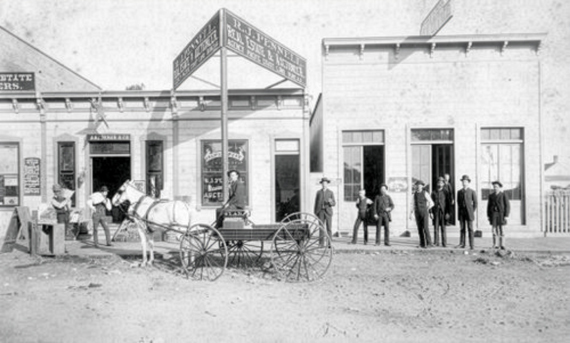 Douglas Gunn can be seen framed in the center doorway outside of the building at right, on the east side of Sixth Street near F Street. John R. Berry, soon to be Gunn’s successor as the San Diego Union’s owner and his rival in the 1889 mayoral election, is standing second from the right in this 1886 photo, wearing a bowler hat. Courtesy SDHC |
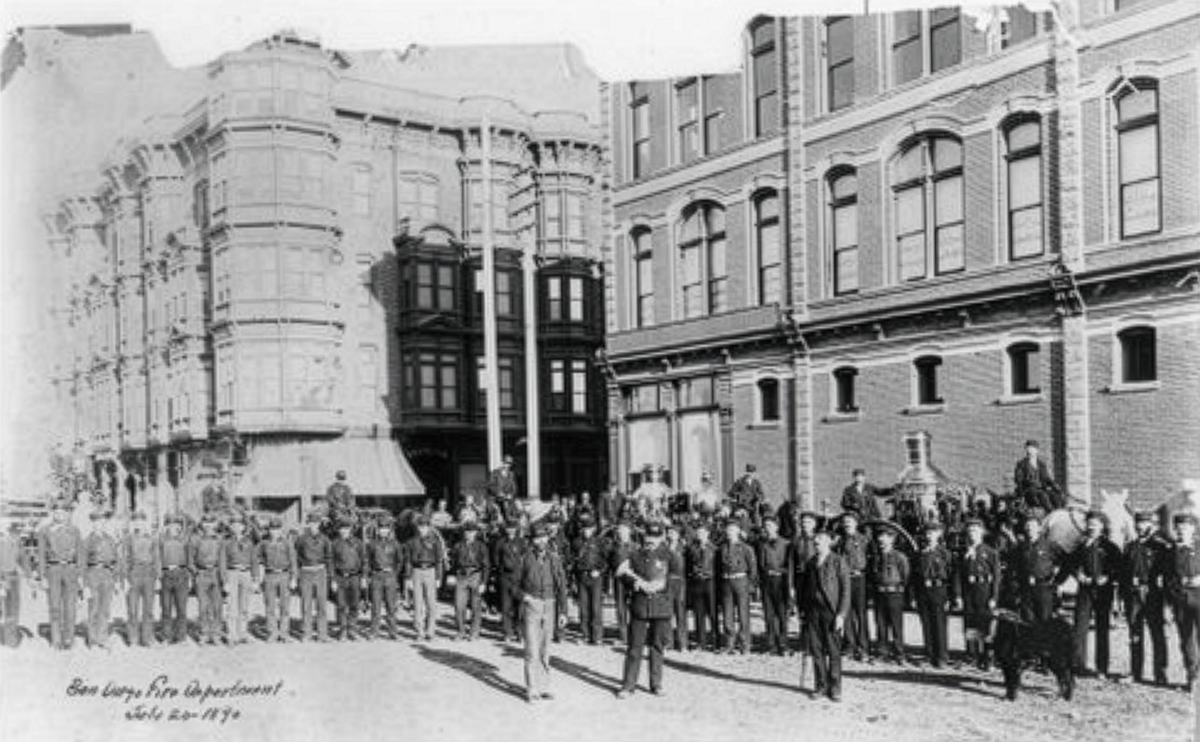
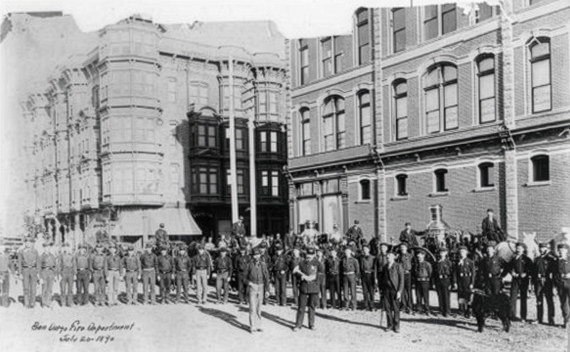 The City Council gathered to mark the San Diego Fire Department’s founding under the city’s 1889 charter. Mayor Douglas Gunn is seen standing in the front at the right, wearing a cutaway frock coat and top hat and holding a walking stick. The photo was taken outside the Chadbourne Furniture Company at Fourth and C Streets on July 20, 1890. Courtesy SDHC |
Born in Wheelersburg, Ohio in 1841, Douglas Gunn was named for Sarah Douglas, a free woman of color and fellow abolitionist friend of his parents, Lewis and Elizabeth Gunn. The older brother of Anna Lee Gunn Marston, Douglas left San Francisco for San Diego in 1868, when he was in his late twenties and well experienced in newspaper operations, civic work, and the mining industry.
Douglas bought the San Diego Union in 1873, and after a successful thirteen-year operation, Douglas sold it to Col. John R. Berry in 1886 to invest his time in the national promotion of his beloved, adopted city through the publication of Picturesque San Diego. The handsome, leather-bound tome featured seventy-two photogravure images of architecture and landscapes printed on gilt-edged paper.
During the city’s 1880s financial boom, Douglas also purchased investment properties and constructed a prominent commercial building called the Express Block, on the site of his previous brick newspaper building at Sixth and F Streets, which served as a key local hub for the Wells Fargo & Co. Express operations, stagecoach passenger staging, and freight delivery. Having established himself in business, he turned his attention to civic affairs and politics.
Though voters replaced the office of mayor in 1852 in favor of a board of trustees, a new city charter adopted in 1887 resulted in the election of Democrat William Hunsaker as San Diego’s fourth mayor. However, his ongoing role as San Diego’s District Attorney created a partisan conflict of interest and he was pressured to resign from his mayoral position less than one year into his term.
As a member of a newly elected charter council in 1889, Douglas, a Republican, ran for mayor on the Citizens Non-Partisan ticket, competing against fellow Republican John R. Berry, winning the election on April 2, 1889 by 428 votes.
Upon his election, he wrote, “I assume the office of mayor of San Diego with a very distinct realization of its responsibility. I shall endeavor to discharge the duties devolved upon me as they are written in the law, without fear or favor, in the interest of the city and all its citizens.”
Douglas’s tenure stood as the first “modern” mayor under the 1889 charter, which established the office of mayor in conjunction with a city council of two houses. Douglas described the two houses as “a continuous body representing the city at large; the other representing several wards of the city.” The charter also founded official police and fire departments.
Hunsaker subsequently filed suit against Douglas, challenging the validity of the 1889 city charter and mayoral election. He unsuccessfully took the suit to the Supreme Court in late 1890, not long before Douglas’s mayoral term expired in May 1891.
Under the stress of the lawsuits, and financial and health issues, Douglas opted not to seek a second term in 1891. His departing words, per the San Diego Weekly Union, advised voters “not to doubt the future greatness of San Diego,” and to “maintain their faith in our natural resources.”
Having accomplished a great deal during his twenty-three years in San Diego, Douglas passed away on November 28, 1891, while reading in his Sixth Street office. He was sitting on his sofa with an open copy of Sir Walter Scott’s Peveril of the Peak.
Douglas’s funeral was held at the home of his sister and brother-in-law, Elizabeth and Charles Hamilton. His silver trimmed casket bearing an engraved silver nameplate stood in the library, the bier draped in rich black broadcloth with tassels. The San Diego Weekly Union reported the procession to Mt. Hope Cemetery to be the largest public attendance ever witnessed in San Diego.
“No community, no county, no people ever had a more unselfish, courageous, and intelligent champion than San Diego had in Douglas Gunn,” the newspaper wrote.
BACK to table of contents
Read the rest of the ongoing The Marstons: A California Story History Series.
|
2026
2025
2024
2023
2022
2021
2020
2019
2018
2017
2016
2015
|