|
The Primary Suite: A Sanctuary for a Lifetime
By Robin Lakin
September/October 2026
In planning their Seventh Avenue residence, George and Anna Lee Marston wanted a home to serve their family needs through every stage of life, from the day in 1905 that the horse-drawn dray wagons carrying their furnishings arrived at the porte cochere to the time they would pass the home on to future generations.
The couple's elegant second-floor suite included a spacious bedroom with an east facing balcony and awning where George, often the first family member up and about, could enjoy the sunrise. Two walk-in closets, a modern fitted bathroom that even included an accessory foot bath, and a comfortable sitting room centered around a cozy fireplace completed their haven.
As was typical of the era, Arts and Crafts furniture is combined with more traditional period pieces. SOHO’s curatorial team borrowed from both bedroom and drawing-room traditions in their choices.
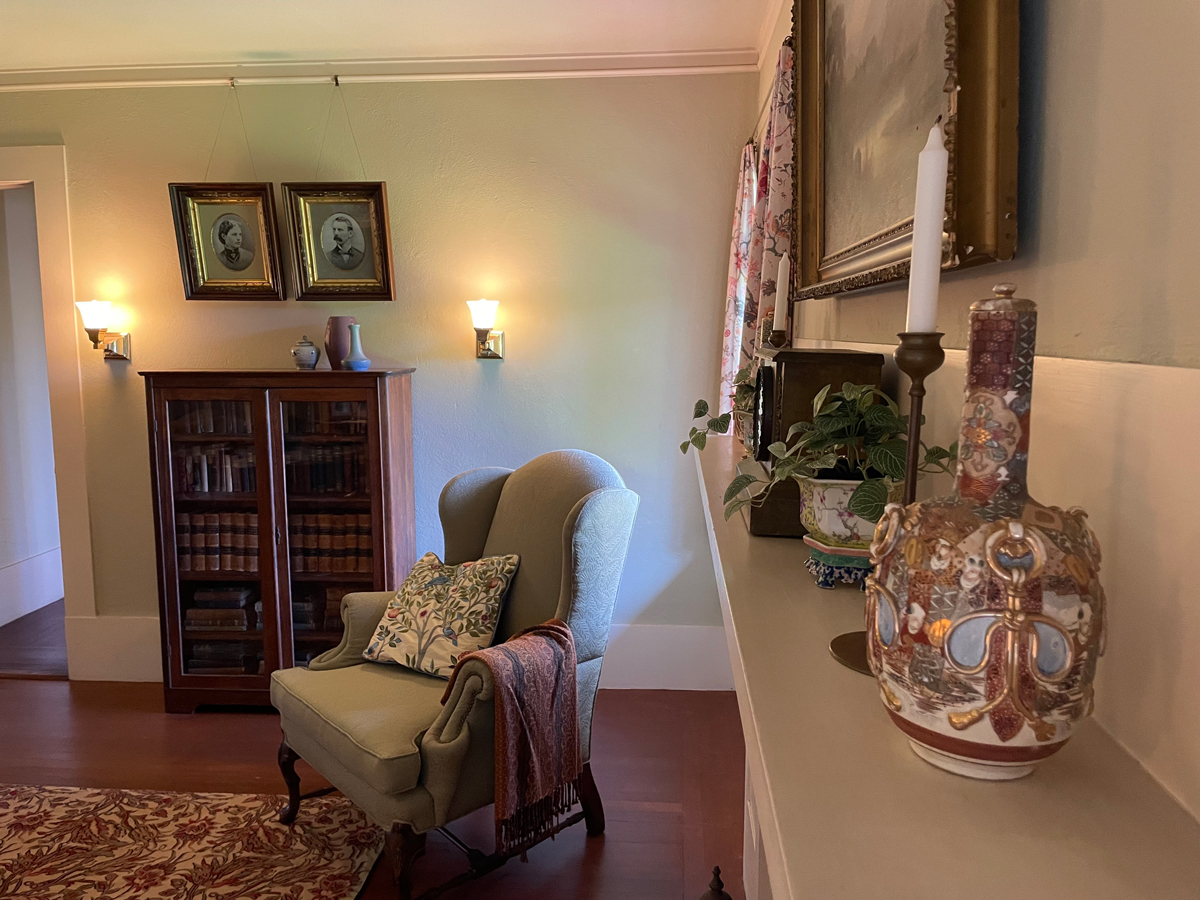
Rescued from the basement, the family’s wing chairs—now reupholstered in a soft Nile green jacquard fabric reminiscent of William Morris’ renowned Willow Bough design—once again occupy their original locations flanking the sitting room fireplace. Copies of George and Anna Lee’s wedding portraits in period appropriate late 1870s frames hang above the oak Larkin bookcase from 1905. A donated mahogany pedestal table and tufted chaise, similar to pieces visible in a 1970s photo of the room, help recreate an environment reminiscent of Anna Lee’s decorating style.
 |
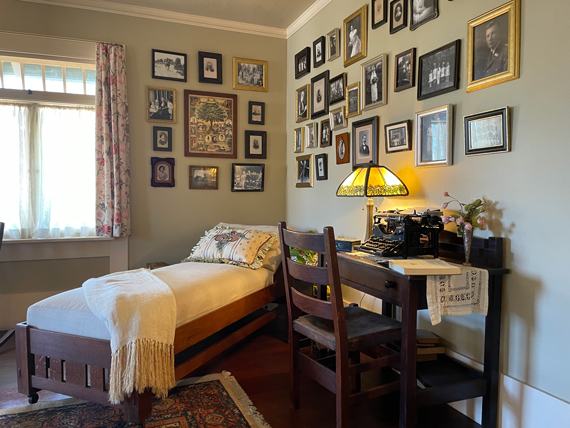 |
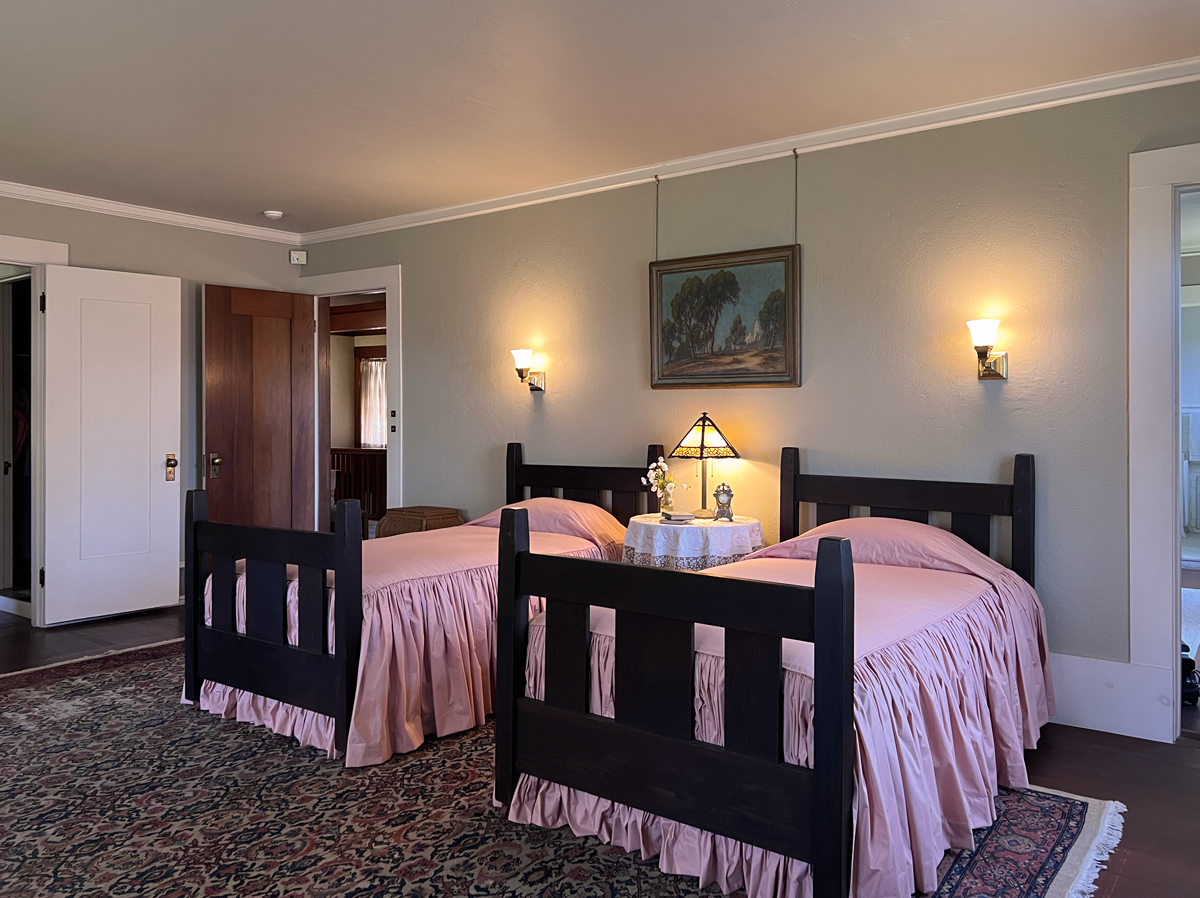
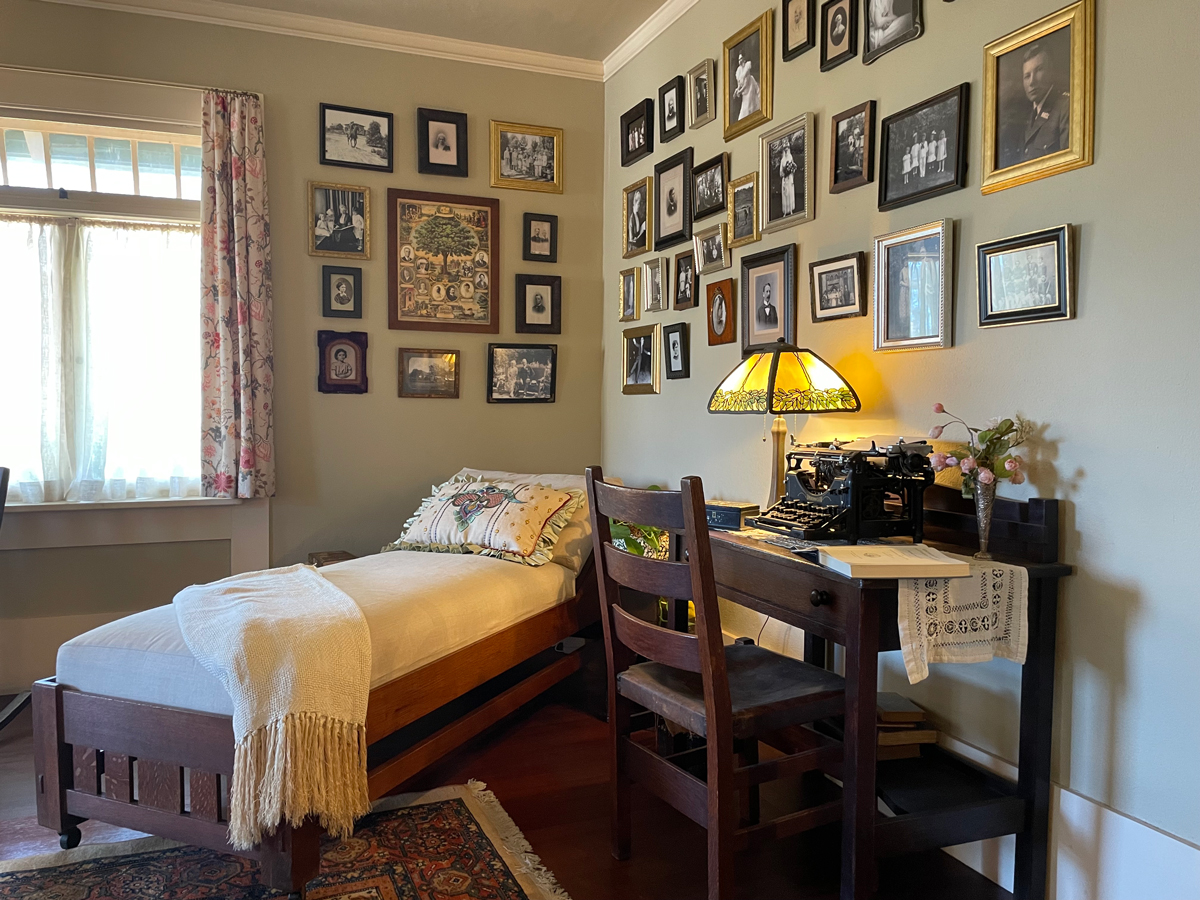
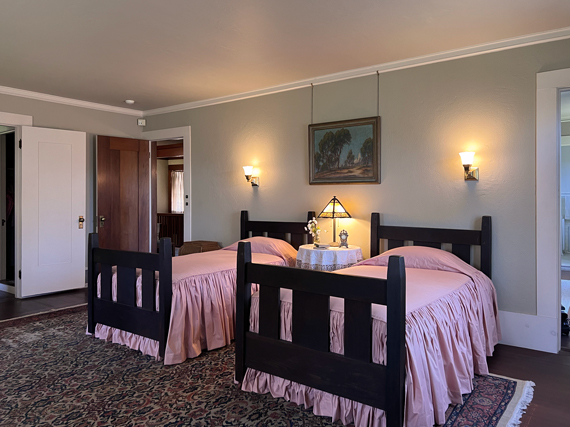
Left The 1927 D.A. Lovell pastel, titled Balboa Park, hangs above the pencil-post-style beds attributed to L. & J.G. Stickley. Its placement is particularly fitting, as the California Tower, the park’s iconic landmark depicted in the pastel, could be seen from the Marston House’s second-floor windows. Photo by Sandé Lollis. Right A pleasing arrangement of a century’s worth of Marston family photos adorns the walls. An early edition of Records of a California Family, composed of Gunn family letters and journal entries with commentary and context provided by Anna Lee Marston, lies adjacent to an early model typewriter reminiscent of the one she used to write this book. It is still in print and available in the Marston House Museum Shop. Photo by Dean Glass |
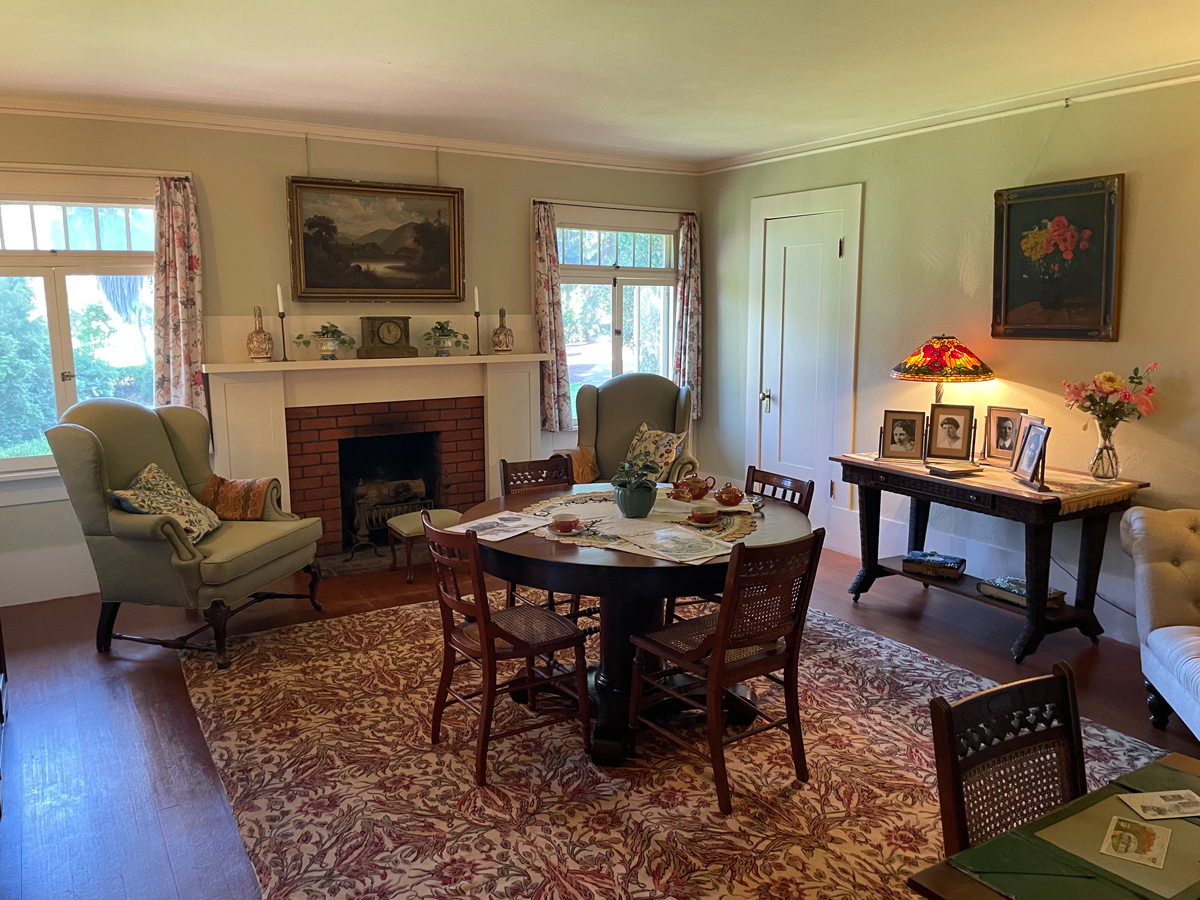
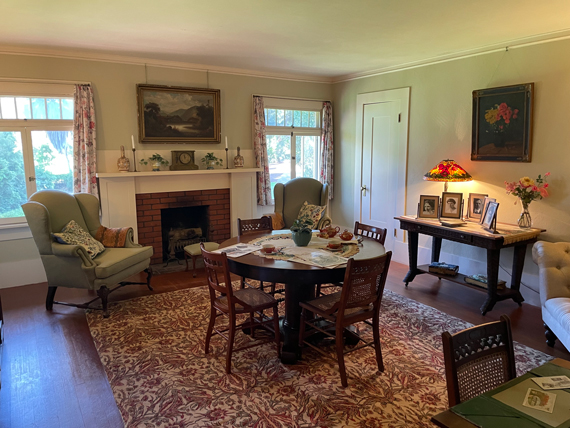 Matching drapes in the primary suite’s sitting room highlight the home’s expansive green lawn and parkland beyond. They incorporate Anna Lee Marston’s love of flowers into this multiuse day room, originally enjoyed by her mother, Elizabeth Gunn. The mix of original furnishings and later-donated museum pieces representative of the family’s belongings reflects their conservative lifestyle: older family furniture continued to be used in the home’s less formal rooms. Photo by Dean Glass |
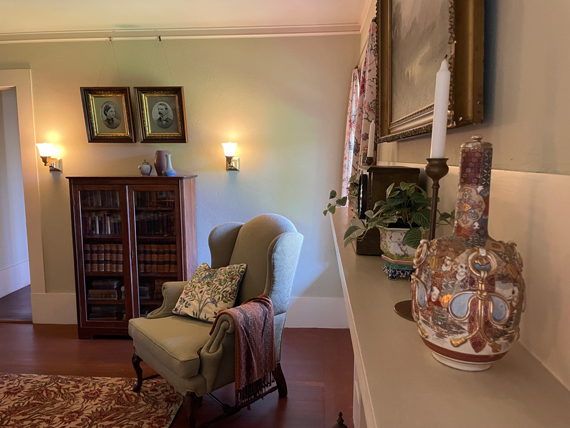 This view of the sitting room highlights one of the pair of original Marston family wing chairs, reupholstered in a soft green jacquard reminiscent of William Morris’s renowned Arts and Crafts Willow Bough design. Seated by the windows, Anna Lee created her beautiful needlework pieces here. The 1905 Larkin bookcase holds a collection of books such as the couple would have begun acquiring in their youth. Photo by Dean Glass |
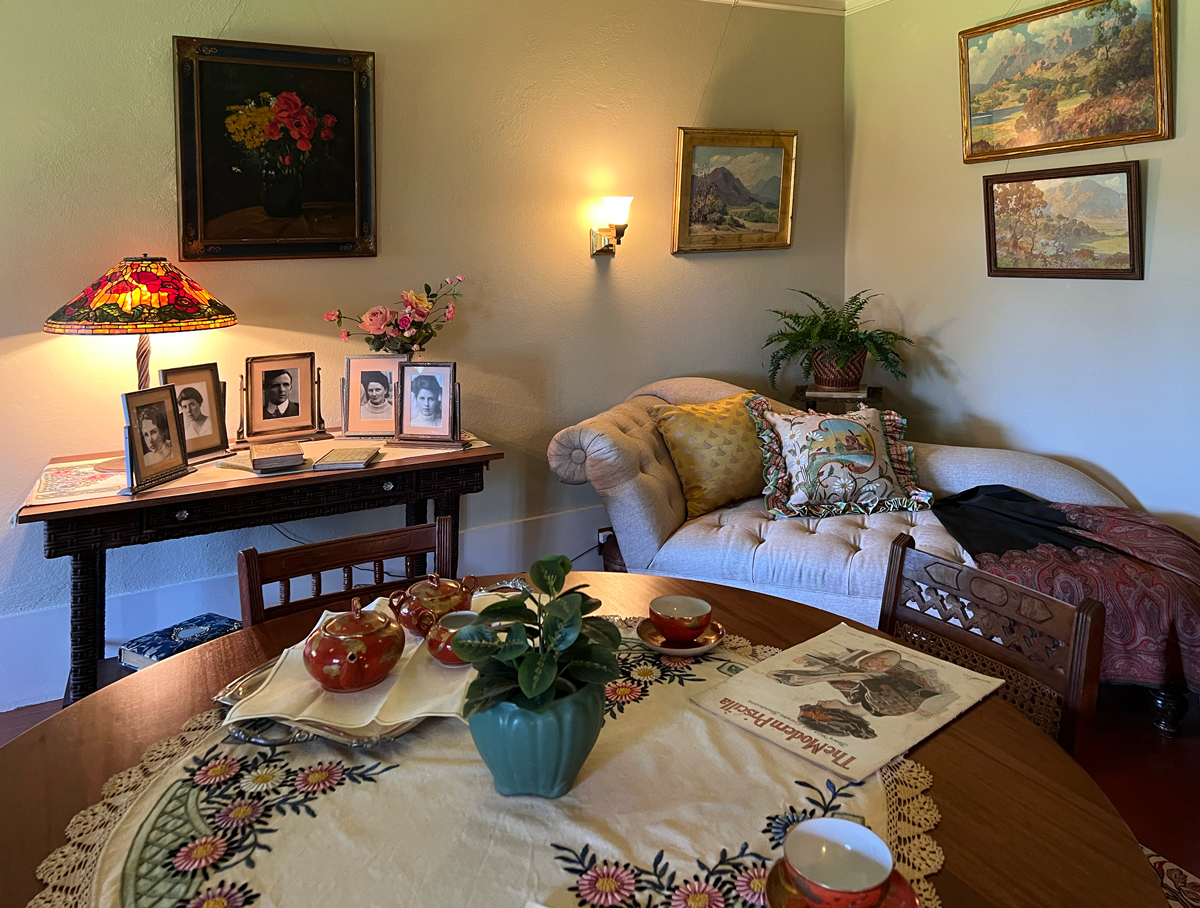
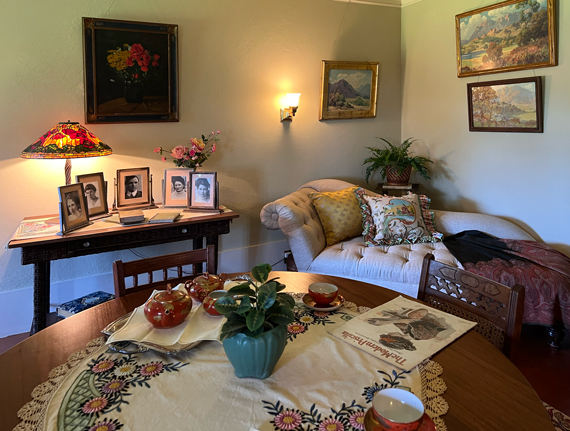 Atop a library table, photographs of the Marston children, lit by the stunning Poppy-patterned Tiffany lamp, date from around October 1905, when the family moved into the house. The Marstons bought works from leading San Diego painters. A plein air painting by an unknown artist in the style of master artist Alfred Mitchell, and two Maurice Braun prints hang above the tufted chaise, which is stylistically similar to one that once graced this room. An early 20th-century pillow trimmed in rainbow-hued silk ruffles bears the hand-embroidered, sentimental motto, “There’s no place like home.” Photo by Sandé Lollis |
Oak pencil post twin beds, attributed to L. & J.G. Stickley, are dressed in polished cotton gathered-skirt bedspreads, a style that has remained popular since the late nineteenth century. The bedspreads’ soft blush tone picks up the hues in the new curtains and the carpet, adding warmth and subtle color to the room.
For visitors touring the house, Bradley & Hubbard glass shaded lamps provide a graceful visual transition to the original Tiffany “Poppy” lamp on the library table in the adjacent sitting room. Early twentieth-century embroidered pillows throughout the suite reflect the kind of extraordinary needlework for which Anna Lee was well known.
As was common in the early 20th century, the suite’s paint, wallpaper, curtains, and textiles were often coordinated to create a cohesive interior. Though no interior photographs from before the 1970s exist to work from, archival evidence offers clues to the room’s original appearance and suggests a carefully considered sanctuary within the home.
Archival evidence also shows that decorative changes and upgrades occurred throughout the family’s residency, including a bathroom renovation in the 1930s. The bedroom's earliest extant evidence of a wall treatment appears to be wallpaper with dainty, vivid pink rosebuds scattered on a soft, gray-green field in a shade similar to the current painted wall color. Polished cotton chintz curtains in a vibrant, stylistic 1940s Jacobean floral print adorned the windows until 1987.
To refurbish the suite, SOHO’s curatorial team selected a Colonial Revival Jacobean floral fabric, representative of patterns popular during the early twentieth century, for the bedroom and sitting room window curtains.
Together, these carefully researched furnishings, finishes, and decorative details help recreate the atmosphere of George and Anna Lee Marston’s private living quarters, giving visitors a richer understanding of how they lived in one of San Diego's most significant historic homes.
BACK to table of contents
Read the rest of the 2026 year-long series: Inside the Marston House.
|
2026
2025
2024
2023
2022
2021
2020
2019
2018
2017
2016
2015
|