|
Después de la Guerra:
Old Town San Diego’s Post-1850 California State Historic Landmarks
Hiding in Plain Site, Part 5B
By Alexander D. Bevil, California State Parks Historian II (Retired)
July/August 2026
During the two decades después de la guerra, or following the Mexican-American War, from 1850 to 1870, Old Town San Diego transitioned from a former Mexican pueblo based on agriculture and ranching to a market-driven Western American frontier town. During this time, an influx of new American and primarily Jewish European entrepreneurs erected several single- and multistory wood-frame, mercantile establishments and homes, along with some constructed of fired clay brick, amid Old Town’s venerable Mexican-Era adobes. However, disaster struck on April 20, 1872 when a fire burned through half of Old Town’s already declining business district. Instead of rebuilding, many chose to relocate further south to what is now downtown San Diego. The following California State Landmarks (CHLs) within the community of Old Town San Diego are associated with this transitional period. All but the Whaley House are located in Old Town San Diego State Historic Park.
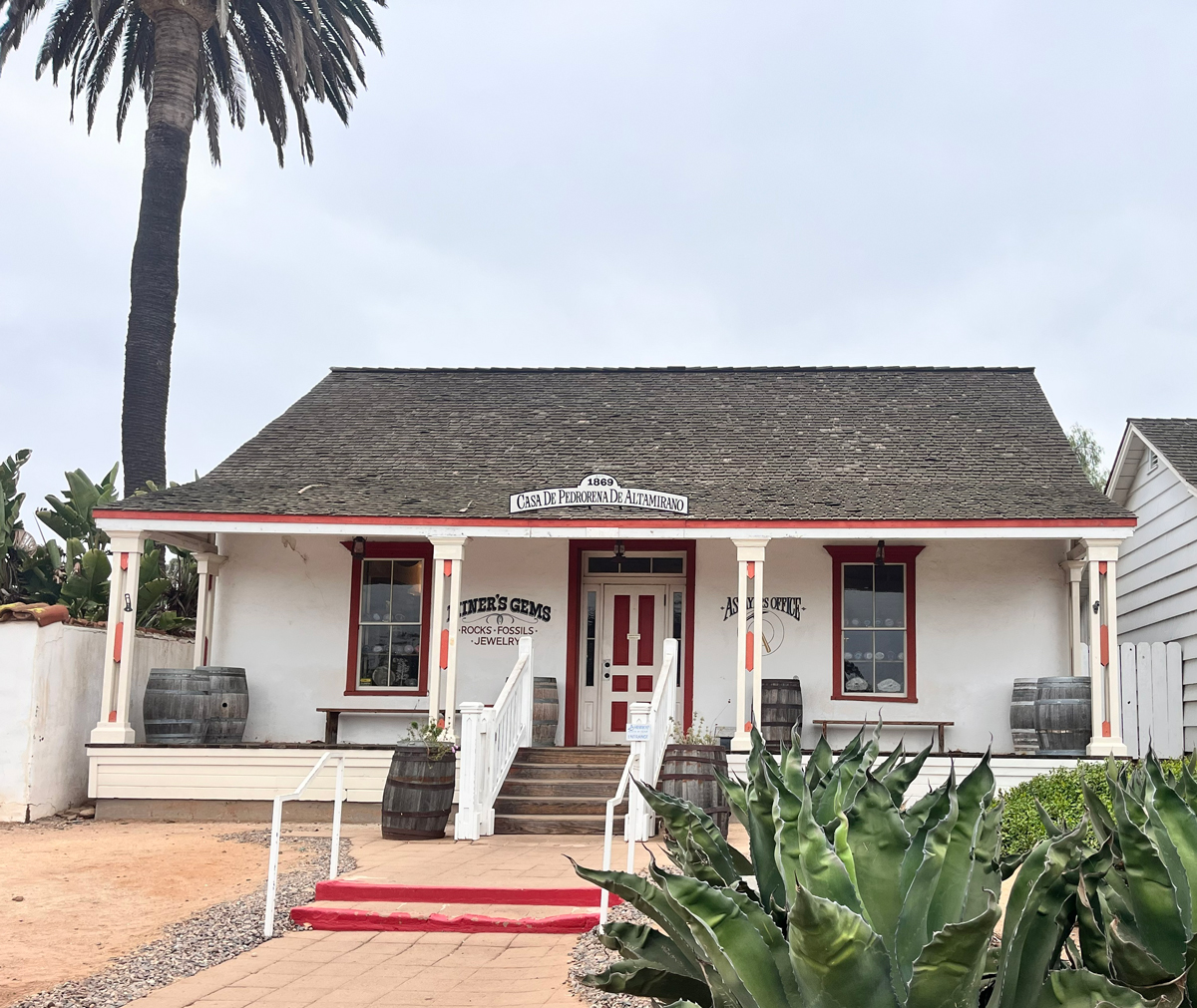
CHL No. 70: Casa de Pedrorena-Altamirano
Ranchero Miguel de Pedrorena erected Old Town’s last adobe-built home in 1869. Before his death, Pedrorena’s father had partnered with William Heath Davis to found New Town in 1850. Don Miguel also built one of the first wood-framed houses in Old Town next to his own adobe for his sister Ysabel and her husband José Antonio Altamirano. The San Diego Union later established its first office and printing press in the former Altamirano residence.
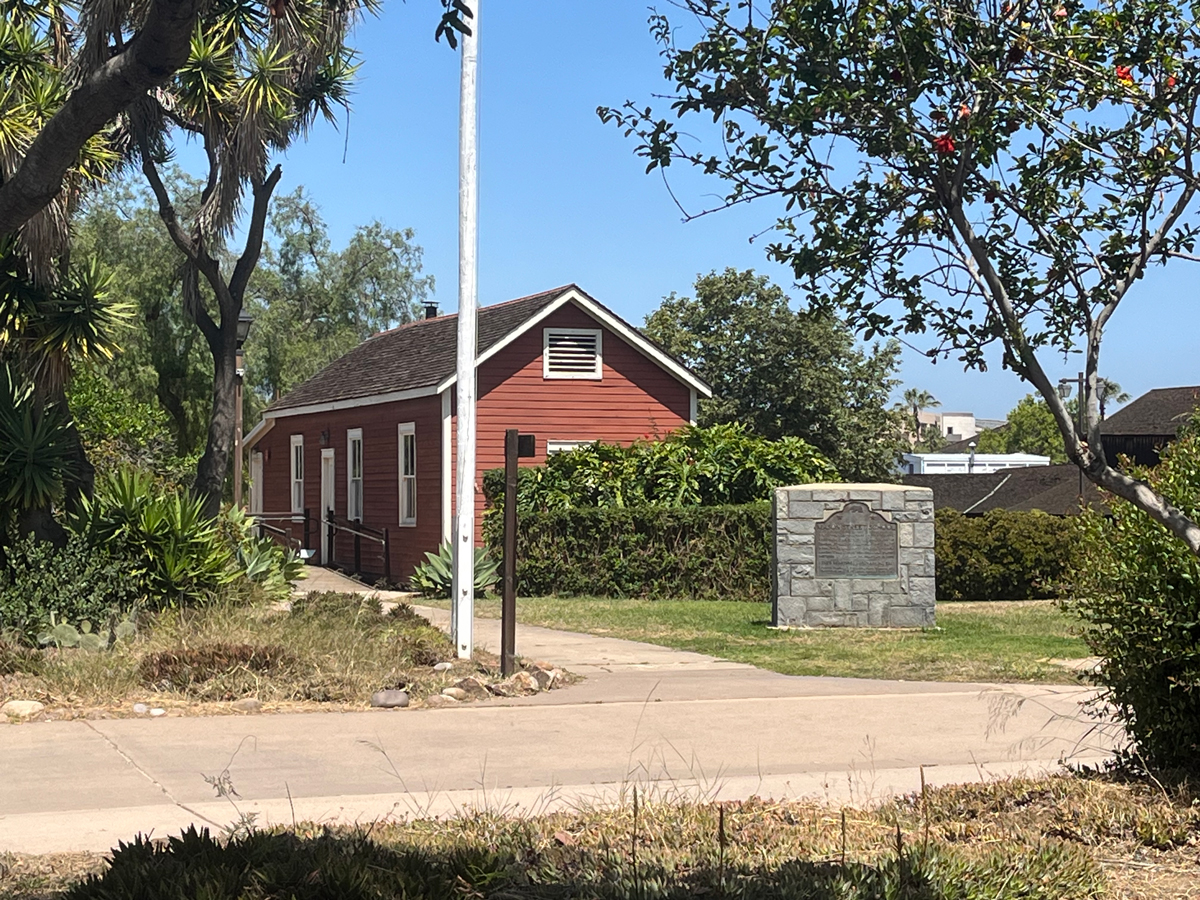
CHL No. 538: Mason Street School
At the time of its 1865 completion, San Diego County’s first publicly owned school house had about forty-two students enrolled. However, about a third would be absent for a variety of reasons, especially if there was a competing fiesta or rodeo that day, or if needed to assist the family at home. Teaching was a challenge because there was no separation of students based on age or education level. All received a standardized mid-19th-century American education that included reading, writing, and arithmetic. In 1873, after a new, more commodious two-story wooden structure replaced it, the original schoolhouse was taken apart and rebuilt as a private residence and later converted into a popular tamale restaurant near Taylor Street. In 1952, the San Diego County Historical Days Association acquired and relocated the former restaurant building to its present site. Restored by popular subscription in 1955, it continues to serve as a living history museum offering adult education classes and programs on California history.
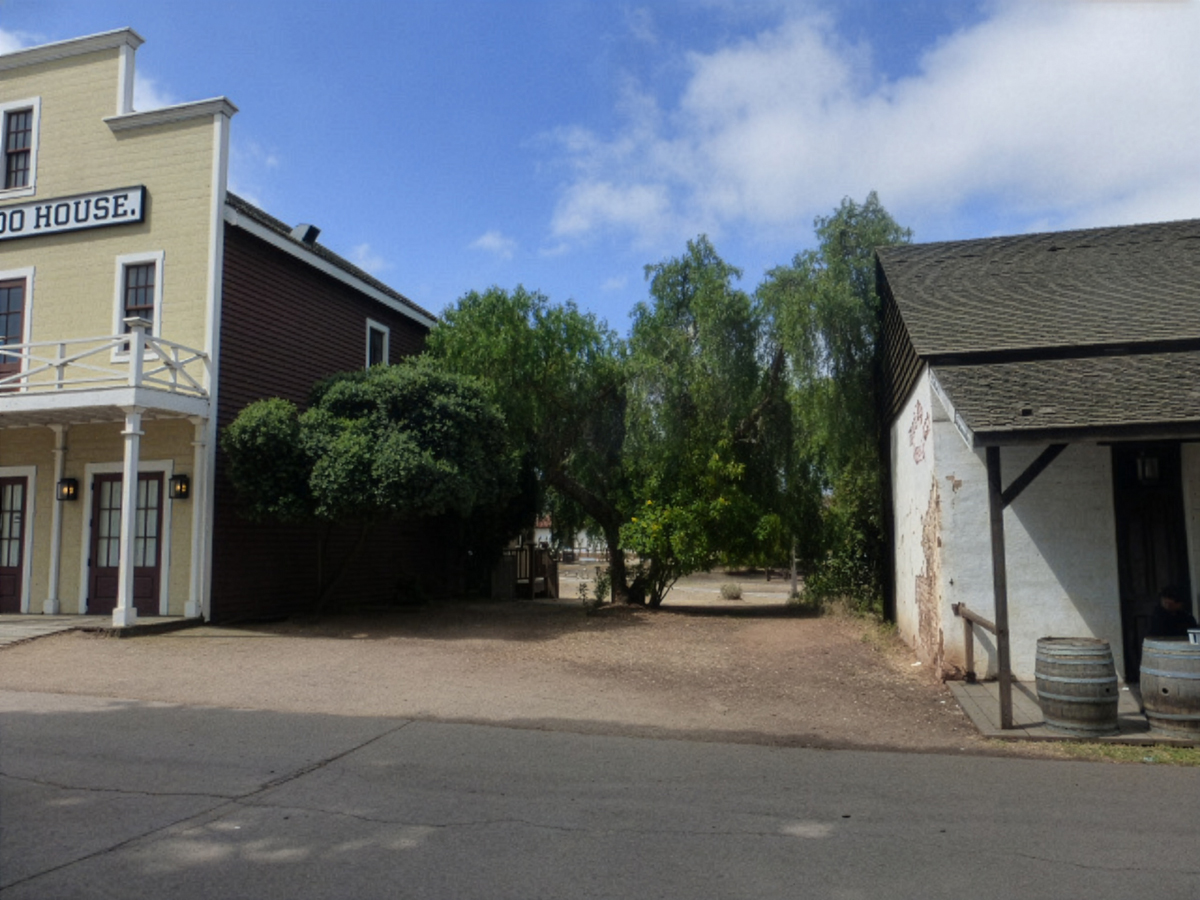
CHL No. 491: Exchange Hotel Site
Sometime before May 1851, George P. Tebbets and his partner Philip Hoof erected the Exchange Hotel on this site. Of the many public houses built around the plaza during the town’s early American period, this is where members of Southern California’s oldest Masonic Lodge held their first meeting on June 29, 1851. Like Tebbets, who served as a town councilman and mayor, many of these Masons played key roles in shaping the growth and development of the town and county. In 1855, the Franklin Brothers demolished the building to build their new three-story hotel. Unfortunately, it was among those destroyed during the 1872 fire. Today, the site is a vacant lot between the rebuilt Colorado House and the Racine and Laramie tobacco shop.
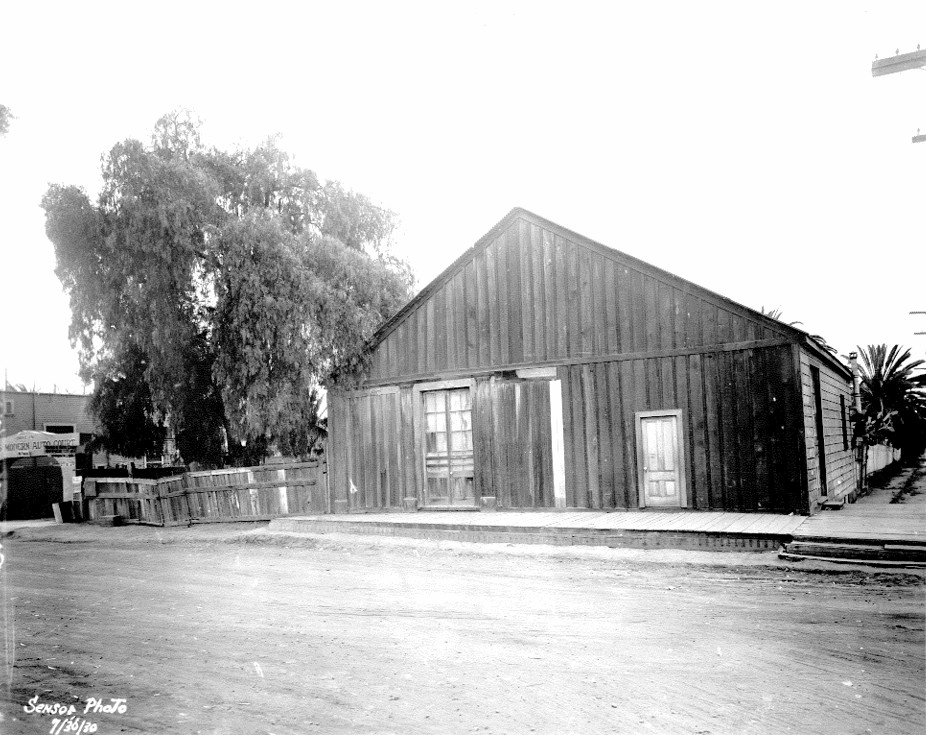
CHL No. 66: Congress Hall Site
Local entrepreneur George Robinson converted the former Magnolia Billiard Saloon on the northeast side of the plaza facing Calhoun Street into the Congress Hall circa 1867. Three years later, French expatriate rancher Vincent Llucia bought and relocated the building to the northwest corner of Calhoun and Wallace Streets. In addition to running the saloon, Llucia sold general merchandise and fresh French bread that he baked daily in an outdoor oven. On occasion, the front porch’s second-story balcony provided a vantage point for bands and public speakers. While it did serve as a post office, the building has erroneously been associated with the famous but short-lived transcontinental Pony Express, which never physically arrived in San Diego, although mail did arrive on horseback from Julian. The hall was pulled down prior to July 1930 and replaced with a much simpler structure. This in turn was removed in 1939 to make way for the nearby Casa de Pico Motor Hotel’s restaurant.
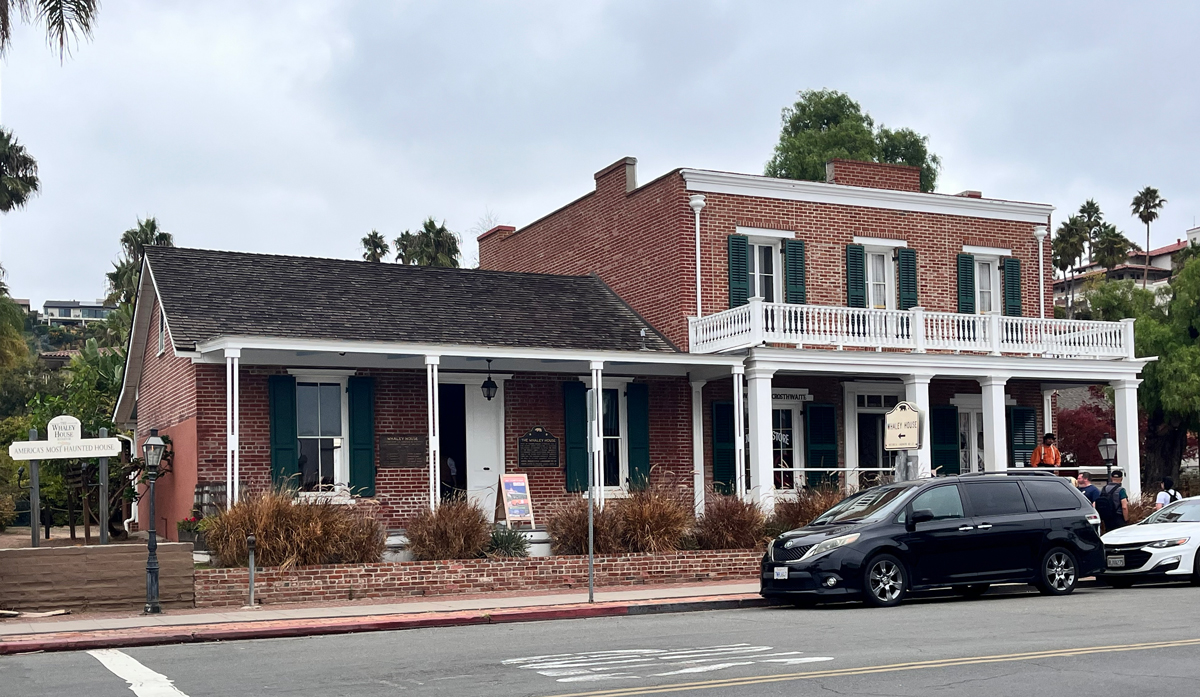
CHL No. 65: The Whaley House
New Yorker Thomas Whaley built Southern California’s oldest all-brick structure in 1857 from locally sourced kiln-fired clay bricks, mortar, and plaster. He also had most of its interior woodwork and hardware shipped around Cape Horn by sailing vessel. Besides housing five generations of Whaleys, it had been a general store and saloon, granary, and dairy. Other uses included a funeral parlor, theater, the town’s first Sunday School, a court house, hall of records, and meeting place for the board of supervisors. The house’s living room, also used as a music salon, was built over the spot where, on September 18, 1852, French Canadian James “Yankee Jim” Robinson was hanged for the crime of stealing a small boat! He was buried a few blocks away at El Campo Santo cemetery. The house was restored beginning in 2000 by Save Our Heritage Organisation working in partnership with the County of San Diego, after decades of neglect and inappropriate, non-historic remodeling. The exterior was restored over the 20 years of SOHO's stewardship.
SLIDE SHOW
BACK to table of contents
Read the rest of the ongoing Hiding in Plain Site Series.
|
2026
2025
2024
2023
2022
2021
2020
2019
2018
2017
2016
2015
|