|
Preservation and Gentrification: An Evolving Story
September/October 2025
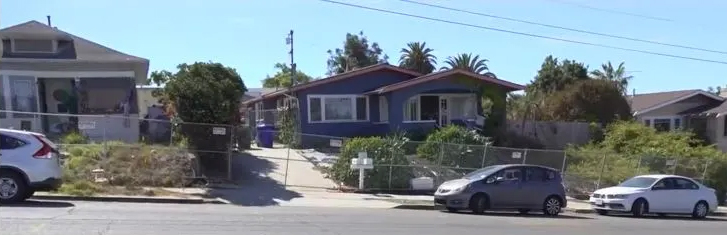
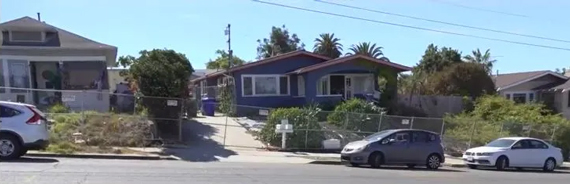 Three adjacent lots on A Street in Golden Hill have been recently sold and are all now behind wire fences. The proposed development (“the Project”) at 2935 A Street is for an 8-story multifamily building. Neighbors feel like the city has forgotten about the families who live in the area and now favors big developers.
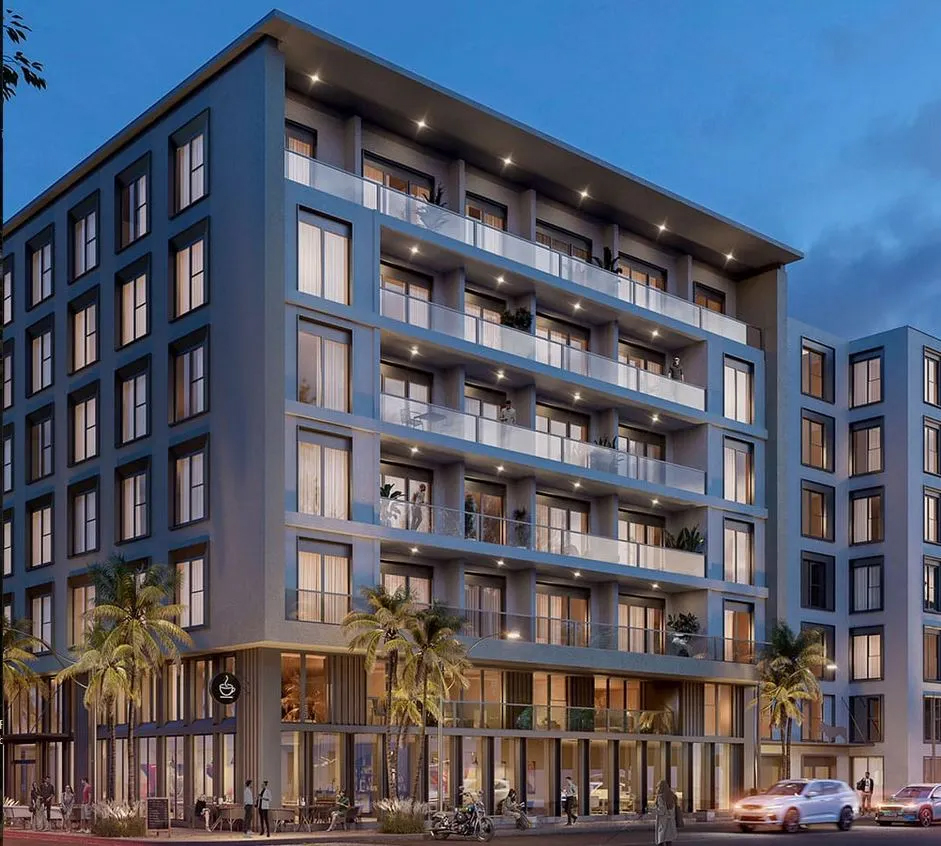
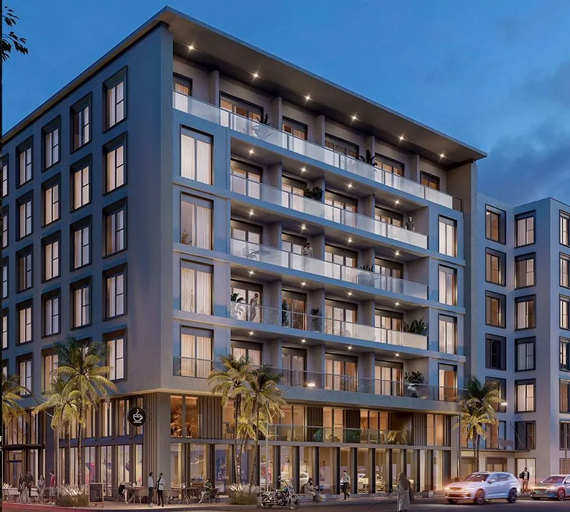 An example of what the developer has constructed elsewhere (this is NOT the proposed apartments for A Street). Photos courtesy OB Rag |
It’s true that historic preservation has, at times, and in different eras, played a role in gentrification. In certain neighborhoods, restoring older homes and buildings made these areas more desirable, which attracted investment, drove up property values, and contributed to the displacement of long-standing residents. That history needs to be acknowledged.
But it’s just one part of the story, and it's not at all the story today. Today, the preservation movement stands as one of the few consistent barriers against displacement.
What we’re seeing now is a new wave of gentrification, one far more aggressive and less tethered to community values. It’s driven not by the careful restoration of old homes, but by the widespread demolition of existing neighborhoods with their naturally occurring affordable housing and their replacement with massive, market-rate developments. Executed under the banner of “housing solutions,” this new housing is often unaffordable to the very people the builders claim to serve.
Today's preservationists possess some of the loudest voices pushing back against this new kind of gentrification. We’ve learned from the past, and we now understand that true community preservation means not only saving buildings but also protecting affordability, culture, history, and livability.
Older homes, apartments, and commercial buildings often serve as the naturally occurring affordable housing (NOAH) that keeps neighborhoods diverse and economically inclusive. Demolishing them doesn’t solve the housing crisis; it makes it worse, replacing modest homes and human-scale neighborhoods with oversized luxury units or expensive micro-apartments.
Preservation today isn’t about freezing neighborhoods in time or just catering to aesthetics. It’s about resisting the destructive forces of speculation and the corporate development industry to ensure that change happens alongside communities, not to them. It’s about standing up to the false narrative that the only way forward is to erase the past.
Preservation is one of the few forces working to prevent a form of displacement that is far more damaging, widespread, and corporate-driven than in the past. Preservationists aren’t the problem. We’re part of the solution.
We now face an aggressive and ultra-high profit-driven wave of gentrification, cloaked in the language of “affordable housing” and “progress.” Developers, who are often backed by YIMBY lobbying groups and aided by increasingly lax and harmful planning laws, are bulldozing character-rich homes and small-scale buildings to erect out-of-scale, high-end boxes. These alien structures, while marketed as solutions to the housing crisis, typically rent or sell at prices far out of reach for the average working family. What remains of these communities is too often marked by a loss of their identity, livability, and vital socio-economic diversity. This process also drives up prices for land, ensuring that first-time buyers are kept out of the market.
In contrast, preservationists champion the retention and adaptive reuse of existing buildings—solutions that prove more sustainable economically, environmentally, and socially than new construction. Planned and built to a human scale, older neighborhoods embody walkability and mixed-use zoning. In other words, they already offer the very characteristics that planners and politicians claim to desire in new developments.
Preservationists seek to maintain these authentic communities, protect naturally occurring affordable housing, and resist demolition that clears the way for upscale gentrification disguised as progress.
This is common-sense stewardship. Demolishing functional, culturally significant buildings in the name of "affordable housing" when in reality they are replaced with luxury units is a cruel shell game. Preservation resists that game. It asks the hard questions: Who is this housing really for? What are we losing? And who benefits from the erasure of our city’s historic fabric and social networks?
Preservation is one of the most powerful tools we have to resist today's destructive, homogenizing forces of gentrification in the 21st century. We must join together and use it quickly, widely, and effectively. Because we're the defense.
BACK to table of contents
|
2026
2025
2024
2023
2022
2021
2020
2019
2018
2017
2016
2015
|