|
The Marston House Kitchen: The Other Family Room
By Robin Lakin
July/August 2026
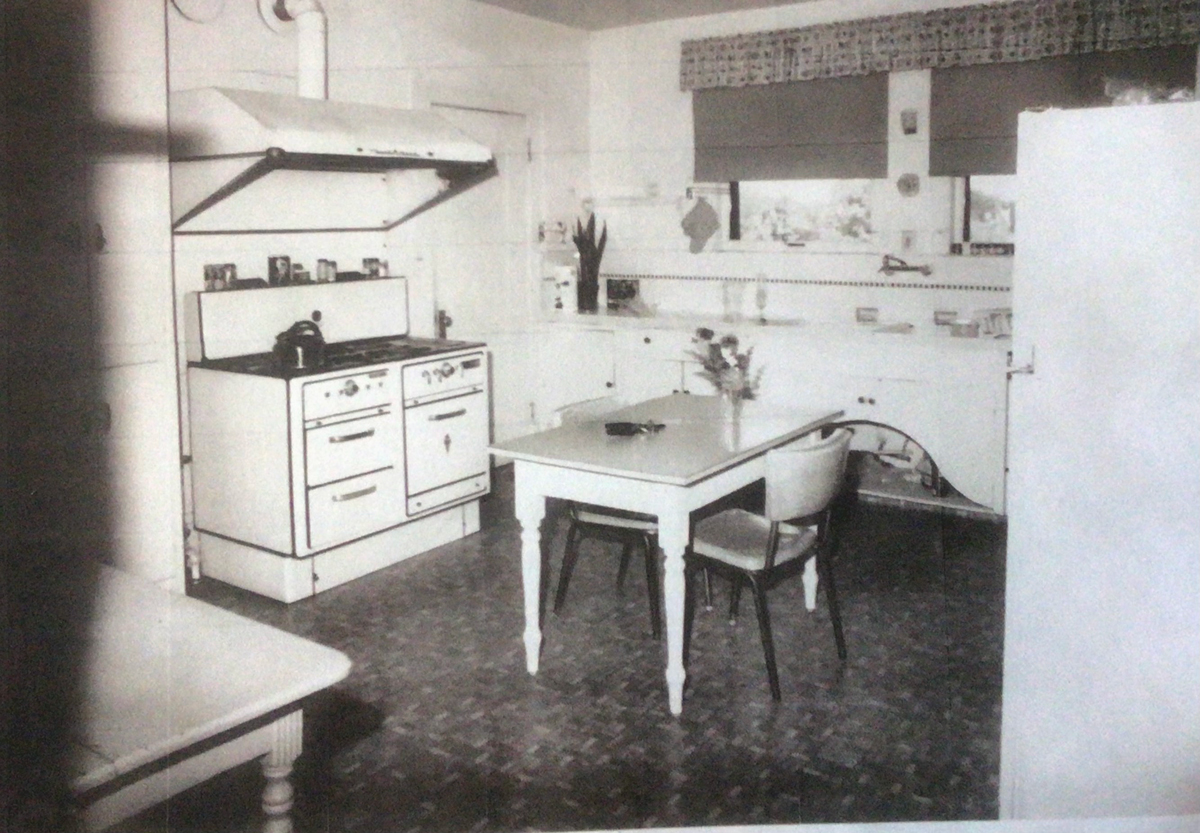
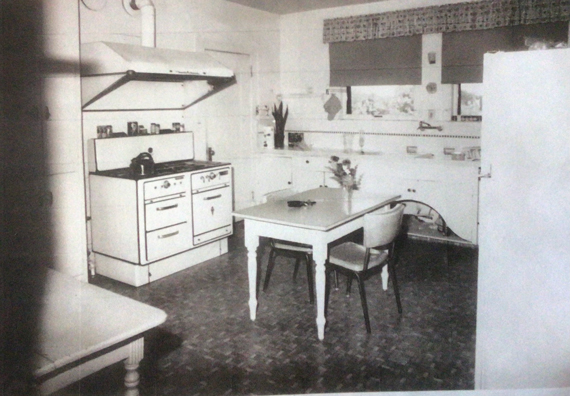 The Marstons’ kitchen, c. 1974. The c. 1950s window shades and curtains (which extended to the butler’s pantry), the 1930s Vent-a-Hood and Wedgewood stove, 1920s green-and-yellow Armstrong linoleum flooring, and the family’s two 19th-century work tables were still in place in 1987, when the Marstons transferred the house to the City of San Diego. Courtesy San Diego History Center (SDHC) |
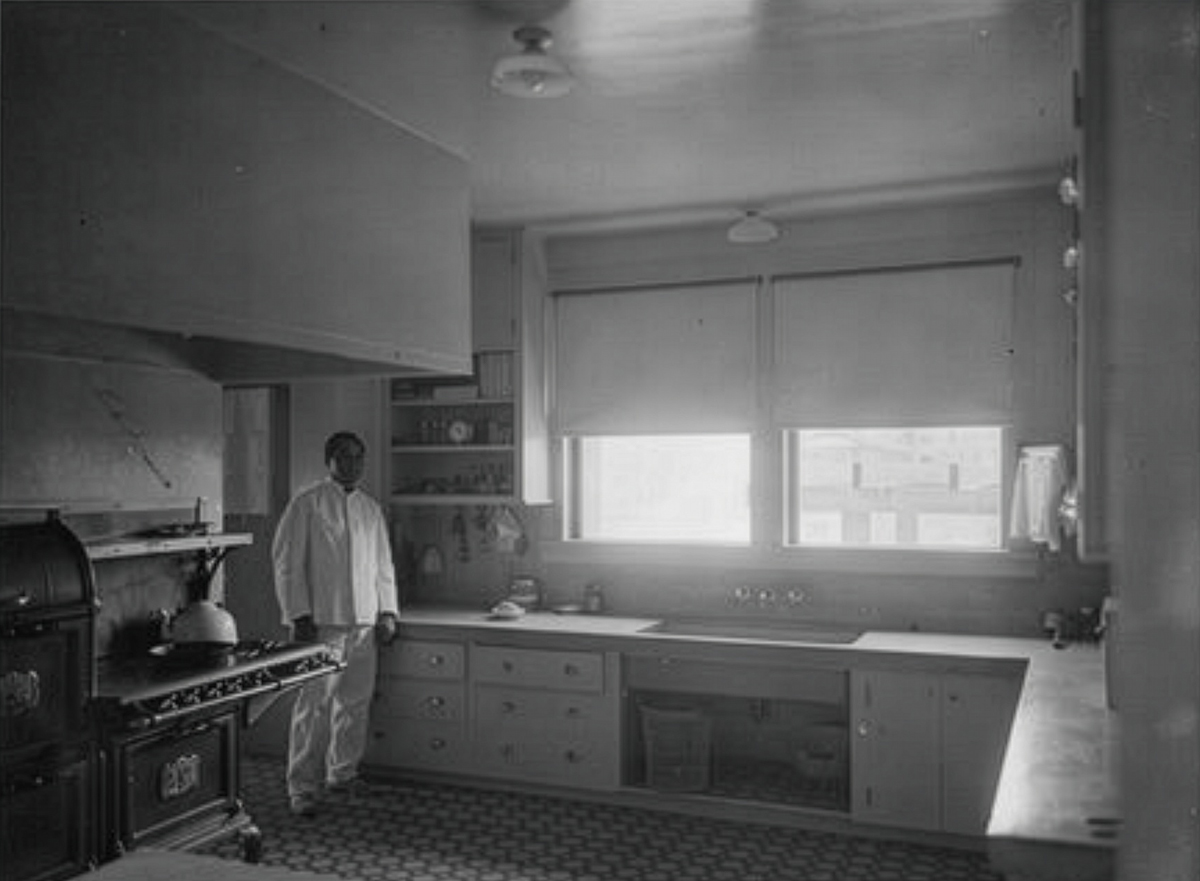
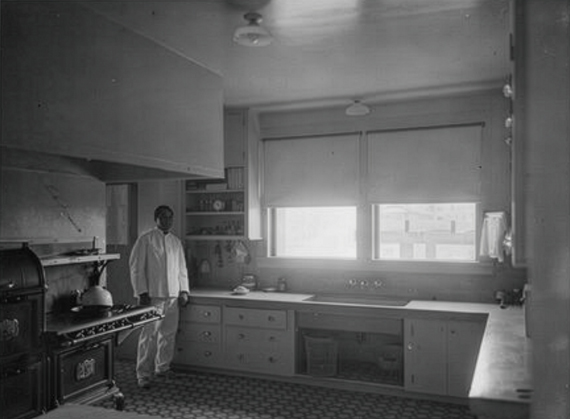 For a glimpse of how the Marston House kitchen looked in 1905, we have a photograph of Irving J. Gill’s kitchen design in the Barker House (1911) in San Diego. The two rooms share a nearly identical floorplan and are outfitted with a concrete magnesite countertop, a cast iron cookstove, and rubber interlocking floor tiles. Courtesy SDHC |
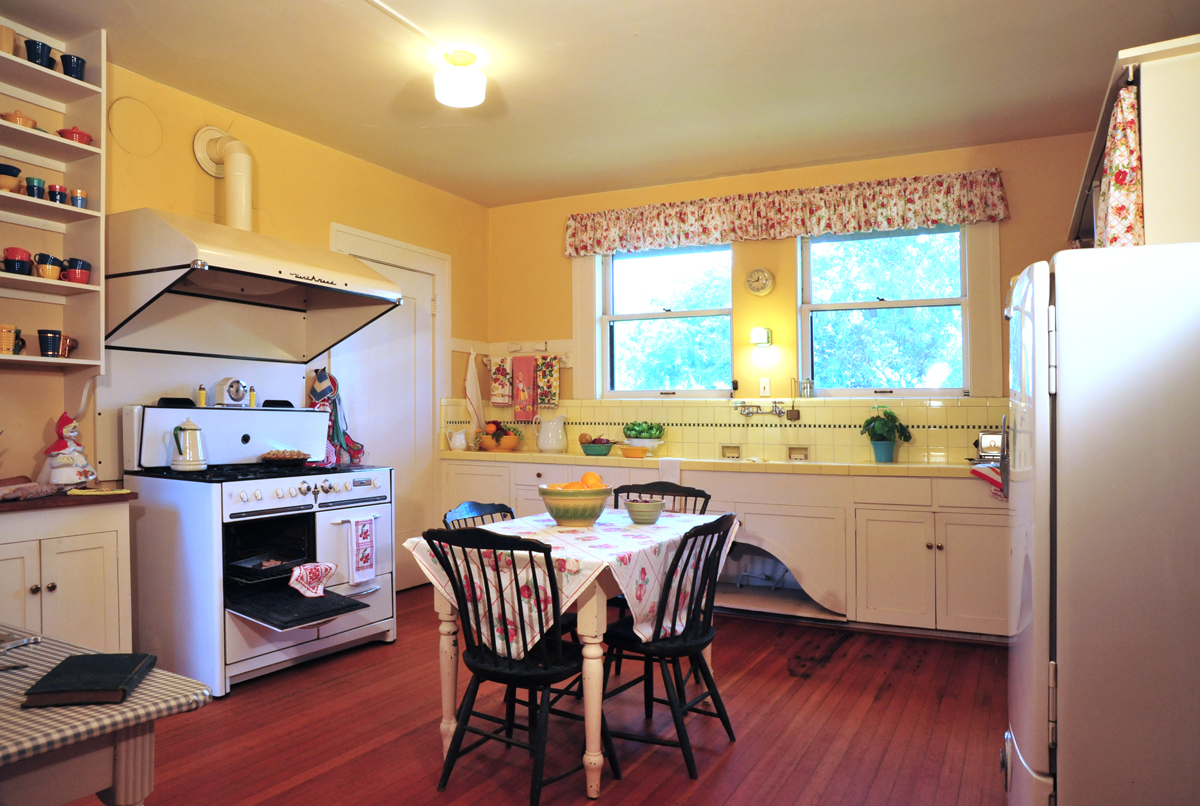
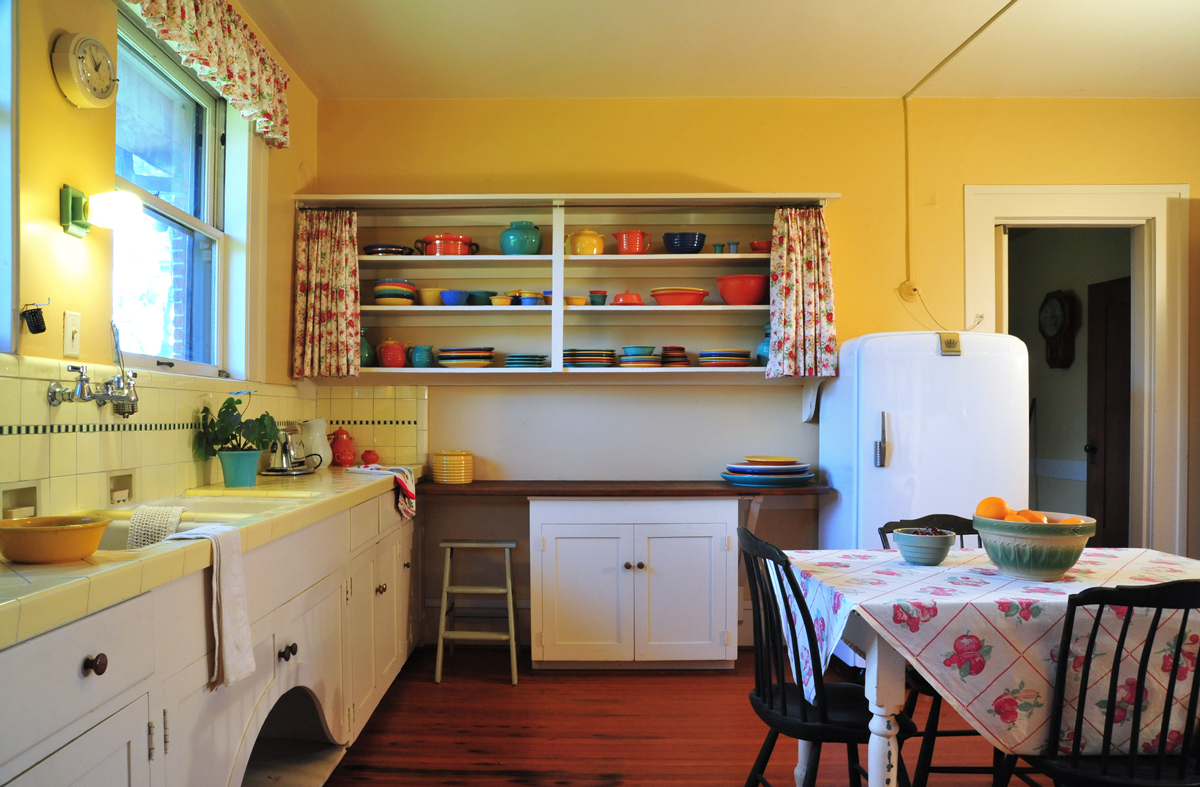
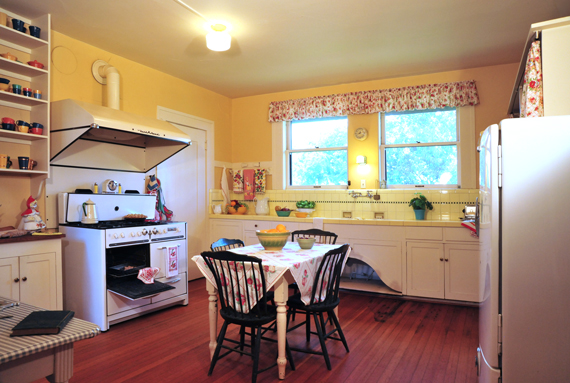 Refurbished by SOHO to a mid-1930s interpretation, the Marston House kitchen now reflects the vivid candy-colored response to the dreary Great Depression as conveyed in the textiles, dinner and service ware, and ceramic tiles of the era. As with the Marstons’ later subtle updates to decor made in the 1950s up to the 1970s, the family kept what was serviceable, and replaced only what had worn out, such as curtains and chairs.Photo by Sandé Lollis |
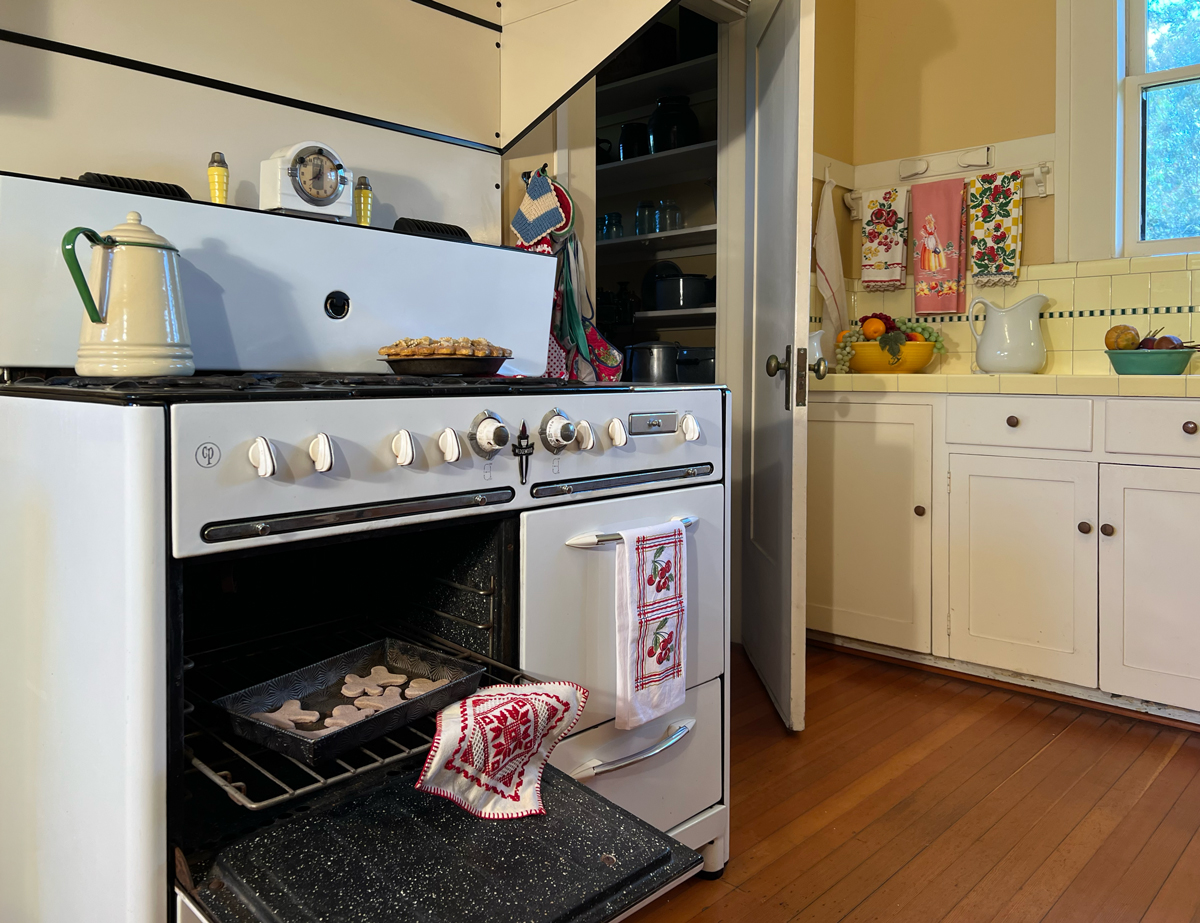
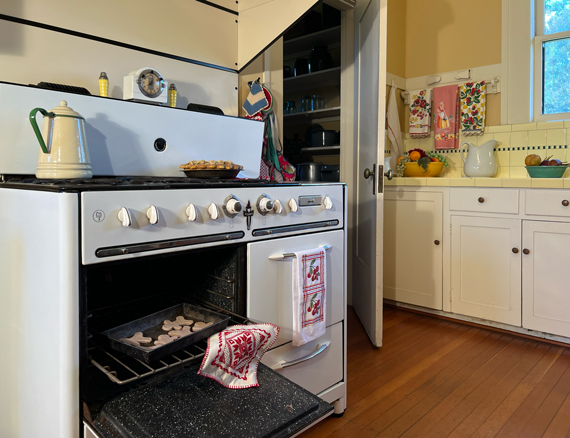 The economically minded Marston family had no need to replace their 1930s six-burner, dual oven Wedgewood stove. Likewise, many San Diego kitchens of that decade still retain their original workhorse stoves. The recent donation of an almost identical mid-to-late 1930s Wedgewood stove helped return the kitchen to its mid-1930s era look, and is compatible with daughter Mary Marston’s choice of ceramic tiles that replaced the original magnesite counter. Photo by Sandé Lollis |
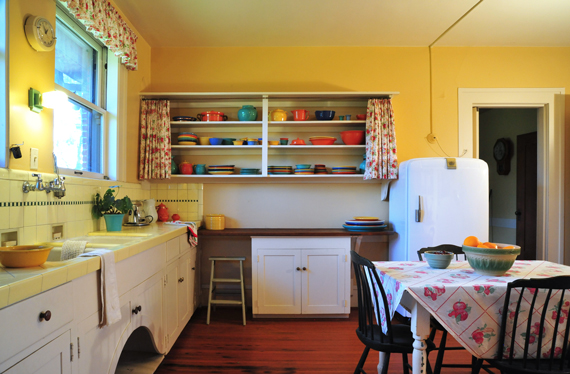 The collection of colorful Bauer pottery, a popular and useful dinnerware line created during the Great Depression, enhances the pale yellow and green countertop tiles. The step ladder reached the high shelves for maximum kitchen storage. The brightly colored 1930s reproduction cotton curtains and the recent purchase of a 1940 Frigidaire refrigerator complete SOHO’s fresh kitchen interpretation. Photo by Sandé Lollis |
Architect Irving J. Gill’s state-of-the-art design for the 1905 kitchen in the new Marston House featured a magnesite concrete countertop, a large cast-iron coal-fueled range, and a walk-in cooler for food storage.
We have evidence that Gill clad the kitchen floor with decorative rubber interlocking tiles, which likely extended through the butler’s pantry, to protect the Douglas fir floors. Rubber tiles would have given the cook a more forgiving surface to stand upon, as well as dampening the sound of footfalls. The adjoining service porch equipped with the ice box also provided the gardening staff and delivery men with a restroom and sink to wash up.
In the ensuing years, kitchen technology rapidly advanced. By 1922, the invention of the monitor-top electric refrigerator—named for its drum-shaped, top-mounted compressor resembling the turret of the USS Monitor—made everyday kitchen use more convenient. The Marstons placed theirs next to the swinging door into the butler’s pantry.
The family purchased their last stove in the mid-1930s: a Wedgewood model with six burners, a griddle with two ovens, and two warming drawers, with a Vent-a-Hood installed above.
They replaced the interlocking rubber floor tiles with 1920s Armstrong linoleum in variegated tones of green and butter yellow, and installed cheery 1930s yellow ceramic tiles with green trim for the countertop instead of the original concrete.
Preparing for museum operations in the late 1980s, the previous stewards of the Marston House removed the appliances and early linoleum, erasing 82 years of upgrades. Incongruous changes included installing a 1920 stove beneath the original 1930s hood, and the curious placement of an icebox inside the kitchen instead of on the service porch. Unfortunately, these decisions inaccurately interpreted naturally consecutive upgrades.
The 1930s represented a coming of age for American kitchens. A purely utilitarian room once occupied by domestic help became a place the family gathered and spent time together. Vibrant and colorful countertop tiles, floor linoleum, dishes, textiles, enamel cookware, cooking and serving utensils made of painted wood and sometimes with Bakelite handles combined with efficient equipment to create a room as aesthetically important as the living room.
In 2023, after SOHO removed the 1920s stove and early icebox, we welcomed the opportunity to interpret a 1930s kitchen representing over a half-century of the Marstons' occupancy. The donation of a mid-1930s Wedgewood stove, nearly identical to theirs, and our recent purchase of a 1940 Frigidaire refrigerator restore authenticity to the kitchen and complement the family’s original work tables, which have been in the room since 1905.
Following typical decor trends, the Marstons painted their two work tables green during the 1920s, and, subsequently, a cream color. Early 19th-century dark green Windsor chairs accurately represent how such sturdy furnishings made their way from the best rooms in the house to service rooms after they went out of style. By the 1940s, this practice prompted furniture manufacturers to design early American style chairs marketed as decorative kitchen furniture.
Photos from 1974 of the Marston kitchen and butler’s pantry reveal that appealing curtains replaced the original, serviceable linen curtains. SOHO’s recent installation of new curtains made from 1930s reproduction fabric contributes to the Depression era look and complements the vintage appliances.
The service porch, effectively a screened porch allowing fresh air into the kitchen, is now open to visitors. A period ironing board and a 1930s electric iron used to press kitchen and dining room linens occupy the former location of the ice box, replaced by an electric refrigerator as household technology evolved. The brighter, ventilated space provided an ideal area for a task once performed in the basement.
We think you’ll agree that the only ingredient missing from SOHO’s Marston House kitchen interpretation is the aroma of fresh buttermilk biscuits baking in the oven!
BACK to table of contents
Read the rest of the 2026 year-long series: Inside the Marston House.
|
2026
2025
2024
2023
2022
2021
2020
2019
2018
2017
2016
2015
|