|
El Pueblo Viejo de San Diego:
Old Town San Diego’s Mexican-Era State Historic Landmarks
Hiding in Plain Sight, Part 5
By Alexander D. Bevil, California State Parks Historian II (Retired)
July/August 2026
The following California State Landmarks (CHLs) reflect the years 1821 to 1847 when San Diego evolved from a military outpost to a Mexican pueblo.
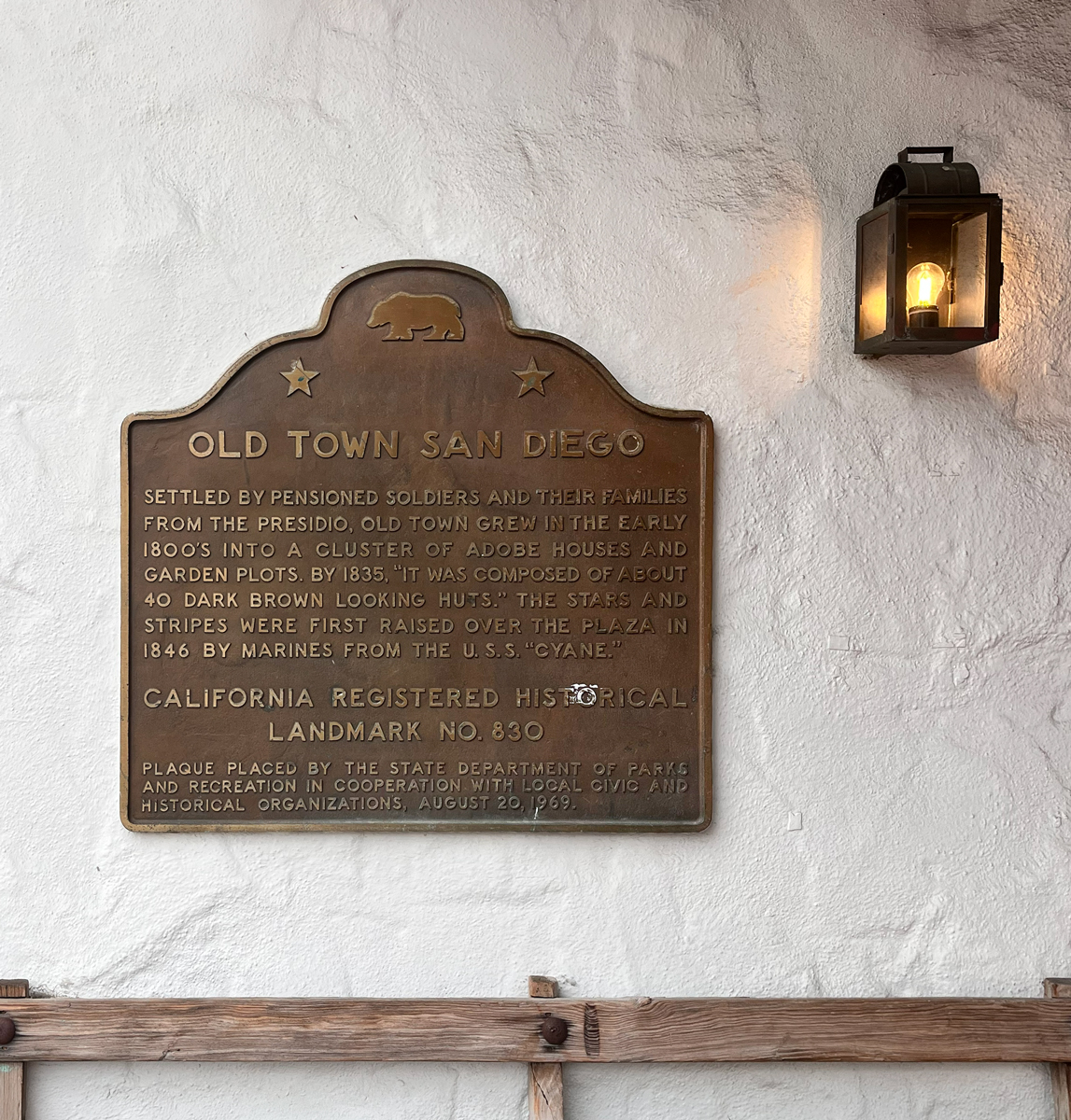
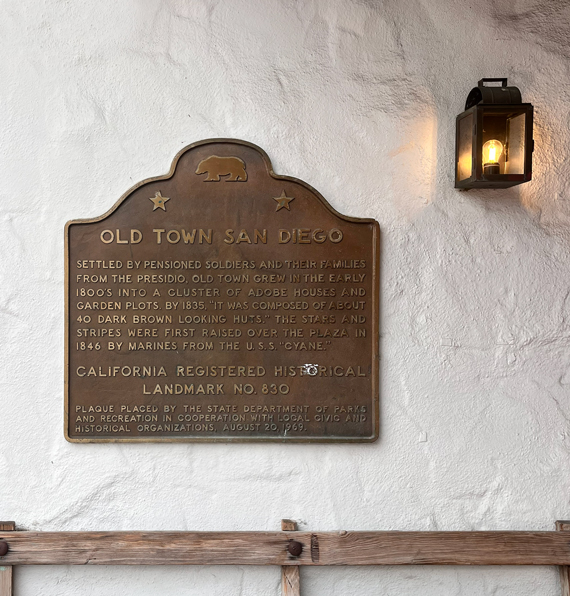 CHL No. 830: Old Town San Diego State Historic Park. California State Parks placed this plaque on the exterior wall of the former El Nopal restaurant on August 6, 1994, some 25 years after the park’s creation. Photo by Alexander D. Bevil |
CHL No. 830: Old Town San Diego
State Historic Park
Comandante Francisco María Ruiz reportedly built the first adobe house outside the confining walls of the Spanish presidio, approximately one-third of a mile southwest of the Presidio hill. In time, other retired soldiers erected homes around their former parade ground, often using building materials taken from the presidio. Like Ruiz, they also had larger homes on vast cattle ranches. Their fortunes changed after the Mexican-American War (1846-1848), as the town shifted from an agrarian economy to one primarily mercantile-based. Many adobes deteriorated. In 1968, California State Parks acquired several surviving historic adobes surrounding the plaza and incorporated them into a new state historic park.
CHL No. 74: Casa de Carrillo
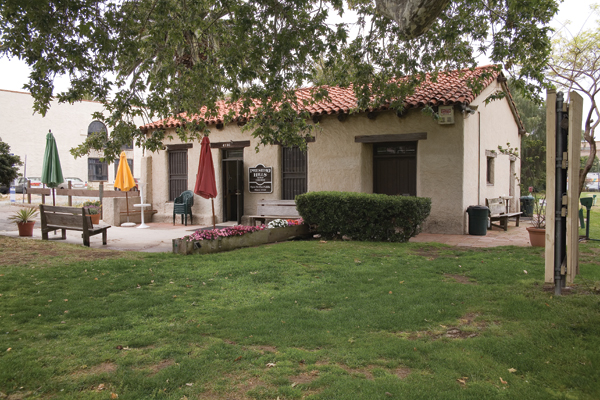
Presidio comandante Francisco María Ruiz reportedly built this house next to his pear garden in 1810 for his cousin and fellow soldier Joaquín Carrillo and his large family. On April 15, 1829, Ruiz’s godchild Josefa Carrillo—with the help of her cousin Pio Pico, a caballero and future Mexican governor of California—eloped with ship captain Henry Delano Fitch to Chile. After her brother Ramón Carrillo sold the property, the large casa deteriorated, leaving only a single-room structure. Given landmark status on December 6, 1932, local businessman George Marston repurposed the building in 1931 as the Presidio Hills Golf Course’s clubhouse. He later deeded both the building and the course to the City of San Diego.
CHL No. 53: Casa de Estudillo
José Antonio Estudillo, another former presidial comandante and ranchero, completed this large U-shaped adobe in 1829. Neutral during the Mexican-American War, Estudillo was elected as San Diego County’s first assessor in 1850. Businessman John D. Spreckels, who purchased the property in 1906, hired architect Hazel Wood Waterman to repurpose it as an end-of-line electric trolley destination. Its manager and later owner Tommy Getz falsely advertised it as “Ramona’s Marriage Place,” referring to the popular novel Ramona by Helen Hunt Jackson. California State Parks slowly began to discredit that claim after it acquired the casa in 1968.
CHL No. 72: Casa de Bandini
In 1829, Estudillo’s respective father and brother-in-law, Dons José and Juan Bandini, erected this neighboring L-shaped adobe, which became the center of Old Town’s economic, social, and political life. Don Juan loaned his house to Commodore Robert F. Stockton as his headquarters. Here, on December 9, 1846, Stockton received an urgent message to rescue General Stephen W. Kearny’s men trapped near San Pasqual. Although Bandini continued to hold political offices after the war, financial losses forced him to sell the casa. In 1869, stage line operator Albert Seeley added a second story and converted it into the Cosmopolitan Hotel.
CHL No. 71: Casa de Machado y Silvas
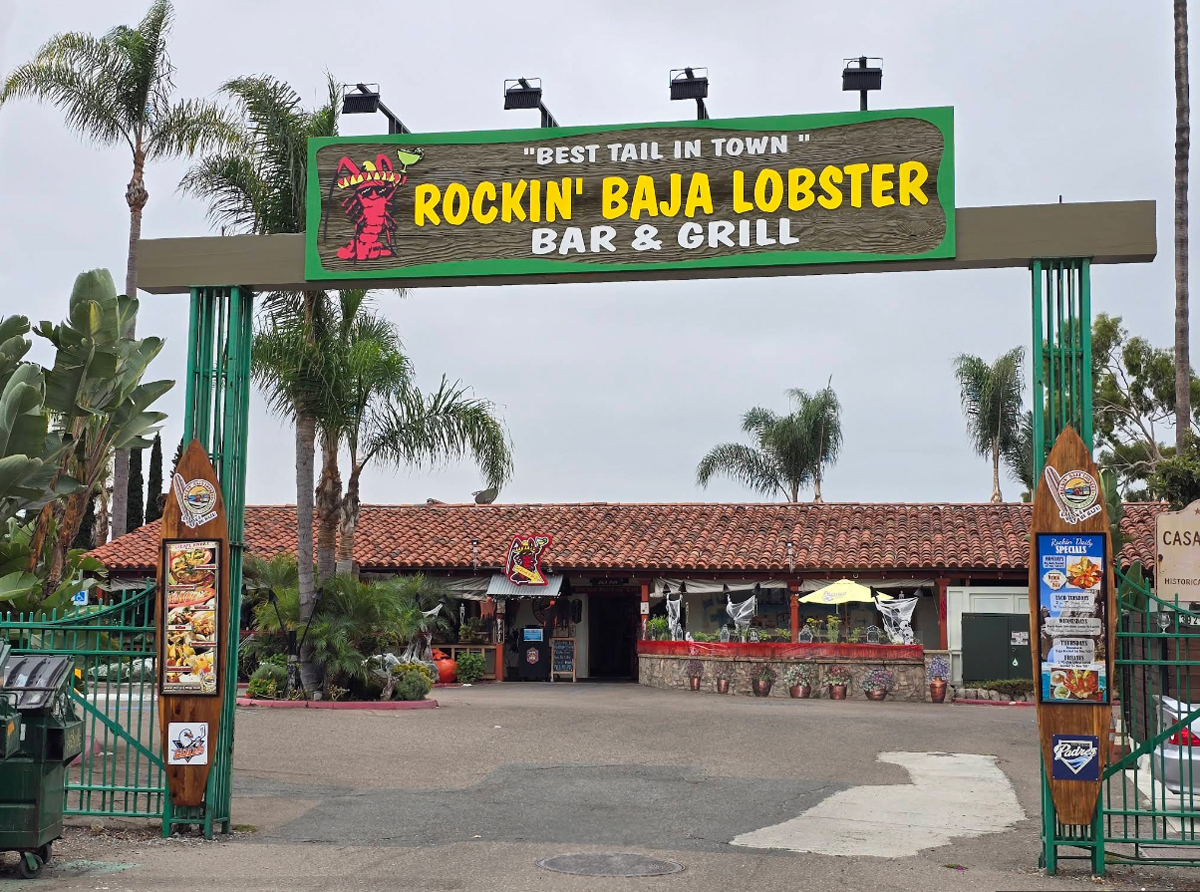
Retired Corporal José Manuel Machado constructed this single-story adobe house for his daughter María Antonia and her husband José Antonio Nacasio Silvas around 1843. It became known as La Casa de la Bandera (The House of the Flag) because in October 1846 Doña María reportedly hid the Mexican flag that had flown over the plaza in her home as American forces reoccupied San Diego. After the war, she converted her casa into the Commercial Restaurant.
CHL No. 63: Plaza, San Diego Viejo (Washington Square)
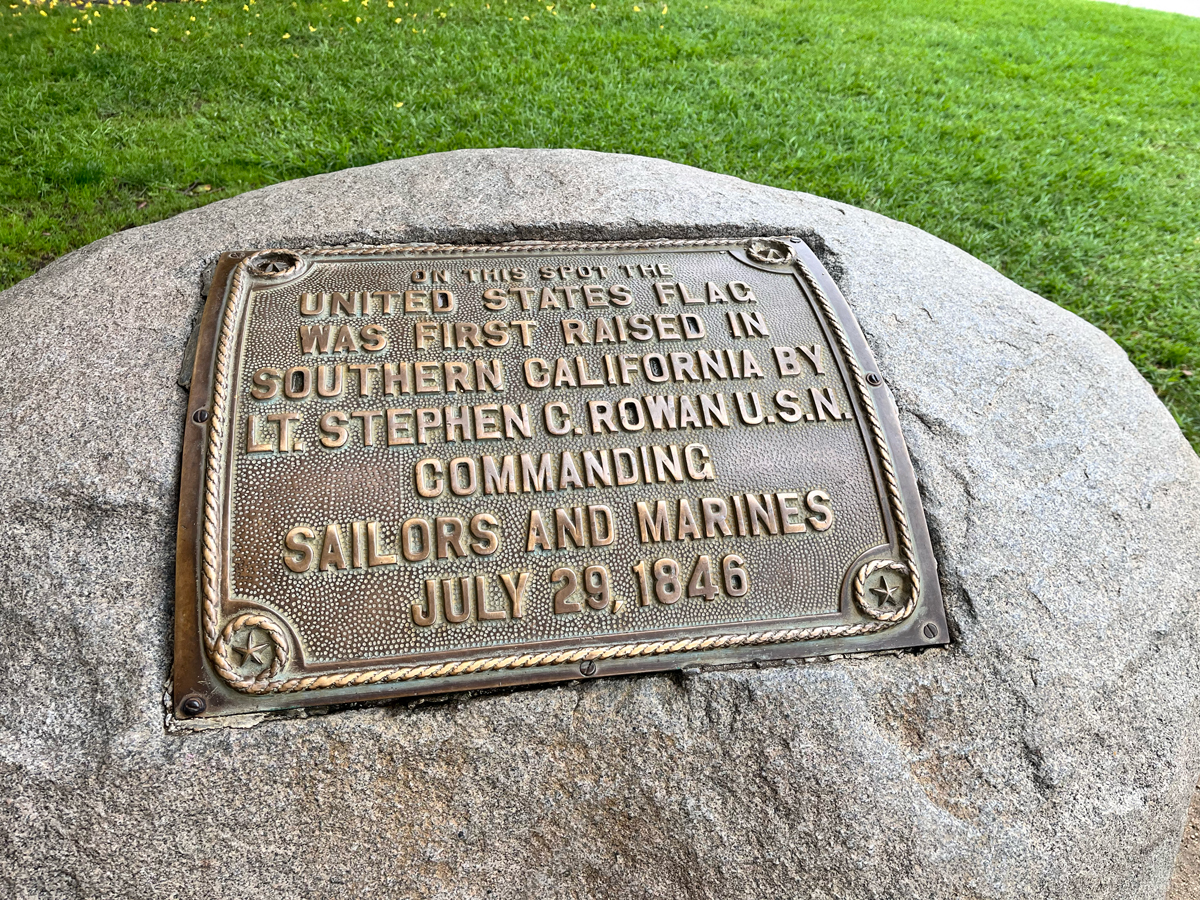
By 1834, the plaza was the center of social, economic, and political life in the Mexican pueblo. Indeed, a combination town hall and jail once stood inside the plaza’s northwest corner. Previously the scene of numerous rodeos and fiestas, on July 29, 1906 a reported 4,000 attendees witnessed the placement of a bronze plaque on a stone boulder to commemorate the 60th anniversary of the first raising of the U. S. flag over the plaza.
CHL No. 73: Casa de Stewart
Retired presidial Corporal Don José Manuel Machado built this adobe for his family in the 1830s. In 1845, newlyweds John (Jack) C. Stewart and Rosa María Machado, Don José’s youngest daughter, moved into the adobe. In Two Years Before the Mast (1840), author Richard Henry Dana mentions Stewart as the second mate of the Alert when the ship gathered hide off La Playa in 1834. Stewart, along with his wife and eleven children, hosted Dana in their overcrowded casa during the latter’s 1859 visit. In 1973 California State Parks acquired and eventually restored the adobe into a house museum.
CHL No. 75: The Site of the Casa de Cota
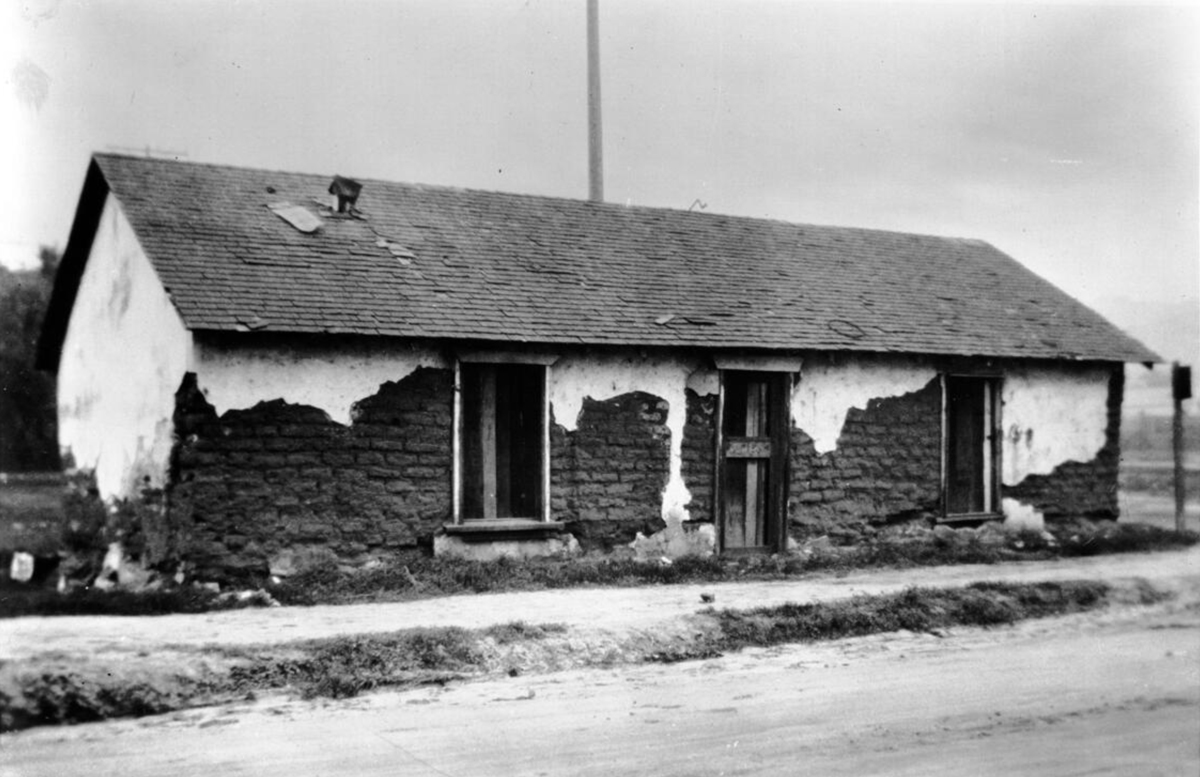
Spanish-born Baja California cattle rancher Juan Cota built this small, gable-end adobe around 1835. His grandson Alejandro Cota stated in 1932 that tenants reported “a troubled ghost” haunting the casa. The alleged ghost may have been troubled by the adobe’s deteriorating condition, which led to its eventual vacancy and demolition around 1942.
CHL No. 60: Casa de Lopez
Juan Francisco Lopez, the son of retired soldier, politician, and ranchero Ignacio Lopez, built La Casa Larga (the Long House) around 1835. On July 29, 1846, while Don Lopez’ granddaughter Prudencia was drawing water from the nearby river bed, she noticed a troop of Frémont’s Volunteers marching toward her. Alarmed, she proceeded to run through the streets shouting (in Spanish), “Here come a million Americans!” Among the casa’s other residents were Juan Matias Moreno, Mexican Governor Pío Pico’s secretary; and Father Antonio Ubach, who used one of its rooms as a chapel. Another room reportedly served as the town’s first school.
SLIDE SHOW
BACK to table of contents
Read the rest of the ongoing Hiding in Plain Sight Series.
|
2026
2025
2024
2023
2022
2021
2020
2019
2018
2017
2016
2015
|