|
Douglas Gunn and the San Diego Union
The Marstons: A California Family - Part 19
By Robin Lakin
July/August 2025
 Lewis C. Gunn and son Douglas, age four, c. 1845, photographed in Philadelphia. Courtesy SOHO collection |
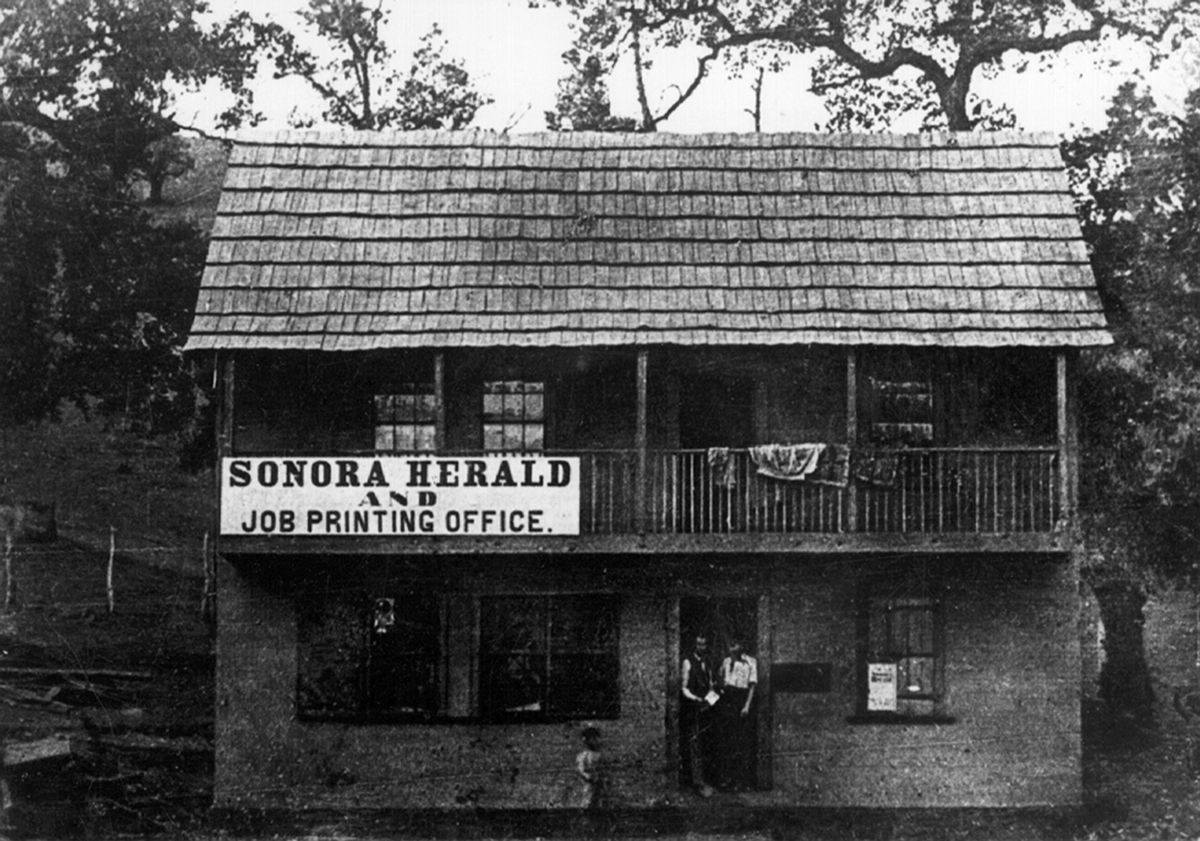
 The Sonora Herald building (and Gunn family home) in Sonora, California, c. 1855, with newspaper editor Lewis Gunn and his son Douglas in the doorway. The smaller child seen in the left foreground is likely Douglas’s brother, Chester Gunn. Courtesy Cali49.com |
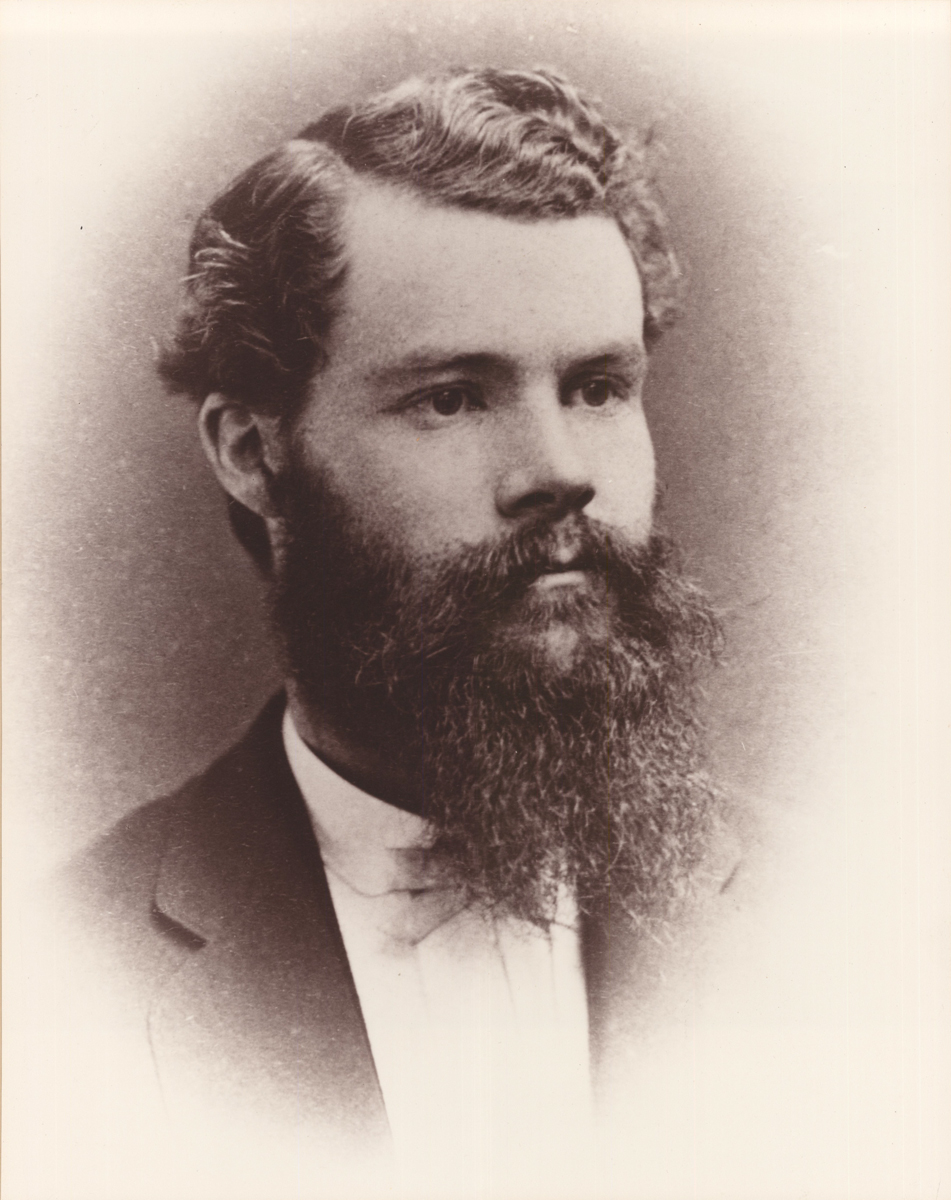
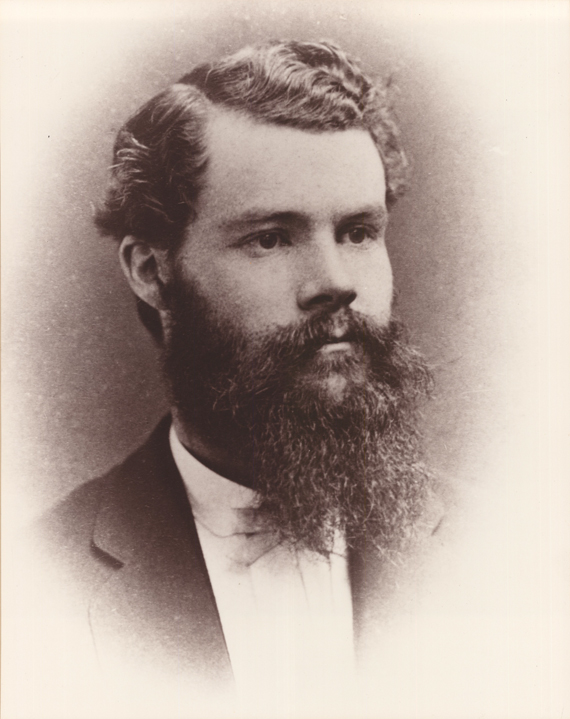 Douglas Gunn at the time of his arrival in San Diego in 1868. Courtesy sandiego.gov |
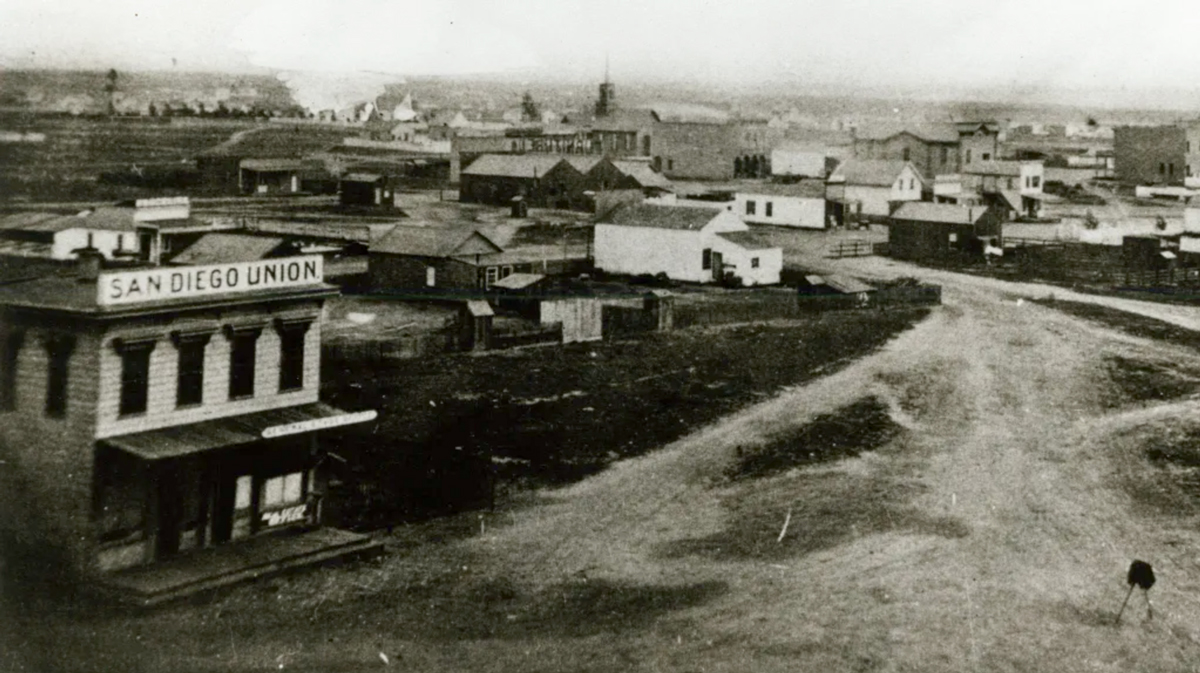
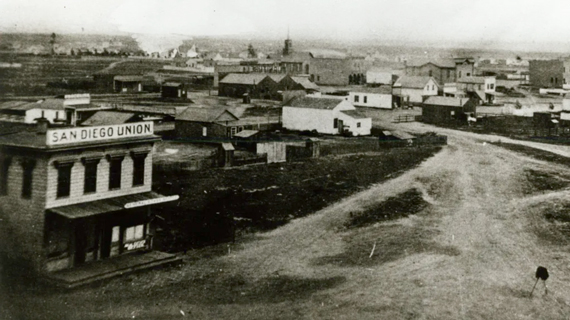 The first San Diego Union building, c. 1875, a two-story wood-frame structure in New Town, as seen from an upper floor of the Horton House at Fourth and what is now Broadway. Courtesy San Diego History Center (SDHC) |
The San Diego Daily Union was widely regarded as the finest newspaper in California during the 13 years that Anna Lee Marston’s eldest sibling, Douglas Gunn, was the owner and editor (1873-1886). Gunn was held in high esteem by fellow San Diegans for his unselfishness, kindness, generosity, and helpful spirit. “The people of the city and county of San Diego have reason to be proud of him, for a more zealous, intelligent, and constant friend of all their interests they will never have,” wrote Gunn’s friend, Charles Nordoff, of the journalist-businessman.
Earlier, the San Diego press had gotten off to a rough start. The weekly San Diego Herald, established in 1851 by Maine native John Judson Ames, faced troubles—from the inability to acquire newsprint to the political party switch from Democrat to Whig by Lt. George H. Derby, who ran the paper during Ames’s lengthy absence. The content was considerably livelier with Derby at the helm, but the paper shut down in 1860.
San Diego was sans newspaper for nearly a decade until a trio of men established the San Diego Union in 1868, another weekly paper. William Jefferson Gatewood, publisher of the San Andreas Register, with Edward W. Bushyhead, and José Narciso Briseño, moved the San Andreas paper to San Diego, rented a building in Old Town, and published the San Diego Union’s first edition on October 10, 1868. It arrived just in time to cover a volatile and consequential chapter in the city’s history: the growing push to relocate San Diego’s county seat from Old Town to New Town—a move heavily promoted by New Town leader and investor Alonzo Horton.
The Union would soon add Douglas Gunn to its staff. He had learned the trade from his father, Lewis C. Gunn, editor of the Sonora Herald.
With the Lewis Gunn family’s move in 1860 from Sonora to San Francisco, Douglas assisted his father, by then the editor of the San Francisco Times. When the younger Gunn arrived in San Diego in 1868, he was an experienced newspaperman who bought a lot at F and 12th streets, where he built a cabin. From his home, he walked the three miles to Old Town each day to work as a San Diego Union reporter.
In 1870, Douglas purchased Gatewood’s half interest in the Union and assumed editorial control in 1871. He moved the paper to a new wood-frame structure at 4th and D Streets in New Town, and printed the inaugural edition of the San Diego Daily Union on March 20, 1871. Benefitting from San Diego’s real estate boom, known as Horton’s Boom, which rapidly expanded the paper’s readership, Douglas bought out Bushyhead’s interest in 1873 for $5,000.
However, hard times had already hit businesses after the anticipated San Diego railroad terminus failed to materialize in 1871. This major setback for the city compounded by the economic panic of 1873, left Douglas struggling to keep the Union afloat The panic turned into a five-year depression, during which Douglas had to run nearly every aspect of the business himself—including reporting, editing, and promotion—in order to keep the paper alive.
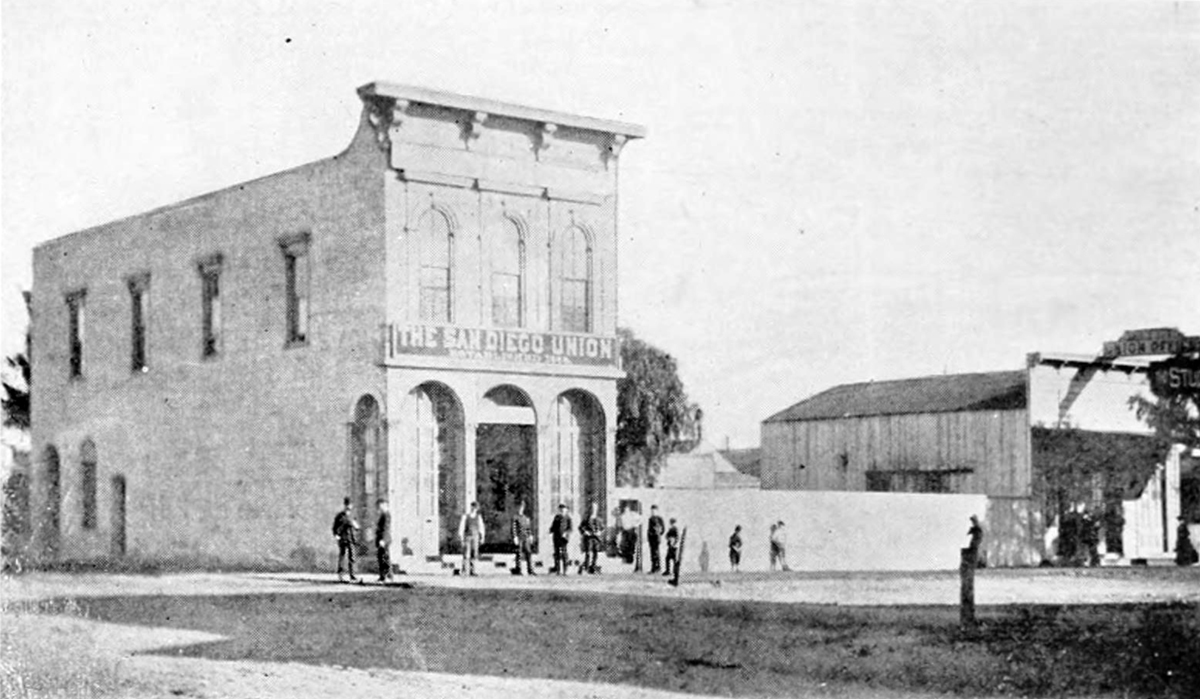
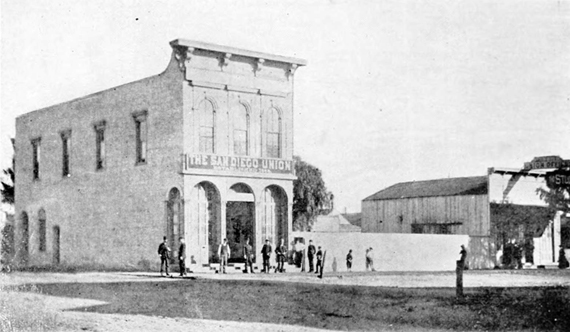
Then, from 1880 to 1885, San Diego’s land sales and population doubled, which boosted the paper’s readership and enabled Douglas to regroup financially. He had already built a two-story brick structure for the Union in 1879 at 6th and F streets and then constructed the Express Block, at 759 Sixth Street, for Wells Fargo delivery and communications businesses. He also increased his presence in civic matters.
In August 1886, Douglas sold the San Diego Daily Union to the San Diego Union Company, allowing him to fully devote himself to the successful national promotion of his beloved adopted city and county of San Diego.
The sale of the newspaper triggered a rapid succession of more than half a dozen operators, until multimillionaire businessman John D. Spreckels acquired the paper in 1890, and a new era began.
From 1873-1886, the San Diego Union and its readers benefited in many ways from the direction, dedication, and determination of one man: Douglas Gunn. Under his leadership, the paper thrived, weathered challenging times, and maintained an outstanding reputation for thirteen years. It was a lucky time for Douglas—and for San Diego.
 |
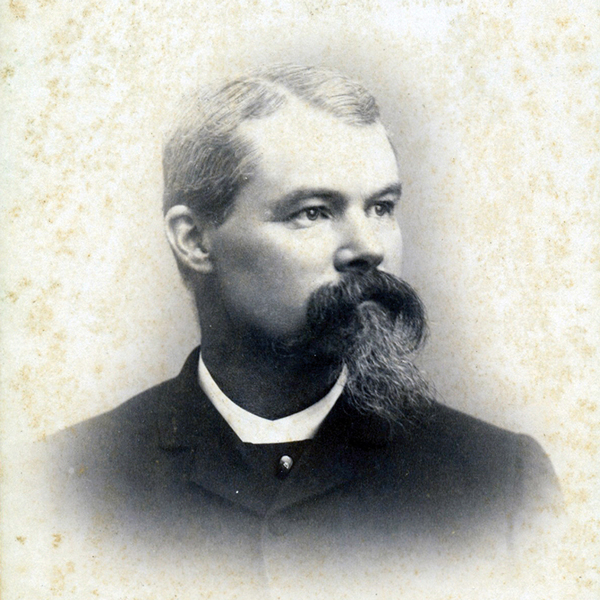 |
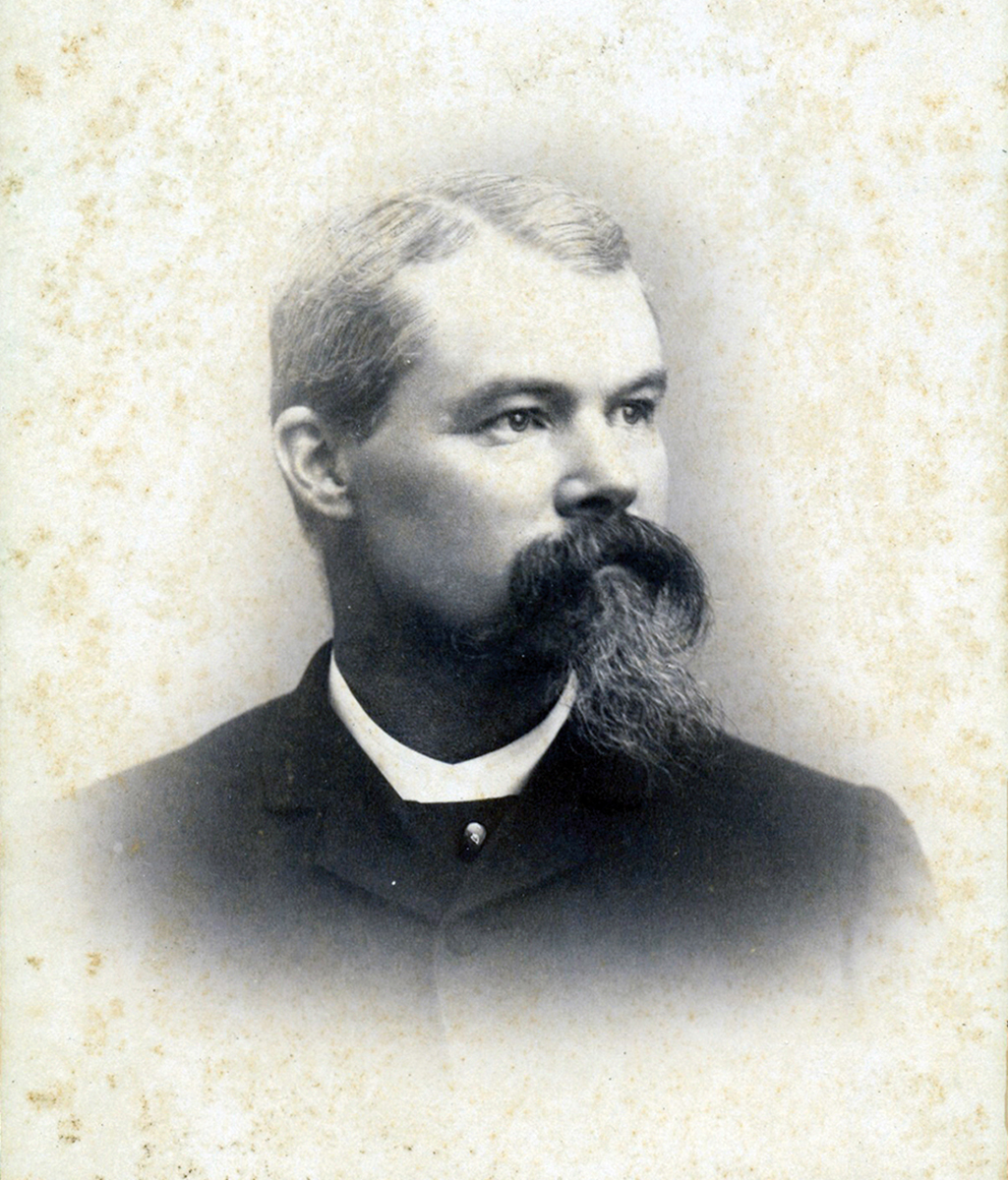
Left The second Union newspaper building, c. 1885, a brick structure at Sixth and F streets in New Town. Courtesy Flickr Commons Right Douglas Gunn in 1885, the year before he sold the San Diego Daily Union. Courtesy Marston Family Collection |
BACK to table of contents
Read the rest of the ongoing The Marstons: A California Story History Series.
|
2026
2025
2024
2023
2022
2021
2020
2019
2018
2017
2016
2015
|