|
The Birth of Pomona College
The Marstons: A California Family - Part 23
By Robin Lakin
March/April 2026
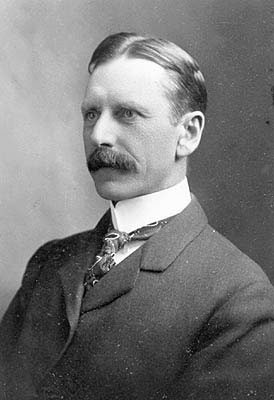
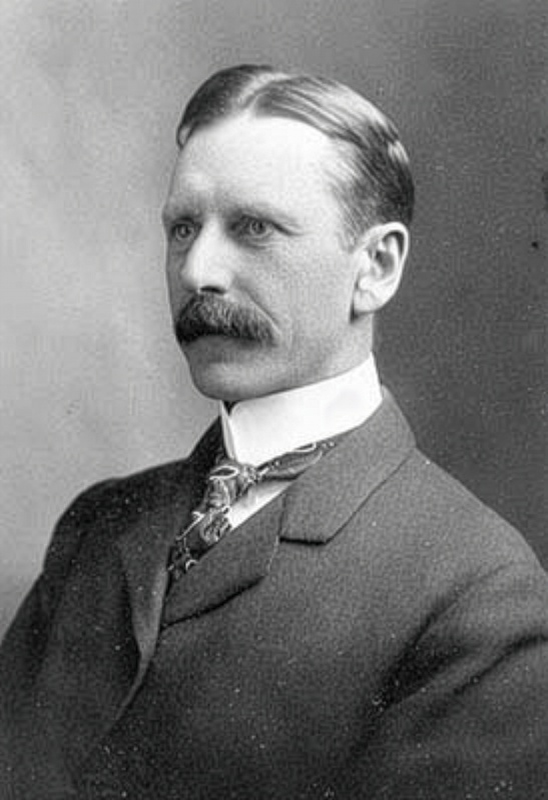 George W. Marston, at age 37, when he began his service as an original and ongoing Pomona College trustee. Courtesy San Diego History Center |
George W. Marston is a supreme example of what an individual with the drive and the resources to accomplish self-education can achieve. Pulled from his first semester of pre-med studies at the University of Michigan to help his family relocate to San Diego in 1870, he ended up in the wrong place to resume his education. At that time, institutions of higher learning existed solely in northern California.
A devout member of the Christian Congregational faith deeply rooted within the 16th-century Puritan Reformation, George viewed education as a holistic necessity to equip individuals with the ability to understand God’s word.
Southern California’s first Congregational Church, founded in San Bernardino in 1866, sat 30 miles east of Claremont in the Pomona Valley. Within 20 years membership grew significantly, resulting in twenty-one new Congregational churches.
In 1886, George took an active role in organizing one of them, San Diego’s first Congregational Church, and joined the education committee of the Association of Congregational Churches. The group aimed to establish a New England-style college: a co-educational private Christian school with a traditional cluster of campus buildings, hosting small class sizes, with a focus on critical thinking, liberal arts, and sciences.
As a founding education committee trustee, George and his fellow members explored proposals from communities surrounding the San Bernardino church, considering Redlands, Riverside, and Pasadena in May 1887.
On October 14, 1887, Dr. Charles B. Sumner, the fledgling college’s supervising authority. hosted a meeting at which the trustees named the new institution Pomona College and adopted its bylaws. George considered writing bylaws his least favorite responsibility, and later wrote of the consequential meeting, “After working on the job all day, we just debated, discussed, and argued through the evening, till after midnight…most of us had to stay with Mr. Sumner and his dormitory accommodations were meager. I slept either in a chair or on the floor.”
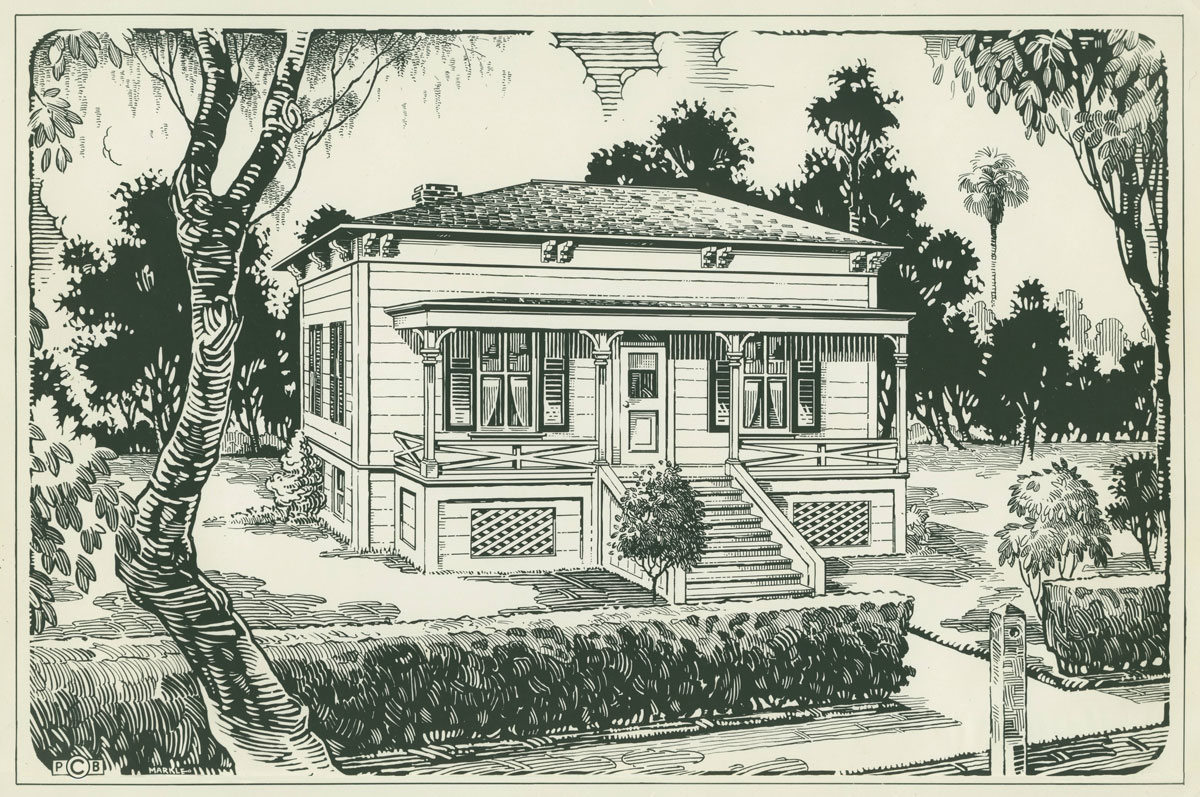
A nearby five-room structure called Ayer Cottage housed classrooms for the first two years, with annual tuition set at $60. Increased enrollment meant the college would need more and better facilities in short order.
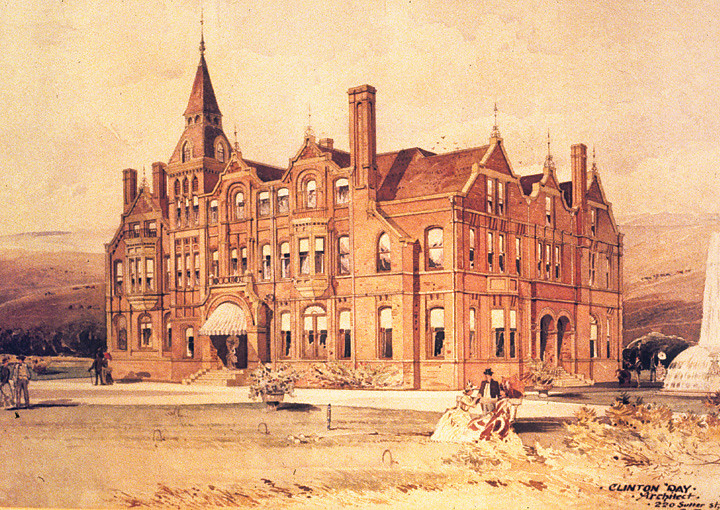
Active college supporter and board member Henry Austin Palmer purchased 80 acres of land in Scanlon Mesa, a few miles north of Pomona. The acquisition of an adjacent 40-acre parcel led to the approval of the new college’s location. The education committee commissioned San Francisco architect Clinton Day to design a substantial brick building, expected to cost $45,000. Dr. Sumner, who eventually became known as the college’s founder, purchased a 10-acre parcel near the proposed college site and constructed a Queen Anne style residence, which he named Twin Oaks.
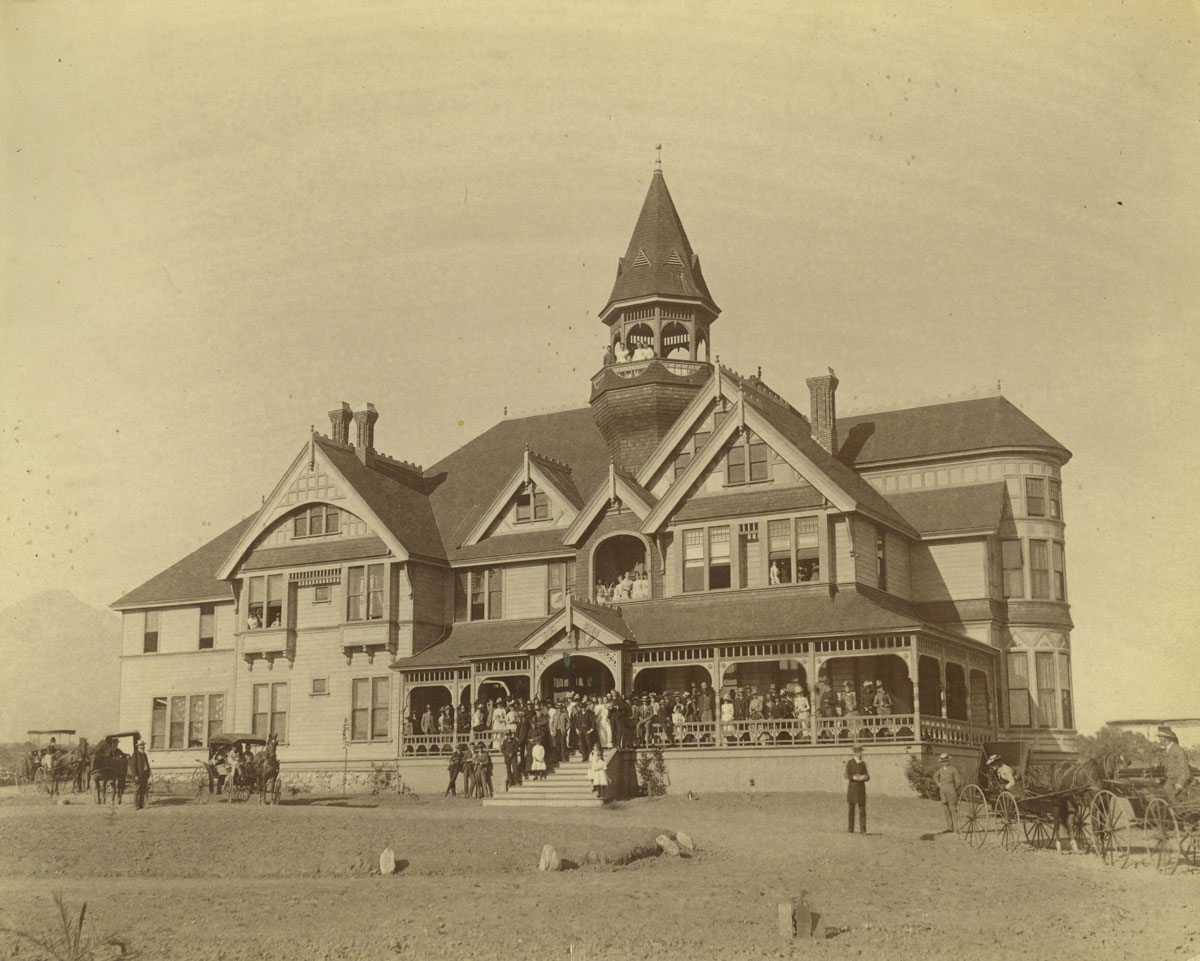
However, the threat of an economic bust thwarted funding for the college’s construction. The offer to use an unfinished hotel in nearby Claremont saved the day. On October 21, 1888, with the structure and significant acreage signed over to the college, the trustees mistakenly predicted this location would only be temporary.
The final move into the newly completed hotel, named Claremont Hall, took place in December 1888. After several years of operation and considerable debate, due in part to the area's growth, the board made a full commitment to the Claremont location for Pomona College in 1892.
Through the bumps in the road in its earliest days, the birth of Pomona College was, out of George’s countless education and civic improvement projects, according to daughter Mary Marston, “perhaps the dearest to his heart.”
The best, as they say, was still to come.
BACK to table of contents
Read the rest of the ongoing The Marstons: A California Story History Series.
|
2026
2025
2024
2023
2022
2021
2020
2019
2018
2017
2016
2015
|